
-

-

-
 PT | EN
PT | EN 
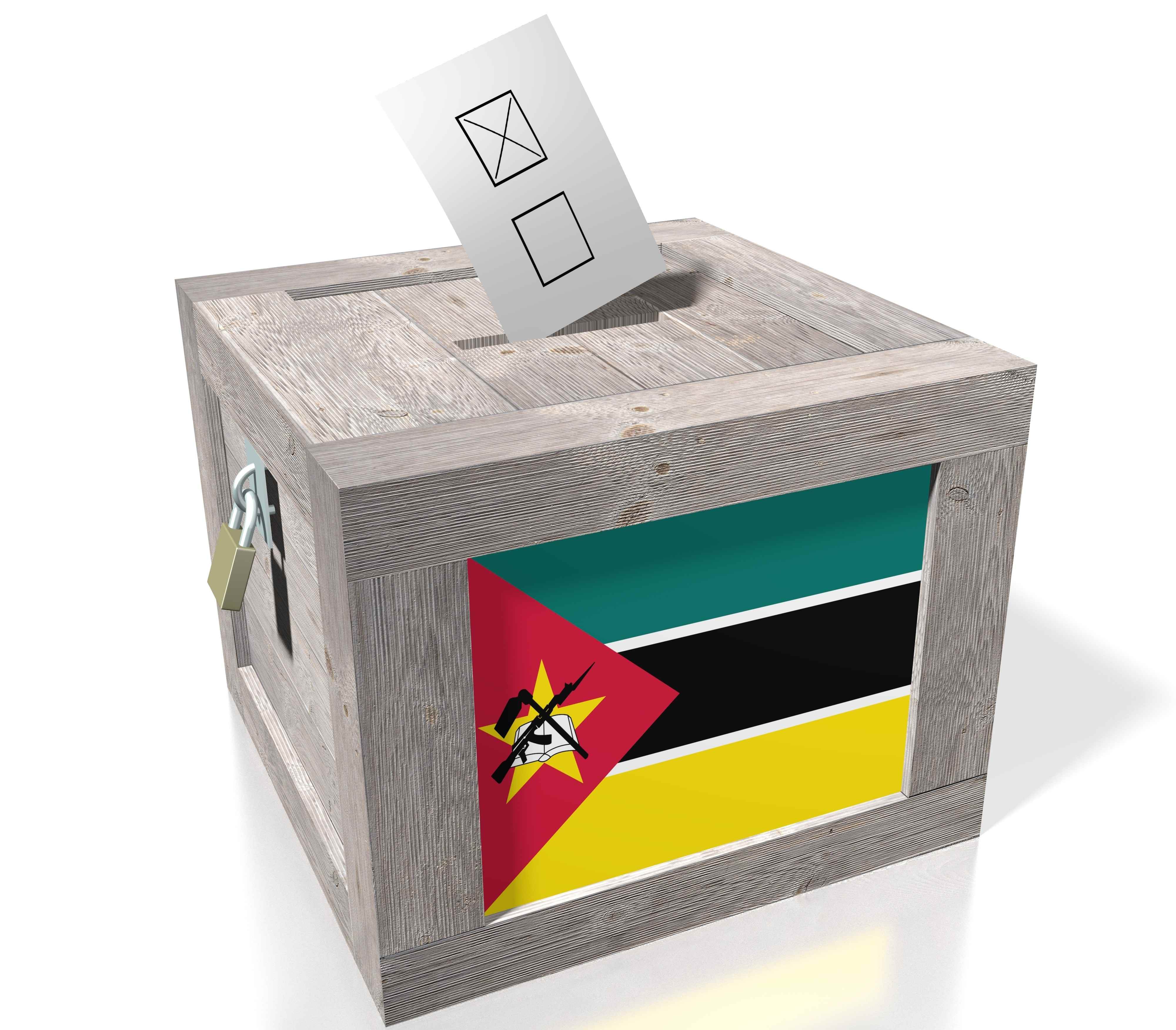
On October 9, 2024, Mozambique held its seventh general election [1]. The National Election Commission (NEC) declared Daniel Chapo, the Frelimo (Mozambique Liberation Front) candidate, the winner with 70.67% of the vote, while Venâncio Mondlane, known as VM7 and supported by Podemos (Optimistic Party for the Development of Mozambique), came in second with 20.32% (NEC 2024). Local and international observers, such as the Mais Integridade Electoral Observation Platform and the European Union Mission, reported numerous irregularities, and VM7, Podemos, and other opposition parties did not recognize the result. In response, the Constitutional Council "adjusted the results," reducing Chapo's vote share to 65% and increasing VM7's to 24%, a decision analysts saw as evidence of fraud. Contesting the results, VM7 began leading popular demonstrations that have swept the country in recent months, without, however, altering the outcome.
On January 15, while Chapo took office, police assaulted supporters of VM7, who had proclaimed himself president upon returning to the country after two and a half months of self-imposed exile due to death threats. While the Frelimo political elite oscillates between accusing foreign governments of financing the demonstrations and appealing for calm among the population, security forces have fired bullets and tear gas at the unarmed population, resulting in over 300 deaths and 4,000 illegal detentions (DECIDE 2025). Without official investigations, analysts denounce the political persecution, especially of VM7 supporters (Dias 2025), highlighting the assassinations of Elvino Dias and Paulo Guambe, VM7's lawyer and Podemos leader, respectively, in an ambush after the announcement of the election results.
The current crisis reflects the limited access to power for those who do not belong to Frelimo, the dominant party since the country's independence. This political exclusion has worsened over the years with a conspicuous escalation in the magnitude and visibility of electoral malpractice (Hanlon 2025). A new factor, however, is the rise of Podemos, driven by the popularity of VM7, which breaks the historical rivalry between Frelimo and Renamo (Bueno 2024).
BACKGROUND
Mozambique is a country marked by violence. Independence in 1975 was the result of a long-armed struggle against Portuguese colonialism (1964-1974), and by 1976, the new state, governed by Frelimo, began to suffer attacks on its territory. What began as a war of destabilization fomented by the apartheid regime of South Africa unfolded into a civil war between Frelimo and Renamo (Mozambican National Resistance), ending only in 1992 and leaving a death toll of approximately one million.
The widespread weariness from the war and the United Nations intervention process, considered successful, underpinned the narrative of successful peacebuilding in Mozambique. This view was reinforced by Renamo's lack of contestation in the first multi-party elections in 1994, despite its defeat to Frelimo. In the years that followed, Frelimo consolidated its position as the dominant party and Renamo its status as the main opposition party, while the country experienced a period of relative stability. Twenty years later, however, after successive electoral challenges by the opposition and Frelimo's growing prominence in the economy, the situation changed.
In April 2012, clashes occurred between former Renamo fighters–who were responsible for the security of the party's then-leader Afonso Dhlakama—and the government's riot police. Tensions escalated following the approval of a new electoral law, rejected by the opposition, leading, from 2013 onwards, to a series of retaliatory actions by Renamo, such as attacks on vehicles, blockades of the country's main transport routes, and a boycott of municipal elections.
In 2014, on the eve of the general elections, a ceasefire was followed by a new peace agreement, which collapsed after Frelimo secured the presidency once again. Rejecting the results, Renamo demanded provincial autonomy in the regions where it won, but with the proposal blocked by Frelimo's parliamentary majority, it resumed attacks. Only in 2018 was a new decentralization agreement signed, along with a memorandum on military matters. Dhlakama died before either side implemented these agreements, but negotiations continued, culminating in the signing of the 2019 Peace and National Reconciliation Accord (Maputo Agreement). While the parties implemented part of the agreement, such as the historic demilitarization of Renamo (which had maintained a group of armed men known as Presidential Guard since 1992), a last-minute change practically reversed the decentralization process, betraying what had been previously agreed upon (Weimer & Bueno 2020).
Given this history, it is not surprising that a new political crisis has arisen in Mozambique after the general elections. On the contrary, the current crisis reveals factors that have left a legacy in the long process of state and democratic building in the country, a process that none of the peace agreements have managed to resolve (Maschietto 2023). At the same time, new elements are emerging that are altering the dynamics of a conflict that has historically been centered on two actors—Frelimo and Renamo.
STRUCTURAL ELEMENTS
One of the defining elements of State management in Mozambique is political exclusion and the consequent struggle for power. Since independence, Frelimo has assumed a central role in statebuilding, leading to a veritable process of partisan control (or Frelimization) of the state, even after the introduction of multi-party politics. During the government of Armando Guebuza (2005-2015), centralism intensified through the manipulation of public institutions and the concentration of economic resources in the hands of the political elite (Pitcher 2020). This dynamic generated a symbiotic relationship between political and economic power, accentuated by the discovery of mineral resources in the country and by increasing corruption, which culminated in the hidden debt scandal revealed in 2016, when semi-public entities contracted debts exceeding 2 billion dollars with illegal government guarantees. The scandal led to the suspension of international budgetary support, but did not break Frelimo's economic control over the country's resources.
Related to this, political decentralization has been implemented gradually, and accompanying measures have undermined its outcomes. For example, the creation of Provincial Decentralized Governance Bodies from 2018 onwards aimed to give greater autonomy to the provinces. However, the introduction of the State Representation and the Secretary of State in the Province—both directly subordinate to the central government—limited the autonomy of the elected governors, thereby maintaining political control under the dominion of Frelimo (Weimer 2021). A similar dynamic occurred in previous years regarding the creation of municipalities (with elected governments) and districts (with leaders appointed by the central government) (Maschietto 2016).
Regarding the electoral process itself in Mozambique, there are chronic credibility problems. Since 1999, recurring allegations of ballot stuffing, invalidation of opposition ballots, and the use of public resources in favor of Frelimo have repeatedly challenged the credibility of elections. A recent report published by the Center for Public Integrity (Hanlon 2025) documents 25 years of electoral fraud in the country, showing that for 20 years these practices occurred but remained largely hidden, preserving the image of free and fair elections. However, from 2018 onwards, the fraud became open and evident, reiterating the message that Frelimo decides the country's political destiny. The document details the different practices of electoral manipulation, such as the alteration of local counts by politicized electoral bodies like the STAE (Technical Secretariat for Election Administration), ballot stuffing, and the use of phantom voters, practices that reached acute proportions in 2019.
Furthermore, violence and intimidation are also frequent. Police repression against demonstrators, with allegations of "lack of authorization," is recurrent (BTI 2022). An emblematic case of violence was the assassination of Anastácio Matavel, coordinator of civilian election observers, killed by a police unit days before the 2019 elections in Gaza province. Assassinations of government critics also mark these dynamics, such as the case of law professor Gilles Cistac, assassinated in 2015, shortly after publicly supporting Renamo's demand for greater political decentralization.
What we see in Mozambique today, therefore, is not new. On the contrary, it is the culmination of a long process of actions clearly aimed at maintaining—if not strengthening—Frelimo's partisan control of the state. The major factor of change seems to be a certain degree of dispersion among the parties now vying for power.
NEW ELEMENTS
Although Renamo had already shown signs of disunity—the creation of the Movimento Democrático de Moçambique (MDM) in 2009 stemming from this fragmentation—Dhlakama's death in 2018 deepened the crisis of leadership and internal cohesion. Upon assuming the presidency of Renamo, Ossufo Momade did not have full acceptance. Mariano Nhongo, former commander of Renamo's military wing, led a dissident Military Junta and, claiming that Momade did not represent the party's interests, rejected the 2019 peace agreement. Demanding renegotiations, the Junta carried out attacks until 2021, when Nhongo was killed in combat with government forces. Even though the Renamo split ended, his popularity declined, and Momade's leadership has been heavily criticized.
In this context, we can observe the meteoric rise in VM7's popularity. A forestry engineer by training and an evangelical pastor, VM7 began his political career in the MDM when, in 2013, he ran for and supposedly won the municipal elections in Maputo, but was prevented from taking office. After Dhlakama's death, he migrated to Renamo and ran again in the municipal elections in Maputo. Allegedly victorious and prevented once more from taking office, VM7 stood out as one of the main exponents of the so-called Blue Revolution (a reference to Renamo's color), a series of protests and demonstrations with widespread youth mobilization. He left Renamo after internal disputes with Momade and, prevented from running through his newly founded party, CAD (Democratic Alliance Coalition), ran in the presidential elections with the support of Podemos (founded in 2019 by Frelimo dissidents) (Bueno 2024) [2].
VM7 not only embodies the persistent political exclusion in the country but has also galvanized the appeals of a population frustrated by the escalating cost of living, increasing inequality, and high unemployment rates. His appeal also stems from another important conjunctural element: the growth of the young population in Mozambique, which no longer has a connection to the old dynamics of the conflict between Renamo and Frelimo. According to the UNDP, two-thirds of the Mozambican population is under 25, and more than half are children. Being so young, they have no memories of the war, nor do they feel deeply connected to the celebratory narrative that Frelimo has reproduced over the years as the sole liberators of the country from Portuguese colonialism (Bueno 2021).
Furthermore, the number of people living below the poverty line has increased significantly in the last 10 years, reaching more than half of the population. From 46.1% in 2015, more than 65% of the population currently lack the means to purchase food and non-food products to meet basic individual or family needs (Hanlon 2024).
INTERNATIONAL OVERVIEW AND POSSIBLE OUTCOMES
The central point of this article is that the crisis in Mozambique goes beyond the electoral aspect, demanding greater political inclusion and economic redistribution. Its resolution is long-term and requires a comprehensive review of public policies, which would lead to the loss of privileges for a political elite entrenched in power. That said, international actors play an important role in resolving the crisis and further legitimizing a regime that has become increasingly centralized over the years.
Among the diplomatic representations in Maputo, only those of the US (pre-Trump), the European Union, Norway, Sweden, Canada, and Switzerland criticized the election results and the excessive use of force by security forces, showing a relatively more critical stance than in the past. Before Chapo's inauguration, the UN called for a de-escalation of tensions and appealed for an investigation into human rights abuses and a guarantee of justice for victims. The UN's actions contrast with its history in the country, since in 1992, when it managed the drafting of the agreement, it did not include accountability for human rights violations and war crimes committed by the parties.
Since 1999, UN mediators have been urged not to approve peace agreements that include general amnesties for serious crimes under international law (Vandeginste & Shriram 2011). Despite this, the Maputo Agreement, negotiated by a personal envoy of the UN Secretary-General, did not include judicial provisions to address abuses and crimes committed during the renewed conflict. Time will tell whether this appeal will be a landmark in the international community's more assertive stance on this issue.
The future of Chapo's government is also uncertain. In his inaugural speech, Chapo promised that his government would mark the beginning of "a new era," and on several occasions, he has sought to project an image of greater openness to dialogue and conciliation, especially compared to his predecessor, Filipe Nyusi. However, he continues to use the same tactic as Nyusi, promoting a new meeting between party leaders without VM7's knowledge (O País 2025). However, would an agreement without VM7 be possible?
Considering only VM7's ability to lead demonstrations while in exile, the answer would clearly be no, a view corroborated by the head of the European Union Election Observation Mission, Laura Ballarín, during a recent visit to Maputo. In this sense, we argue that a dialogue should not only include VM7, but also break with the historical model of "agreement between elites" (Vines 2021) in place since 1992. Furthermore, such an agreement should broadly encompass civil society and youth, and extend beyond Maputo, addressing the country's geoeconomic and cultural diversity with regional and local platforms.
Notes
[1] Part of this article is based on research developed within the scope of the REINTEGRA project – “Reviewing the impact of amnesty in the reintegration of ex-combatants: A bottom-up view of the case of Mozambique” (2022.00657.CEECIND), funded by the Foundation for Science and Technology (FCT).
[2] VM7 Facebook profile: https://www.facebook.com/share/v/15j8Fkebw6/?mibextid=wwXIfr.
Bibliographic References
Bertelsmann Stiftung (BTI). 2022. Mozambique country report.
Gütersloh: Bertelsmann Stiftung. http://www.bti-project.org .
Bueno, Natalia. 2021. “Different Mechanisms, Same Result: Remembering the Liberation War in Mozambique.” Memory Studies 14 (5): 1018–1034. https://doi.org/10.1177/1750698021995993 .
Bueno, Natalia. 2024. “The end of Mozambique's two-party system?” Africa Is A Country, October 25, 2024. https://africasacountry.com/2024/10/the-end-of-mozambiques-two-party-system .
CNE. 2024. “National Centralization and General Counting. General Elections and Provincial Assemblies.” Republic of Mozambique, October 24, 2024. https://www5.open.ac.uk/technology/mozambique/sites/www.open.ac.uk.technology.mozambique/files/files/Resultados%20Eleitorais%202024(1).pdf .
DECIDE. 2025. “Preliminary Report on the Post-Electoral Context in Mozambique.” DECIDE Platform. https://pdecide.org/blog/preliminary-report-on-the-post-electoral-context-in-mozambique-3-months .
Dias, Ricardo. 2025. "It is not PODEMOS members who are being persecuted and murdered, it is Venâncio Mondlane's supporters, says João Feijó. The Mozambique Times, February 4, 2025. https://moztimes.com/blog/nao-sao-membros-do-podemos-que-sao-perseguidos-e-assassinados-sao-apoiantes-de-venancio-mondlane-afirma-joao-feijo/ .
Hanlon, Joseph. 2024. “Mozambique: Government admits huge rise in poverty, new 20-year plan. Club of Mozambique.” Club of Mozambique, June 24, 2024. https://clubofmozambique.com/news/mozambique-government-admits-huge-rise-in-poverty-new-20-year-plan-by-joseph-hanlon-260392/ .
Hanlon, Joseph. 2024. “25 years of electoral fraud, protected by secrecy.” Center for Public Integrity (CIP). https://www.cipmoz.org/wp-content/uploads/2024/02/25-years-of-electoral-fraud.pdf
Maschietto, Roberta Holanda. 2016. “Decentralization and local governance in Mozambique: The challenges of promoting bottom-up dynamics from the top-down.” Conflict, Security & Development 16 (2): 103-123. https://doi.org/10.1080/14678802.2016.1153306 .
Maschietto, Roberta Holanda. 2023. “The challenges and resilience of democracy in Mozambique.” CEBRI-Revista 2 (6): 155-175. https://cebri.org/revista/br/artigo/94/os-desafios-ea-resiliencia-da-democracia-em-mocambique .
O País. 2025. “Chapo announces agreement with parties for reforms and peace.” O País, January 27, 2025. https://opais.co.mz/chapo-anuncia-acordo-com-partidos-para-reformas-e-paz/ .
Pitcher, Anne M. 2020. “Mozambique elections 2019: pernicious polarization, democratic decline and rising authoritarianism.” African Affairs 119 (476): 468–486. https://doi.org/10.1093/afraf/adaa012
RTP. 2025. “Mozambique. Solution to the crisis involves including Mondlane in the dialogue.” RTP News, January 31, 2025. https://www.rtp.pt/noticias/mundo/mocambique-solucao-para-crise-passa-por-incluir-mondlane-no-dialogo_n1631229 .
Vandeginste, Stef & Chandra Lekha Sriram. 2011. “Power Sharing and Transitional Justice: A Clash of Paradigms?” Global Governance 17 (4): 489–505. https://www.jstor.org/stable/23104288 .
Vines, Alex. 2021. “Violence, Peacebuilding, and Elite Bargains in Mozambique Since Independence.” In The State of Peacebuilding in Africa, T. McNamee & M. Muyangwa (eds.): 321–342. Palgrave Macmillan: Cham. https://doi.org/10.1007/978-3-030-46636-7_18
Weimer, Bernhard. 2021. The “New Paradigm” of Decentralization in Mozambique. Update of the Political Economy Analysis. Maputo: Swiss Agency for Development and Cooperation (SDC).
Weimer, Bernhard & Natália Bueno. 2020. “Peace and reconciliation in Mozambique: critical junctures and path dependence.” In Challenges for Mozambique 2020, Salvador Forquilha (ed.): 65–95. Maputo: IESE. https://www.iese.ac.mz/wp-content/uploads/2020/12/Desafios-2020_online.pdf .
Received: February 3, 2025
Accepted for publication: February 27, 2025
Translation published: June 10, 2026
* Translated from Portuguese by Theo Pereira with the support of digital translation and AI-assisted language tools: Google Translate (initial draft), Grammarly (grammatical and syntactic revision), and ChatGPT 6 (selective phrasing refinements). Reviewed and approved by the authors. AI assistance is disclosed in line with the guidelines of CNPq Ordinance No. 2,664 of March 6, 2026 (Brazil).
Copyright © 2026 CEBRI-Revista. This is an open access article distributed under the terms of the Creative Commons Attribution License, which permits unrestricted use, distribution, and reproduction in any medium, provided the original article is properly cited.
