
-

-

-
 PT | EN
PT | EN 
"The living can teach the dead nothing; the dead, on the contrary, instruct the living," Chateaubriand stated in his memoirs, recalling the funeral of statesman Castlereagh. This phrase would certainly be appreciated by Ambassador Marcos Castrioto Azambuja, an expert in the art of curating Brazilian diplomatic memory. Born in 1935, he entered the Brazilian Ministry of Foreign Affairs (Itamaraty) through a civil service exam in 1958 at the age of twenty-three during the golden period of Juscelino Kubitschek's administration. He was first posted to the Brazilian Mission in New York and later held equally prestigious posts until serving as Ambassador to Buenos Aires (1992-1997) and Paris (1997-2003). His career spanned forty-five years, all lived, as did his former chief, Cyro de Freitas Valle, from and for the Itamaraty.
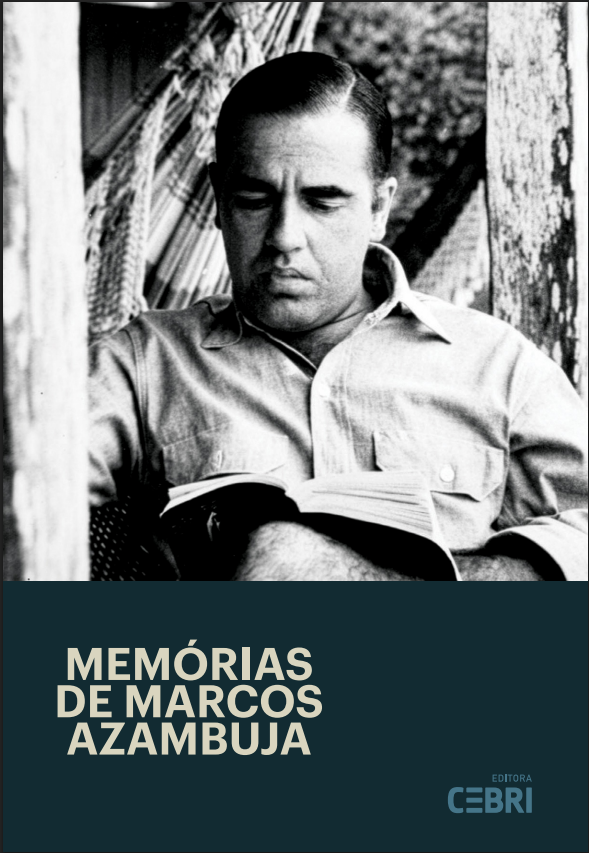
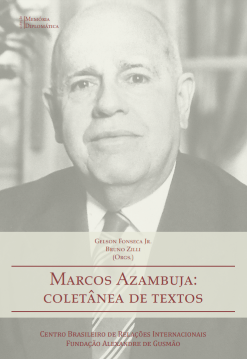
Azambuja is honored in two recent works. Alexandra de Mello e Silva, Monica Hirst, and Gelson Fonseca Jr. organized the first work, a memoir (2025), which includes three interviews conducted in 1997, 2009, and 2025. Gelson Fonseca Jr. and Bruno Zilli organized the second, an anthology (2026), which brings together sixty-four works by Azambuja. The honoree participated in the conception of both works but passed away before he could see their completion.
The final result impresses not only with its content but also by its style: the rare ability to compose miniature portraits in pithy and slightly mischievous phrases. One of the best profiles is dedicated to the versatile writer, politician, journalist, academic, and diplomat Gilberto Amado, whom Azambuja considers his maître à penser. Like Chateaubriand, the books offer a memory from beyond the grave. In these two volumes, Azambuja shows his admiration for the brilliance of Amado, a Sergipe state native, yet he does not ignore the serious flaws of this grand gentleman who lived intensely, from the era of Baron Rio Branco to the Military Dictatorship. Amado was the author of five delightful memoirs that, unfortunately, did not cover the best part of his diplomatic life. Azambuja took on the important task of recording Amado’s final phase for posterity, including aspects that were not so flattering. He describes Amado as presumptuous, with boundless vanity. Each of these characteristics is documented, with the most serious ones encapsulated under the delightful phrase: "His prejudices were neither few nor silent" (Fonseca Jr. & Zilli 2026, 362).
Azambuja's vision of Brazil and the world naturally privileges the agency of great intellectuals and statespeople. International and domestic constraints receive little emphasis. However, his picturesque portrayal of the characters always conceals a broader reading of the world. When he writes that the Argentinian Dante Caputo had "a slight deficit of prudence and an excessive stock of ideas" (Fonseca Jr., Hirst & Mello e Silva 2025, 289), he is not merely evaluating the character: he suggests a reflection on what he considers to be the dangers of entrusting foreign policy to brilliant but headstrong personalities, untempered by the entanglements of the professional diplomatic class. He made a similar judgment about former Brazilian president Jânio Quadros and on Marco Aurélio Garcia's role in President Lula's advisory team.
The unique narrative and descriptive ability of both books is like a balm, especially now, when writing has become standardized by the glossolalia of artificial intelligence. Azambuja is a witty Virgil who guides the reader through the most diverse public and private environments, especially in Rio de Janeiro, a city he deeply admired. Between witty jokes and insightful analyses, we walk from Flamengo Beach to the historic center of Rio de Janeiro with its Francophone dimension; we visit the storied Itamaraty Palace and its surroundings, admiring how the diplomatic daily life of yesteryear emerged from the intimate connection with the hustle and bustle of popular shops and traditional restaurants of "Rua Larga"; we sigh, alongside the author, with nostalgia for the foreclosed VIP's hotel. These strolls bring the past to life through their details and contradictions. Azambuja had a "tolerant curiosity about the world" (2026, 83), a quality he attributed to Fernando Henrique Cardoso and which no less perfectly applies to himself.
This curiosity did not end with his diplomatic career. Back in Rio de Janeiro, he turned his retirement into a second public life. As Vice-President of CEBRI’s Board of Trustees, he sought, in his own words, "to influence the pre-election debates so that issues of our external relations are present" (2026, 166, 284). It is from this tribune that he expresses his opinions on recent Brazilian foreign policy. In a 2013 article he wrote during President Dilma's administration, he calls for a return to "the tranquil bed of a foreign policy in which personal, partisan, and ideological preferences did not cloud the vision of our true interests" (2026, 231). This diagnosis aligns a top-level diplomat with critics of the Workers’ Party (PT) administration, who saw the South-South emphasis as an ideologization of the agenda. Azambuja does not stoop to pamphleteering, but neither does he mince words, especially regarding what he considered excessive "indulgence with governments of dubious competence and legitimacy" in the neighborhood (2026, 245).
Ambassadors, even in retirement, have difficulty shedding the mentality and mannerisms of their careers. If we were to use Walter Benjamin's famous phrase, we could affirm that, without exception, diplomatic memoirs are also exercises in self-justification. Azambuja refers to this reality as a reverence for the "habits of the house, the traditions of the house, the style of the house" (2025, 57). He does not entirely escape this impulse, lamenting the "decline in the quality of standards of diplomatic action" (2026, 79), a perennial complaint among generations of foreign service memoirists.
Taken together, the works avoid a laudatory tone. They are almost iconoclastic. They offer an unusually critical view of virtually sacrosanct aspects of Brazilian professional diplomacy and expose the tension between the cult of tradition and the diagnosis of an institution that is aging poorly. Azambuja points, for example, to "slowness in reviewing" (past actions) and "elitist tribalism" as fundamental Itamaraty problems. For him, traditionalism ossifies the younger generation, who feel "anointed with an inherited sacredness, a reverential respect for their elders" (2025, 136). The result, for him, was an institution with "more unrealized talent than effective achievements" (2025, 172). It is a stark conclusion and, at the same time, contradictory to his joy in recalling the great figures of the past.
Criticism is especially important in the case of former Foreign Minister Antônio Azeredo da Silveira. Roberto Campos's extensive memoirs do not spare Silveirinha (as Silveira was known), for example. At the same time, the entourage of the Foreign Minister during the Geisel administration (1974-1979) ranks him among the greats of Brazilian history. Azambuja is perhaps one of the only former collaborators to offer upfront criticism of his former mentor, whom he describes as vengeful, egocentric, competitive, and paranoid. He predicts: "he erred more than he got right" (2025, 113, 282-283; 2026, 379). Occasionally, however, his assessment is excessively harsh–perhaps because he inherited the judgment of many of his former bosses, as in the case of Odette de Carvalho, the first woman elevated to the position of first-class Minister (2025, 84).
He also does not spare the institution's canonical routines. In both works, he criticizes the process of crafting speeches delivered by Brazilian representatives at the opening of UN General Assembly sessions. From a bureaucratic point of view, there is a great internal struggle, notably between the Itamaraty State Secretariat, the Presidential Palace, and the Brazilian Mission to the UN, over the phraseology of the Brazilian speech, with dozens of people intervening on the drafts. This activity ends up being a thermometer of the micro-powers between secretariats, departments, and advisors. Azambuja seems to suggest that diplomats give excessive importance to something which is "heard with indifference," without thereby minimizing the occasion: it is when the country presents its interpretation of the international order, exposes its positions on ongoing crises, and communicates the priorities of its foreign policy.
His recurring predilection for juxtaposing opposites privileges the consistency of tradition. This explains the parallel praise for Luís Carlos Prestes, Eugênio Gudin, Barbosa Lima Sobrinho, and Sobral Pinto: all were, for decades, faithful to their respective ideologies. This trait also aligns with the way he observes the sense of exceptionality of the Brazilian experience in the Latin American world. Much ink has already been spilled explaining how the country’s national self-image took shape in a conflictual otherness with our neighbors. Azambuja, with his profound regional experience, reinforces this reading when he states, in a 2016 lecture at Casa do Saber, that "we are cut from a different cloth." We would be a "latecomer, not a country off course. We do not usually make many mistakes; we err, rather, by taking too long to get it right" (2026, 41-42). The implicit reading was that the neighbors, imbued with "personalism with theatrical gesticulation" (2026, 86), would be inconsistent. This extends to the image of the career itself: for him, Brazilian diplomats would be "more professional" than their neighbors (2026, 334).
The question that both works leave open remains: what to do with a memory that simultaneously cultivates and dismantles the foundations of the institution that produced it? Azambuja does not resolve it, and that may be his greatest achievement. The memoirs and the anthology are less valuable as an inventory of a 45-year career than as a perspective that has learned to distrust its own certainties, including those of Itamaraty. If the Brazil that Azambuja describes is a country that errs by being slow to get things right, his testimony suggests that Brazilian diplomacy may suffer from the same flaw, and that recognizing it, with the lightness of someone who still believes in the institution, is already a way to begin its correction.
That said, neither work offers a definitive framework. Notably, fifty-two of the sixty-four texts in the anthology date from after Azambuja’s retirement in May 2003, and only one dates from before 1981. There is therefore room for a third publication. Beyond the telegraphic series, the Itamaraty archives hold a considerable volume of memoranda from the period when he was in Rio de Janeiro and Brasília. One of Azambuja's first texts in this series, dated December 1959 and classified as confidential, was a mature reflection on the extent of Brazilian territorial waters.[1]
These sources become even more relevant when we observe that Azambuja, atypically, remained in the State Secretariat for many years, from 1976 to 1987. It was a decisive period in the history of Brazilian foreign policy, a transition from the last two authoritarian administrations to the civilian presidency of José Sarney. Azambuja was at the center of the action. In one of the texts, he mentions the "debts" (2026, 88) that inhibited Brazilian foreign policy, but does not present himself as one of the architects who helped resolve them. The series of memoranda helps to fill this gap. As head of the administrative area of Itamaraty from 1984 to 1987, he frequently drafted incisive official communications documenting the institution's transformation during the period of redemocratization, including the deactivation of the infamous "Special Secretariat for Documentation (SEDOC)" in September 1986.[2] On the international stage, he collaborated with Ambassador Bernardo Pericás Neto on Brazil's return to the UN Security Council. "We will return to the Council when Brazil, freed from obstacles and inhibitions, can once again fully occupy its merited role on the international stage," he predicted.[3]
These papers outlive their author. Still scattered, it is in them that Chateaubriand's phrase takes on its meaning: our dead will continue to instruct the living. Azambuja dedicated his career to non-events, to the ideal diplomacy of the blank page, bequeathing in the end two books of remarkable frankness and still unexplored riches. Guardian of the past, Azambuja leaves the lesson that one of the best traditions of Itamaraty is perhaps knowing how to remember itself, before its history becomes merely someone else's memory.
Notes
[1]From Marcos Azambuja to Araújo Castro. DPo/336. December 1, 1959. Confidential Memos. Historical Archive of Itamaraty – Brasília (AHI-BSB).
[2]From Marcos Azambuja to Jorge Pires do Rio. SGAd/218. September 2, 1986. Secret Memos. AHI-BSB.
[3]Order of Marcos Azambuja in memo DOI/141. November 18, 1985. Secret Memos. AHI-BSB.
References
Fonseca Jr., Gelson, Monica Hirst & Alexandra de Mello e Silva. 2025. Memórias de Marcos Azambuja. Rio de Janeiro: CEBRI.
Fonseca Jr., Gelson & Bruno Zilli (Orgs.). 2026. Marcos Azambuja: coletânea de textos. Brasília: FUNAG; CEBRI.
Received: June 3, 2026
Accepted for publication: June 10, 2026
* Translated by Theo Pereira with the support of digital machine translation tools: Google Translate (initial draft), Grammarly (grammatical and syntactic revision), and ChatGPT (selective phrasing refinements). Translation revised by Isaiah Williams. Reviewed by the author.
Copyright © 2026 CEBRI-Revista. This is an open access article distributed under the terms of the Creative Commons Attribution License, which permits unrestricted use, distribution, and reproduction in any medium, provided the original article is properly cited.