
-

-

-
 PT | EN
PT | EN 
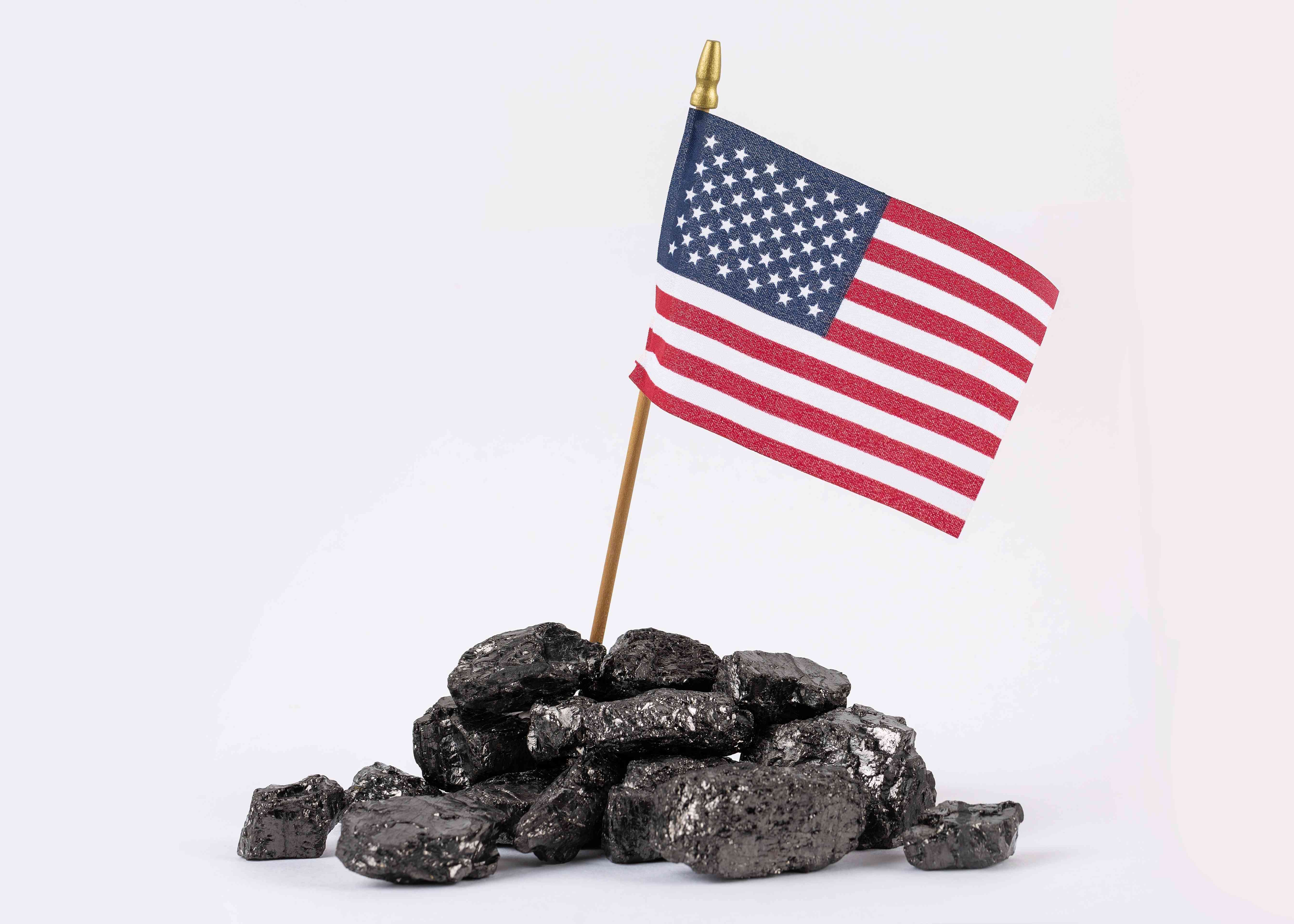
Since January 2025, the Trump administration has translated US corporate interests in energy and critical minerals into national security policy, framing Latin America as a priority zone under a "Trump Corollary" to the Monroe Doctrine. Through military pressure, interventions (notably in Venezuela), and bilateral security and critical minerals agreements, Washington seeks resource access amid competition with China, reshaping regional sovereignty, energy governance, and mineral extraction dynamics across Latin American States.
This brief essay argues that Donald Trump's second administration has been marked by a willingness to openly deploy US military force to secure the foreign supply of both longstanding and new raw materials, especially with a view to serving the interests of big techs. This group of high-tech transnational companies provides the digital infrastructure and services on which much of the country's economic, social, and political life has come to depend (Birch & Bronson 2022). The closeness between the sector's leading business figures and Trump is constant and visible. CEOs of companies such as Meta, Amazon, Google, Tesla/SpaceX, Apple, and Nvidia, among others, were present at his inauguration in January 2025 (Swenson 2025) and accompanied him on his highly anticipated international trip to China in May 2026 (Hays & Mitchell 2026).
The big techs aim to secure a safe and abundant supply of two types of raw materials in particular: energy sources to meet the growing demand of artificial intelligence systems (O'Donnell & Crownhart 2025), and critical minerals for manufacturing various kinds of electronics, such as phones and computers, for both civilian and military use (Allen 2025). Trump translated this corporate agenda into a matter of national interest initially through the National Energy Emergency Declaration, issued on the first day of his new term. According to the document, the United States must make its entire energy supply chain–which includes critical minerals, oil (and its derivatives), gas, coal, uranium, biofuels, and geothermal and hydroelectric sources–more reliable, diversified, and affordable (The White House 2025a).
The external dimension of this course of action was set out in the National Security Strategy, published in November 2025, which lists national economic security as one of the priorities to be pursued by the Trump administration (The White House 2025b). The strategy seeks to increase US self-sufficiency and includes objectives such as maintaining the country's dominance in the international energy sector, rejecting restrictions on the use of fossil fuels imposed by the “ideology” of climate change, and ensuring access to material and mineral supply chains around the world, to be monitored by US intelligence services. The Americas are described as strategic for these purposes, where it is expected to see a greater military presence aimed at deterring extra-regional powers, in the name of a Trump Corollary to the Monroe Doctrine.
Such doctrine has, since 1823, conceived the Americas as an exclusive US sphere of influence amid ongoing struggles for independence in the region. In 1904, President Theodore Roosevelt announced a first addendum to the doctrine, bearing his name, that signaled the US intention to police the Americas and intervene in domestic sovereignties whenever it saw fit to keep European powers out of the region. Now, Trump is updating this intent by shifting the focus toward deterring Chinese power and consolidating the dominance of the big techs. The next sections describe the first movements toward this aim.
VENEZUELA AS THE FIRST TEST OF THE TRUMP COROLLARY
The Southern Command (Southcom) is the operational unit of the US Department of War responsible for carrying out military policy toward Latin America and the Caribbean (except for Mexico, which falls under Northcom). Each year, the Southcom commander gives a public statement to the US Senate reporting on the command's activities. In February 2025, Admiral Alvin Holsey (2025), appointed by Trump to the post, stressed that reducing China's influence in the region would be a priority, since the Asian country would rival the United States in access to raw materials, minerals, energy, logistics infrastructure, and telecommunications. Countering the actions of Russia, Iran, organized crime, and undocumented migrants were also cited as objectives by Holsey. The preferred means of US defense, according to him, would be to build military partnerships with local governments, including capacity-building cooperation, joint exercises, and humanitarian assistance.
However, in October 2025, Admiral Holsey announced that he would step down from leading Southcom the following December, in a move described by the press as having been forced by Trump's Secretary of War, Pete Hegseth, who was pushing for a more “flexible” posture at the institution (Stewart 2025). The announcement came just weeks after Hegseth ordered that everyone on board a Venezuelan vessel suspected of trafficking drugs in the Caribbean Sea be killed in a missile airstrike (Horton & Nakashima 2025). This type of action would be repeated in the following months, under the command of a new Task Force Against Narcotics, created by Hegseth to take over such operations from Southcom. In his farewell address, Admiral Holsey stressed that democracy, the rule of law, and human rights should be the values guiding US defense policy (Stewart 2025).
Shortly thereafter, on January 3, 2026, the United States invaded Venezuela for a few hours and seized the country's president and first lady, Nicolás Maduro and Cilia Flores. The couple was taken to a prison in New York, accused of belonging to a “narco-terrorist” network that sent drugs to the United States. The move was ordered by the White House without any debate in Congress and drew criticism from China, the largest buyer of Venezuelan oil, for violating international law (Xinhua 2026). In Maduro's place, Venezuela's National Assembly installed the Vice President, Delcy Rodríguez. Over the following months, Rodríguez facilitated foreign investment in Venezuela's oil and mining sectors (OPSA 2026), while US attacks on vessels in the Caribbean declined.
GROWING PRESSURE OVER ENERGY
Following the exhibition of the Trump Corollary through the invasion of Venezuela, a pattern in US action in Latin America soon became evident: securing access to local energy sources through the threat of force or military presence, under the pretext of combating drug trafficking. On the day of Maduro's arrest, Trump declared that his Colombian counterpart, Gustavo Petro, would be the next target of attention, accusing him of involvement with drug cartels (Reuters 2026b). Tensions eased in February, after Petro offered Colombian ports as an outlet for Venezuelan-produced oil to be exported to the United States (Monitor Mercantil 2026).
With another of Venezuela's neighbors, Guyana, the United States signed a military cooperation agreement to patrol waters as part of the effort to combat drug trafficking in late 2025 (Exame 2025). The action may also help protect offshore oil exploration carried out chiefly by Exxon Mobil, amid social pressure in Guyana for a renegotiation of the contract, which is considered disadvantageous to the local State. An attempted renegotiation by Irfaan Ali's government, however, was publicly rebuked by the US ambassador to Guyana in April (Kaieteur News 2026), in an explicit intervention in domestic affairs.
With Ecuador, in March 2026, Southcom launched joint military operations at sea and on land to combat drug trafficking and illegal mining, after President Daniel Noboa's attempt to install permanent US military bases in the country was rejected by the population in a referendum (Bermúdez 2026). The following month, the United States signed a memorandum of understanding on cooperation in nuclear energy production in Ecuador, in order to expand and diversify its energy mix (Ecuador 2026). This type of energy is coveted by some big techs for its capacity to produce electricity around the clock (Rapier 2026).
Beyond the Amazonian region, in Paraguay, President Santiago Peña authorized, in March 2026, the presence of US military personnel and government officials for security and defense activities with diplomatic immunity, especially to combat criminal networks operating in the Triple Frontier with Argentina and Brazil (Taddeo 2026). In this border region, the United States also plans to use the electricity generated for Paraguay by the Itaipu Hydroelectric Dam to supply data centers for artificial intelligence companies (Modanez & Rocha 2025).
To bring these and other bilateral initiatives together into a collective effort, the United States organized the Shield of the Americas event in Florida on March 7, 2026, attended by the presidents of 12 countries regarded as allies: Argentina, Bolivia, Chile, Costa Rica, Ecuador, El Salvador, Guyana, Honduras, Panama, Paraguay, the Dominican Republic, and Trinidad and Tobago. Speaking at the event, US Secretary of State Marco Rubio said that the platform aims to facilitate day-to-day dialogue among governments on defense, security, energy, and trade (United States 2026). Kristi Noem, US Secretary of Homeland Security, was named Special Envoy for the Shield of the Americas, tasked with deepening cooperation with exclusive dedication.
THE PURSUIT OF CRITICAL MINERALS
As mentioned above, the US National Security Strategy goes beyond strict energy supply and also considers access to minerals as one of the pillars of the country's economic security (The White House 2025b). Along these lines and under the “America First” mantra, the Trump administration has been reinforcing the need to depend less on other countries for the supply of critical and strategic minerals: Executive Order 14241, issued in March 2025, for example, directs efforts to increase domestic mineral production (The White House 2025c). However, the United States does not have the reserves or extraction and processing capacity to meet all its domestic demand and has been working to strengthen ties with countries that supply these materials. In the proclamation of January 14, 2026 (Adjusting Imports of Processed Critical Minerals and Their Derivative Products into the United States), Trump affirmed that it would be necessary to negotiate agreements with other countries for the supply of critical minerals as quickly as possible. Imposing import restrictions, such as tariffs, could happen if satisfactory agreements are not reached within the desired timeframe. To this end, he directed the US Secretary of Commerce to negotiate such agreements (The White House 2026a).
Since January 2025, the United States has invested more than US$ 1 billion in critical minerals in Latin America, especially in projects to secure supplies of lithium, copper, and rare earths (Jamasmie 2026). On February 4, 2026, the United States organized a Critical Minerals Ministerial, bringing together 54 countries, with the stated aim of reorganizing global supply chains. Seven Latin American countries took part: Argentina, Bolivia, Brazil, Ecuador, Mexico, Paraguay, and Peru. At the event, the Forum on Resource Geostrategic Engagement (FORGE) was announced as the successor to the Mineral Security Partnership, positioning itself as a preferred zone for trade and investment in critical minerals, with mechanisms to coordinate minimum prices (Blakemore & Harmon 2026). In addition, 11 bilateral agreements on critical minerals were announced (United States 2026a).
The agreement with Argentina was one of the first to be signed. President Javier Milei stated that the initiative should boost the country's economic growth. Planned activities include the use of public and private financing instruments, the simplification of administrative licensing procedures, and cooperation in areas such as geological mapping, recycling, and critical materials management (Garcia 2026a). The agreement builds on the Memorandum of Understanding on Critical Minerals that the two countries signed in August 2024 (US Embassy in Argentina 2024). One of the main minerals extracted in Argentina is lithium: the country is part of the so-called “lithium triangle,” together with Bolivia and Chile, which together hold more than half of the world's reserves of the mineral (Ives, Nascimento & Closs 2023).
The United States does not yet have an agreement of this kind with Bolivia, which has handled the question of its mineral resources with greater national autonomy than its Argentine neighbor for the past two decades, during the Movimiento al Socialismo (MAS) administrations of Evo Morales and Luis Arce. However, following changes in the Bolivian Presidency and the rise to power of the center-right Rodrigo Paz, the scenario has been shifting. In late April 2026, Bolivia and the United States signed a Memorandum of Understanding on Critical Minerals (AFP 2026). With Chile, meanwhile, the US government signed an agreement on mining and security in April 2026. According to Chile's Minister of Foreign Affairs, Francisco Pérez Mackenna, the agreement seeks to strengthen secure and resilient supply chains, promote value-added production, and create conditions to attract investment (Orellana 2026). The agreement follows a joint declaration signed by the two countries in March 2026 on critical minerals and rare earths (Subrei 2026).
Peru, Ecuador, and Paraguay also signed critical minerals agreements with the United States in February 2026. In Peru's case, a bilateral Memorandum of Understanding on the subject had already existed since August 2024 (US Embassy in Peru 2024). In Ecuador's case, this is the first agreement of its kind between the two countries. For Ecuador's Chamber of Mining, the agreement represents a milestone for the country and offers an opportunity to position it as a reliable supplier, given that only 1% of Ecuadorian territory is currently under exploration (Primicias 2026). In Paraguay's case, according to the government of Santiago Peña, the two countries committed to intensifying cooperation efforts to accelerate the secure supply of critical minerals and strengthen their industrial bases (MRE Paraguay 2026). The country is also undergoing a reform of its mining legislation, aimed at attracting new private investment, particularly in the critical minerals sector (Infobae 2026a).
With respect to Venezuela, the US government has been benefiting from new mineral policies adopted by interim president Delcy Rodríguez. On March 9, the country's National Assembly approved a new mining law to attract private investment to the sector (Valor Econômico 2026). A few days later, the US government approved licenses for investment and operations in critical minerals in Venezuela (Shakil & Martinez 2026). With Mexico, meanwhile, a Critical Minerals Action Plan was announced on February 4, aimed, according to the Office of the US Trade Representative, at developing coordinated trade policies and mechanisms to mitigate vulnerabilities in the critical minerals supply chain (Porsch 2026). US Trade Representative Jamieson Greer stated that the plan underscores the two countries' commitment to confronting “distortions in the global market that have left North American supply chains vulnerable to disruption” (Reuters 2026a).
Finally, a critical minerals agreement was also proposed to Brazil, but it did not receive a positive response (Ionova & Faddul 2026). Even so, in early April 2026, the US government signed a Memorandum of Understanding with the government of the state of Goiás for cooperation in the critical minerals sector, which raised concern within the Brazilian federal government (Garcia 2026b). Later that month, the US company USA Rare Earth (USAR) announced the purchase of the mining company Serra Verde Group, located in Minaçu, Goiás. The company operates the only mine in Brazil that produces and processes rare earths. It is also the only one outside Asia with commercial-scale production capacity for four rare earth elements: neodymium, praseodymium, terbium, and dysprosium (ClimaInfo 2026).
CORE AND CRACKS OF THE TRUMP COROLLARY
As the previous sections illustrate, military interventionism and extractivism function as two faces of the Trump Corollary that the United States is currently applying to Latin America. It is a re-edition of imperialist practices that have marked the history of center-periphery relations in the region, this time for the benefit of big tech companies. The greater military presence and the threat of using force against non-aligned governments are instruments of a strategy aimed at deterring extra-regional powers, especially China, while simultaneously gaining greater influence over critical infrastructures, particularly in the areas of energy and mining. This strategy can also be interpreted as part of a broader “geopolitics of artificial intelligence,” in which Washington and Beijing are competing for hegemony over raw materials, infrastructure, equipment, and advanced technology to increase the productivity of their economies (Stacciarini & Gonçalves 2025).
There are, however, cracks in the US project. Domestically, there is no consensus among the military over the approach of disregarding international law, as illustrated by Admiral Holsey's decision to step down from the leadership of Southcom. Changes in the composition of the US Congress following the midterm elections in November 2026 could increase opposition in that sense. Regionally, the major political gap is the lack of Brazilian buy-in, as the country resists militarizing the fight against drug trafficking, maintains extensive energy cooperation with China, and demands greater sovereignty in the critical minerals’ exploration agreements sought by the United States. Brazil's presidential election in October 2026 will be a contest between keeping the country's position of autonomy for another four years, represented by Lula da Silva, or shifting it toward greater deference to Trump, as the Bolsonarist opposition demands. The disposition of the White House to interfere in the Brazilian election has gained public notoriety (Ionova & Wong 2026).
At the global level, the political economy of the Trump Corollary runs counter to the fight against climate change, one of today's foremost collective problems for humanity. By violating basic principles of international law, weakening multilateralism, refusing to give up fossil fuel production, and disregarding debates on environmental justice in mining projects, the United States is engaging in climate obstruction practices (Roberts et al. 2025), which delay the multilevel governance needed to mitigate greenhouse gas emissions and adapt human life to a warmer atmosphere. The socio-environmental costs of the Trump Corollary, therefore, extend beyond Latin America and, contrary to the sought-after exclusive sphere of influence, may end up multiplying transnational reactions and expanding avenues of counter-hegemony in the region (Stephens 2026).
CONCLUDING REMARKS
The Trump Corollary represents a contemporary and aggressive update to the Monroe Doctrine. It seeks to reinforce the 19th-century framing of Latin America as an exclusive US sphere of influence, where military power must now be instrumentalized to secure energy and critical minerals, especially for the benefit of big tech companies. By translating powerful corporate interests into national security policy, the Trump administration aims to deter Chinese influence and control strategic supply chains in the region. To achieve favorable deals, the White House is openly inclined to utilize different forms of interventionism, ranging from the invasion of territories, the replacement of presidents, the threat of the use of military force, military presence, and interference in elections. Despite the enormous pressure the Trump Corollary imposes on the autonomy of Latin American countries, there is political space for regional and transregional resistance due to the multiplication of socio-environmental conflicts expected to follow such a Trumpist line of action.
References
AFP. 2026. “Bolívia busca cooperação tecnológica dos EUA para desenvolver indústria de lítio.” AFP, May 6, 2026. https://noticias.uol.com.br/ultimas-noticias/afp/2026/05/06/bolivia-busca-cooperacao-tecnologica-dos-eua-para-desenvolver-industria-de-litio.htm.
Allen, Karen. 2025. “Critical Minerals and Tech Dependency, a Key G20 Issue for Africa.” Institute for Security Studies, July 10, 2025. https://issafrica.org/iss-today/critical-minerals-and-tech-dependency-a-key-g20-issue-for-africa.
Bermúdez, Ángel. 2026. “EE.UU. y Ecuador lanzan operaciones militares conjuntas contra ‘organizaciones terroristas’ en el país sudamericano.” BBC Brasil, March 4, 2026. https://www.bbc.com/mundo/articles/cvg88xw7xgno.
Birch, Kean & Kelly Bronson. 2022. “Big Tech.” Science as Culture 31(1): 1-14. https://doi.org/10.1080/09505431.2022.2036118.
Blakemore, Reed & Alexis Harmon. 2026. “US Critical Minerals Policy Goes Collaborative with FORGE.” Atlantic Council, February 12, 2026. https://www.atlanticcouncil.org/dispatches/us-critical-minerals-policy-goes-collaborative-with-forge/.
ClimaInfo. 2026b. “Empresa dos EUA compra única mineradora de terras raras do Brasil.” ClimaInfo, April 23, 2026. https://climainfo.org.br/2026/04/23/empresa-dos-eua-compra-unica-mineradora-de-terras-raras-do-brasil/.
Ecuador. 2026. “Ecuador y Estados Unidos fortalecen su cooperación estratégica en materia de energía nuclear civil.” Quito, April 1, 2026. https://www.cancilleria.gob.ec/2026/04/01/ecuador-y-estados-unidos-fortalecen-su-cooperacion-estrategica-en-materia-de-energia-nuclear-civil/.
Exame. 2025. “Guiana amplia cooperação militar com EUA em meio à crise com Venezuela.” Exame, December 10, 2025. https://exame.com/mundo/guiana-amplia-cooperacao-militar-com-eua-em-meio-a-crise-com-venezuela/.
Garcia, Gabriel. 2026a. “Com financiamentos, Argentina e EUA fecham acordo de minerais críticos.” CNN Brasil, February 4, 2026. https://www.cnnbrasil.com.br/economia/macroeconomia/com-financiamentos-argentina-e-eua-fecham-acordo-de-minerais-criticos/.
Garcia, Gabriel. 2026b. “Acordo EUA-Goiás prevê respeito às leis brasileiras e não cria obrigações.” CNN Brasil, April 2026. https://www.cnnbrasil.com.br/infra/acordo-eua-goias-preve-respeito-as-leis-brasileiras-e-nao-cria-obrigacoes/.
Hays, Kali & Archie Mitchell. 2026. “Elon Musk and Jensen Huang among CEOs Joining Trump on China Trip.” BBC, May 13, 2026. https://www.bbc.com/news/articles/c5yx757w048o.
Holsey, Admiral Alvin. 2025. “Statement before the 119th Congress Senate Armed Services Committee.” US Southern Command, February 13, 2025. https://www.southcom.mil/Portals/7/Documents/Posture%20Statements/2025_SOUTHCOM_Posture_Statement_FINAL.pdf.
Horton, Alex & Ellen Nakashima. 2025. “Hegseth Order on First Caribbean Boat Strike, Officials Say: Kill Them All.” The Washington Post, November 28, 2025. https://www.washingtonpost.com/national-security/2025/11/28/hegseth-kill-them-all-survivors-boat-strike/.
Infobae. 2026a. “Paraguay se sumó a la iniciativa de EE. UU. sobre minerales críticos.” Infobae, February 5, 2026. https://www.infobae.com/america/america-latina/2026/02/05/paraguay-se-sumo-a-la-iniciativa-de-eeuu-sobre-minerales-criticos/.
Ionova, Ana & Ju Faddul. 2026. “US Rare Earth Minerals, Brazil and China.” The New York Times, March 20, 2026. https://www.nytimes.com/2026/03/20/world/americas/us-rare-earth-minerals-brazil-china.html.
Ionova, Ana & Edward Wong. 2026. “US May Label Brazilian Gangs as Terror Groups, After Push by the Bolsonaros.” The New York Times, March 27, 2026. https://www.nytimes.com/2026/03/27/world/americas/brazil-gangs-terror-trump-bolsonaro.html.
Ives, Diogo & Jefferson Nascimento & Marília Closs. 2023. “Geopolítica da transição energética: o Triângulo ABC do lítio na América do Sul.” Boletim OPSA 4: 33-39. https://opsa.com.br/wp-content/uploads/2024/02/Boletim_OPSA_2023_n4.pdf.
Jamasmie, Cecilia. 2026. “US Pours $1B into Latin America Critical Minerals.” MINING.COM, March 12, 2026. https://www.mining.com/us-pours-1b-into-into-latin-america-critical-minerals/.
Kaieteur News. 2026. “US Ambassador: Changing Agreed Deals Sends ‘Bad Signal’ to Investors.” Kaieteur News, April 2, 2026. https://kaieteurnewsonline.com/2026/04/02/us-ambassador-changing-agreed-deals-sends-bad-signal-to-investors/.
Modanez, Camila & Izabela Rocha. 2025. “Interesse americano por Itaipu revela como a extração energética integra nova face da colonização tecnológica.” O Globo, August 14, 2025. https://oglobo.globo.com/economia/noticia/2025/08/14/interesse-americano-por-itaipu-revela-como-a-extracao-energetica-integra-nova-face-da-colonizacao-tecnologica.ghtml.
Monitor Mercantil. 2026. “Petro oferece a Trump ajuda da Ecopetrol para reativação energética da Venezuela.” Monitor Mercantil, February 4, 2026. https://monitormercantil.com.br/petro-oferece-a-trump-ajuda-da-ecopetrol-para-reativacao-energetica-da-venezuela/.
MRE Paraguay (Ministerio de Relaciones Exteriores). 2026. “Paraguay refuerza alianza con EE.UU. y se suma a iniciativa sobre minerales críticos.” MRE Paraguay, February 2026. https://www.mre.gov.py/paraguay-refuerza-alianza-con-ee-uu-y-se-suma-a-iniciativa-sobre-minerales-criticos/.
O’Donnell, James & Casey Crownhart. 2025. “We Did the Math on AI’s Energy Footprint.” MIT Technological Review, May 20, 2025. https://www.technologyreview.com/2025/05/20/1116327/ai-energy-usage-climate-footprint-big-tech/.
OPSA. 2026. “Delcy Rodríguez completa três meses na presidência da Venezuela.” Conjuntura Latitude Sul 10 (4): 8. https://opsa.com.br/wp-content/uploads/2026/05/4.Conjuntua_Abril_2026.pdf.
Orellana, Francisca. 2026. “Chile, US Sign Critical Minerals and Crime Agreements.” UPI, April 21, 2026. https://www.upi.com/Top_News/World-News/2026/04/21/latam-chile-US-critical-minerals-crime-agreements/8881776797929/.
Porsch, Thais. 2026. “EUA e México trabalharão em plano de ação sobre minerais críticos, afirma USTR.” CNN Brasil, February 4, 2026. https://www.cnnbrasil.com.br/economia/macroeconomia/eua-e-mexico-trabalharao-em-plano-de-acao-sobre-minerais-criticos-afirma-ustr/.
Primicias. 2026. “Ecuador y Estados Unidos firman acuerdo sobre tierras raras y minerales críticos.” Primicias, February 4, 2026. https://www.primicias.ec/economia/ecuador-estados-unidos-acuerdo-tierras-raras-115463.
Reuters. 2026a. “US, Mexico to Develop Coordinated Trade Policies for Critical Minerals.” Reuters, February 4, 2026. https://www.reuters.com/world/china/us-mexico-develop-coordinated-trade-policies-critical-minerals-2026-02-04/.
Reuters. 2026b. “Trump ameaça operação militar contra a Colômbia após ataque à Venezuela.” Reuters, January 5, 2026. https://www.reuters.com/world/americas/trump-says-new-military-operation-focused-colombia-sounds-good-him-2026-01-05/.
Roberts, Timmons, Carlos Milani, Jennifer Jacquet, Christian Downie (Eds.). 2025. Climate Obstruction: A Global Assessment. New York: Oxford University Press. https://doi.org/10.1093/oso/9780197787144.001.0001.
Shakil, Ismail & Christian Martinez. 2026. “EUA emite novas licenças relacionadas à Venezuela para minerais críticos.” CNN Brasil, March 2026. https://www.cnnbrasil.com.br/infra/eua-emite-novas-licencas-relacionadas-a-venezuela-para-minerais-criticos/.
Stacciarini, João & Ricardo Gonçalves. 2025. “Data centers, minerais críticos, energia e geopolítica: as bases da Inteligência Artificial.” Sociedade e Natureza, Uberlândia, v. 37, e77215. https://doi.org/10.14393/SN-v37-2025-77215x.
Stephens, Jennifer. 2026. “Artificial Intelligence Spells a Real Climate Disaster.” The Irish Times, May 21, 2026. https://www.irishtimes.com/environment/climate-crisis/2026/05/21/artificial-intelligence-spells-a-real-climate-disaster/.
Stewart, Phil. 2025. “US Admiral Leading US Troops in Latin America Steps Down.” Reuters, December 12, 2025. https://www.reuters.com/world/americas/us-admiral-leading-us-troops-latin-america-step-down-2025-12-12/.
Subrei (Subsecretaría de Relaciones Económicas Internacionales de Chile). 2026. “Chile y Estados Unidos firman declaración conjunta sobre minerales críticos y tierras raras.” Subrei, March 13, 2026. https://www.subrei.gob.cl/sala-de-prensa/noticias/detalle-noticias/2026/03/13/chile-y-estados-unidos-firman-declaraci%C3%B3n-conjunta-sobre-minerales-cr%C3%ADticos-y-tierras-raras.
Swenson, Ali. 2025. “Trump, a Populist President, Is Flanked by Tech Billionaires at His Inauguration.” Associated Press, January 21, 2025. https://apnews.com/article/trump-inauguration-tech-billionaires-zuckerberg-musk-wealth-0896bfc3f50d941d62cebc3074267ecd.
Taddeo, Luciana. 2026. “Congresso paraguaio ratifica presença de militares dos EUA no país.” CNN Brasil, March 11, 2026. https://www.cnnbrasil.com.br/internacional/congresso-paraguaio-ratifica-presenca-de-militares-dos-eua-no-pais/.
The White House. 2025a. “Declaring a National Energy Emergency.” The White House, January 20, 2025. https://www.whitehouse.gov/presidential-actions/2025/01/declaring-a-national-energy-emergency/.
The White House. 2025b. “National Security Strategy of the United States of America.” The White House, November 2025. https://www.whitehouse.gov/wp-content/uploads/2025/12/2025-National-Security-Strategy.pdf.
The White House. 2025c. “Immediate Measures to Increase American Mineral Production.” The White House, March 20, 2025. https://www.whitehouse.gov/presidential-actions/2025/03/immediate-measures-to-increase-american-mineral-production/.
The White House. 2026a. “Adjusting Imports of Processed Critical Minerals and Their Derivative Products into the United States.” The White House, January 14, 2026. https://www.whitehouse.gov/presidential-actions/2026/01/adjusting-imports-of-processed-critical-minerals-and-their-derivative-products-into-the-united-states/.
United States. 2026a. “2026 Critical Minerals Ministerial.” US Department of State, February 4, 2026. https://www.state.gov/releases/office-of-the-spokesperson/2026/02/2026-critical-minerals-ministerial.
United States. 2026b. “Secretary of State Marco Rubio and Secretary of Homeland Security Kristi Noem at the Shield of the Americas Summit Working Lunch.” US Department of State, March 7, 2026. https://www.state.gov/releases/office-of-the-spokesperson/2026/03/secretary-of-state-marco-rubio-and-secretary-of-homeland-security-kristi-noem-at-the-shield-of-the-americas-summit-working-lunch/.
US Embassy in Argentina. 2024. “US and Argentina Launch Strategic Framework to Strengthen Critical Minerals Supply Chains.” US Mission Argentina, February 3, 2026. https://ar.usembassy.gov/u-s-and-argentina-launch-strategic-framework-to-strengthen-critical-minerals-supply-chains/.
US Embassy in Peru. 2024. “The United States of America and Peru Sign MoU to Strengthen Cooperation on Critical Minerals.” US Mission Lima, August 30, 2024. https://pe.usembassy.gov/the-united-states-of-america-and-peru-sign-mou-to-strengthen-cooperation-on-critical-minerals/.
Valor Econômico. 2026. “Venezuela avança com lei que deve abrir mineração a investimentos estrangeiros.” Valor Econômico, March 10, 2026. https://valor.globo.com/mundo/noticia/2026/03/10/venezuela-avanca-com-lei-que-deve-abrir-mineracao-a-investimentos-estrangeiros.ghtml.
Xinhua. 2026. “Xinhua Commentary: Venezuela Strike Shows Who Is Really Undermining the International Law.” Xinhua, January 3, 2026. https://english.news.cn/20260103/d15448ef4481409e908b418e7034251d/c.html.
Submitted: July 13, 2026
Accepted for publication: August 3, 2026
DOI: https://doi.org/10.54827/issn2764-7897.cebri2026.17.02.03.61-74.en
Copyright © 2026 CEBRI-Journal. This is an Open Access article distributed under the terms of the Creative Commons Attribution License, which permits unrestricted use, distribution, and reproduction in any medium, provided the original article is properly cited.
