CEBRI takes part in Seminar on the EFTA–Mercosur Free Trade Agreement
- 24 november 2026
International Trade Program
On November 1, the free trade agreement between Brazil and Norway entered into force. In this context, the Consulate General of Norway in Rio de Janeiro and Innovation Norway, in collaboration with the Royal Norwegian Embassy in Brasília, hosted the seminar “EFTA–Mercosur Free Trade Agreement: Business Opportunities and Strengthening Cooperation” on November 18, at the Official Residence of Norway in Rio de Janeiro. The event focused on the agreement and its implications for trade relations between Norway and Brazil. The Brazilian Center for International Relations (CEBRI) took part in the meeting, represented by Manoel Corrêa do Lago, CEBRI International Counselor; Stella Lacerda, Corporate Relations Analyst; Maria Fernanda Ferreira, Project Analyst; and Julia Soares, Project Assistant.

The program opened with a presentation by Thomas Granli, Innovation Norway's Director for Latin America, who provided an overview of how the agreement works in practice. Granli explained that tariffs will be gradually eliminated according to schedules ranging from immediate removal to periods of up to fifteen years. He also noted that companies must identify their products' codes and categories to determine the applicable treatment. Among the opportunities highlighted were the maritime and offshore industries, advanced electronic equipment, infrastructure and energy transition, digital services, and shipbuilding, as well as access to public procurement markets.
Next, Ana Cláudia Takatsu, from the International Trade Negotiations Department of Brazil's Ministry of Development, Industry, Trade and Services (MDIC), presented the structure of the agreement, which goes beyond tariff reductions to cover services, investment, intellectual property, government procurement, competition, trade facilitation, and a chapter on trade and sustainable development. She emphasized that the agreement establishes a permanent institutional framework, including a joint committee, a trade committee, and designated contact points, allowing regulatory and trade facilitation issues to be addressed on an ongoing basis.
According to Takatsu, Brazil has already implemented its customs systems and tariff preferences in coordination with the Federal Revenue Service. She also explained that proof of origin may be provided through either a certificate or a self-declaration, and that the relevant documentation must be retained for at least five years. In the services sector, she highlighted Brazil's commitment to exempting vessels flying the flags of EFTA countries from lighthouse usage fees.
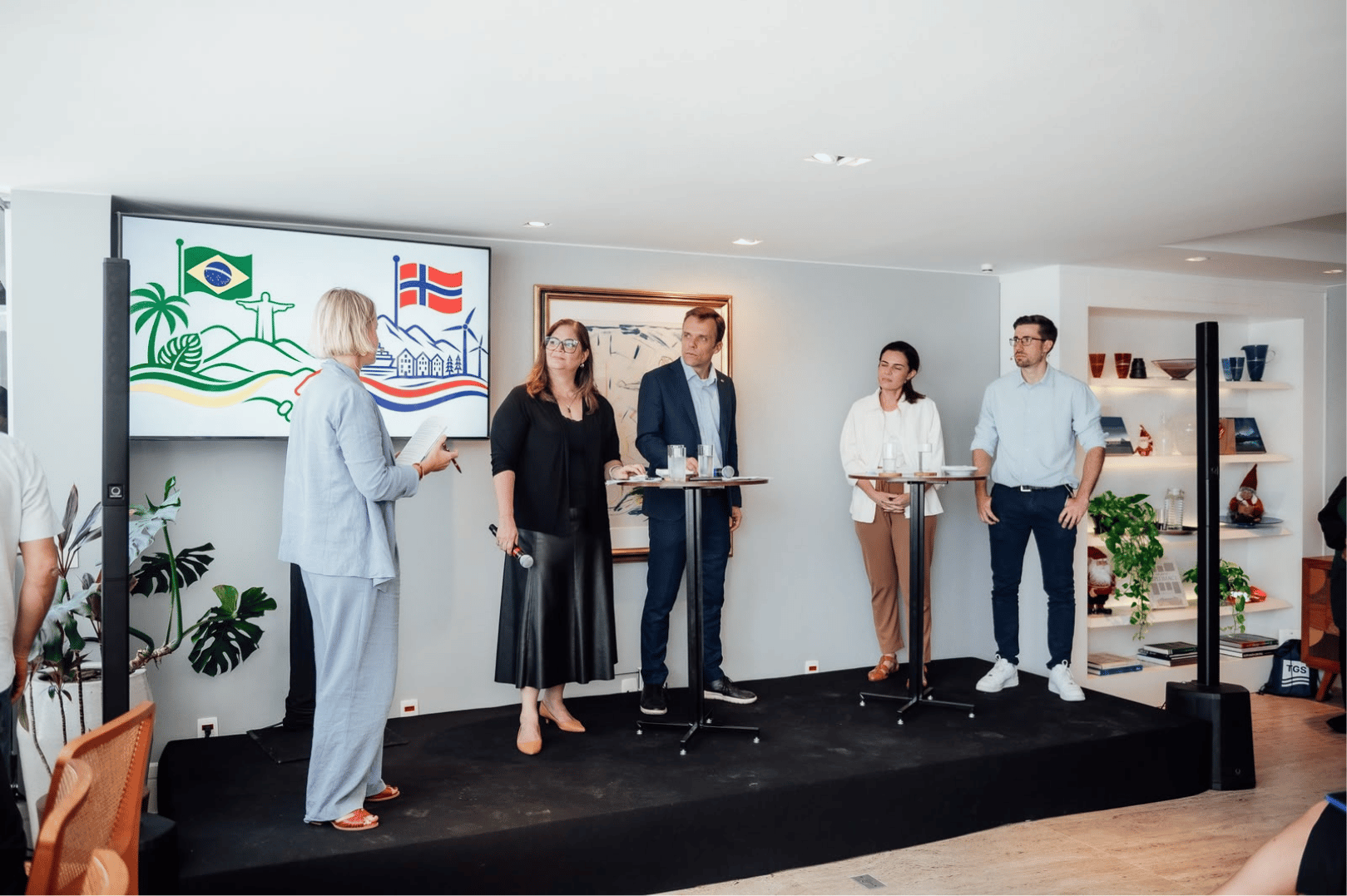
Following the presentations, representatives of Norwegian companies DOF Brasil and Equinor discussed the practical challenges of implementing the agreement, with Thomas Granli as moderator. Topics included adapting systems and suppliers to the new rules, the eligibility of inputs for preferential treatment, and ongoing changes to Brazil's Single Foreign Trade Window (Janela Única de Comércio Exterior), scheduled for January. Ana Cláudia reiterated that the agreement has no expiration date and that the applicable base tariffs cannot be increased, providing predictability at a time of rising tariffs worldwide. She also highlighted cooperation on technical barriers, certification, and mutual recognition, as well as the challenge of expanding access to the agreement for small and medium-sized enterprises, which currently face greater difficulties in taking advantage of its provisions.
CEBRI's participation in the seminar reaffirmed the organization's engagement in monitoring the Mercosur trade agreement agenda and strengthening institutional ties with the Consulate General of Norway and Innovation Norway. The meeting also expanded dialogue with the Brazilian government and Norwegian companies operating in Brazil, providing an opportunity to closely follow the first steps in implementing the agreement and the challenges associated with its use, particularly by small and medium-sized enterprises.
Authors