CEBRI, IDB, and the Ministry of Mines and Energy discuss Brazil’s strategic priorities on critical minerals
- 11 august 2026
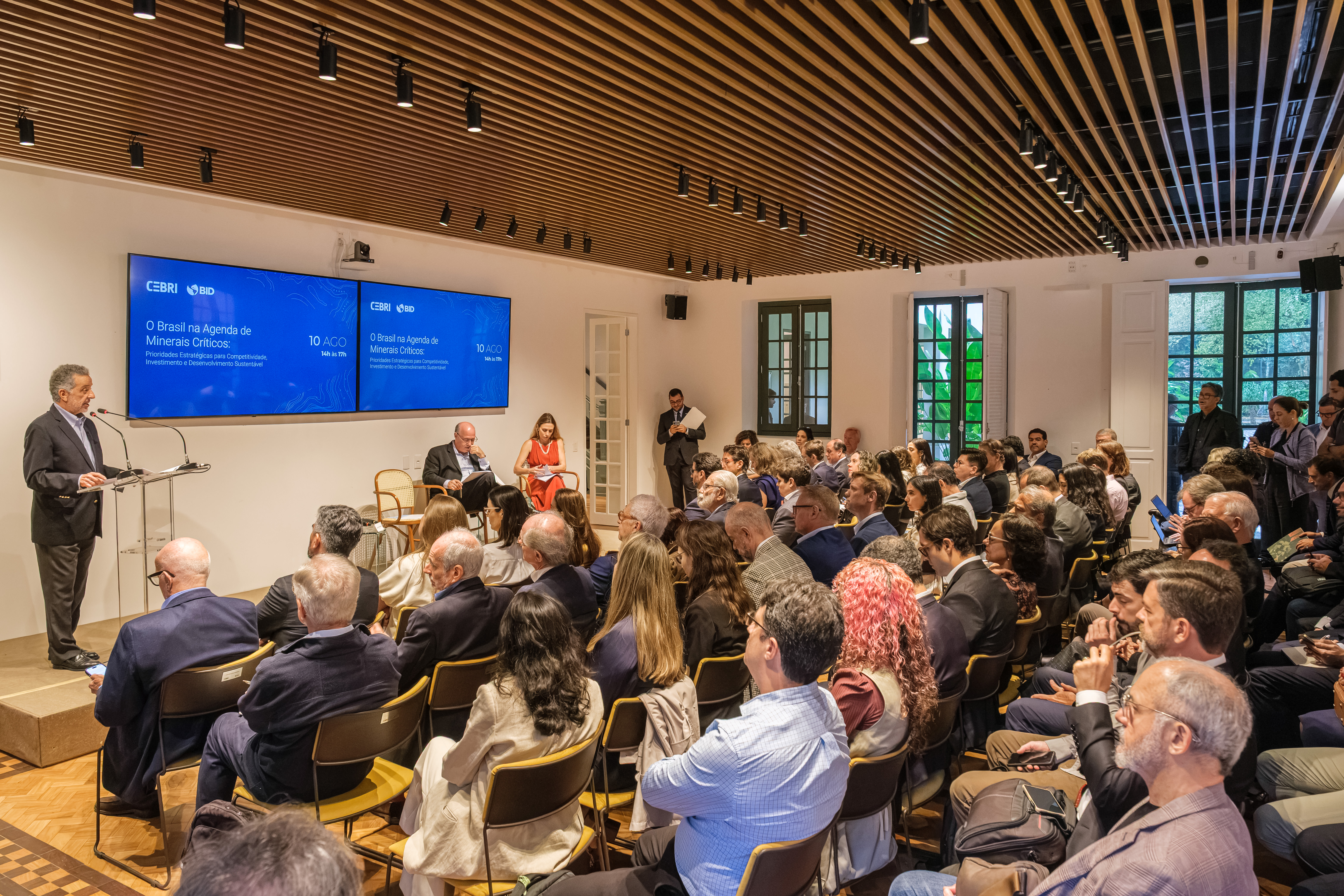
On Monday, August 10, CEBRI and the Inter-American Development Bank (IDB) held the event “Brazil on the Critical Minerals Agenda: Strategic Priorities for Competitiveness, Investment, and Sustainable Development.”
As the energy transition and digital transformation advance, driven by the expansion of data centers, batteries, and emerging technologies, critical minerals are becoming increasingly important to economic and industrial development, reinforcing the need for a national strategy for the sector.
Against this backdrop, the event brought together representatives from government, industry, financial institutions, academia, and international organizations to discuss Brazil’s priorities on the critical and strategic minerals agenda.
The opening remarks were delivered by José Pio Borges, Chairman of CEBRI’s Board of Trustees, followed by a discussion with Ilan Goldfajn, President of the Inter-American Development Bank (IDB), and Anderson Arruda, Deputy National Secretary of the Department of Mineral Transformation and Technology at Brazil’s Ministry of Mines and Energy (MME).
“Brazil has a historic opportunity to turn its geological potential into industrial capacity and establish itself as a global player in rare earths and critical minerals.” — José Pio Borges
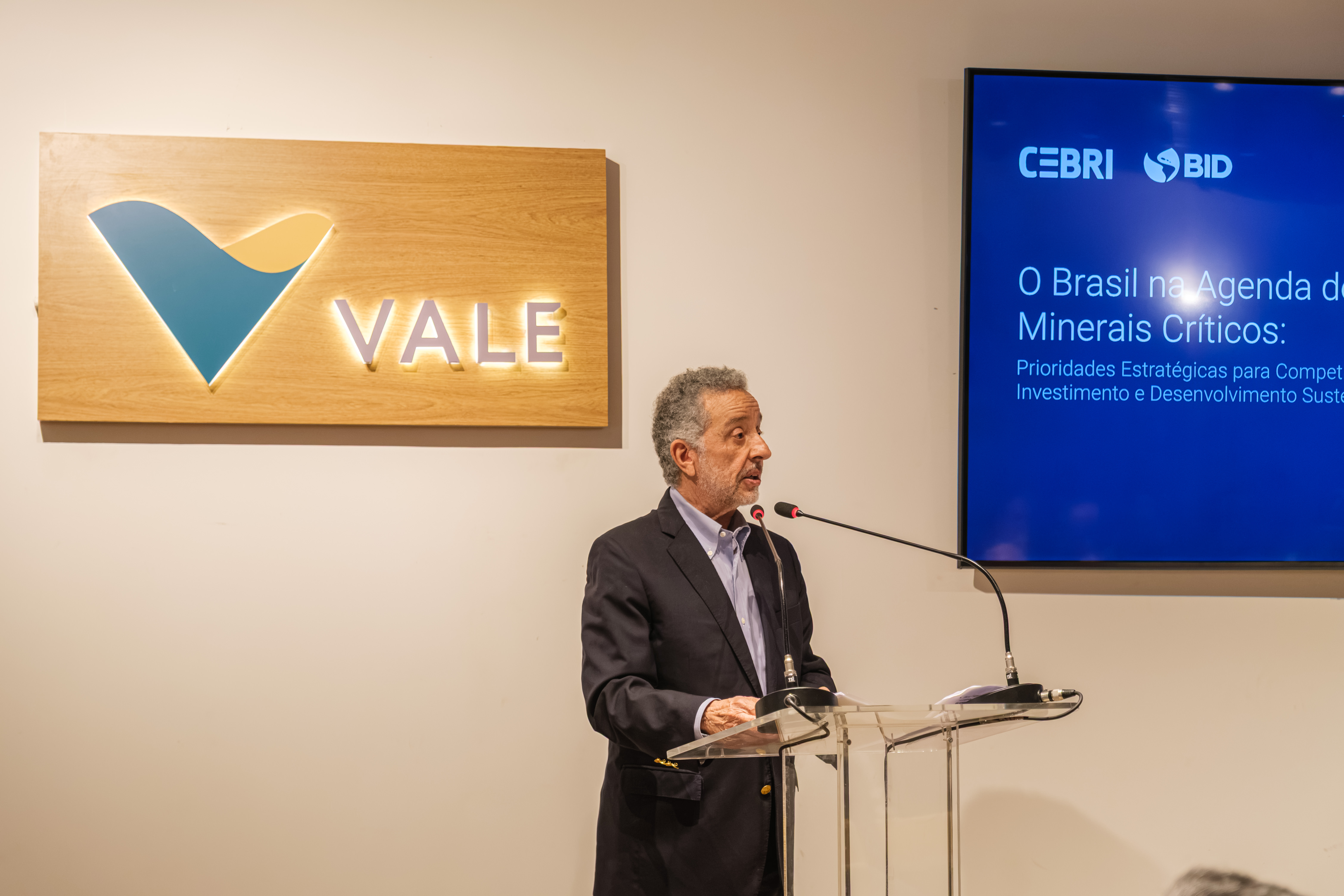
During the discussion, Ilan Goldfajn highlighted two factors expanding opportunities for Latin America and, particularly, Brazil: rising global demand for critical minerals, driven by technological advances and the energy transition, and the growing push to diversify supply chains amid an increasingly fragmented geopolitical landscape. To turn potential into productive capacity, countries need to make progress in areas such as knowledge, financing, and regulation.
“Countries need to make progress in knowledge, financing, and regulation to develop the critical minerals industry.” — Ilan Goldfajn
The event continued with the panel “Brazil’s Role in the Critical Minerals Agenda: Priorities, Partnerships, and Next Steps,” moderated by Rafaela Guedes, CEBRI Senior Fellow. The panel featured Débora Freire, Secretary for Economic Policy at Brazil’s Ministry of Finance; Tomás Serebrisky, Infrastructure and Energy Sector Manager at the IDB; José Luis Gordon, Director of Productive Development, Innovation, and Foreign Trade at the Brazilian Development Bank (BNDES); and Cinthia Rodrigues, Institutional Director of Women in Mining Brasil and R&D Manager at the Brazilian Mining Institute (IBRAM).
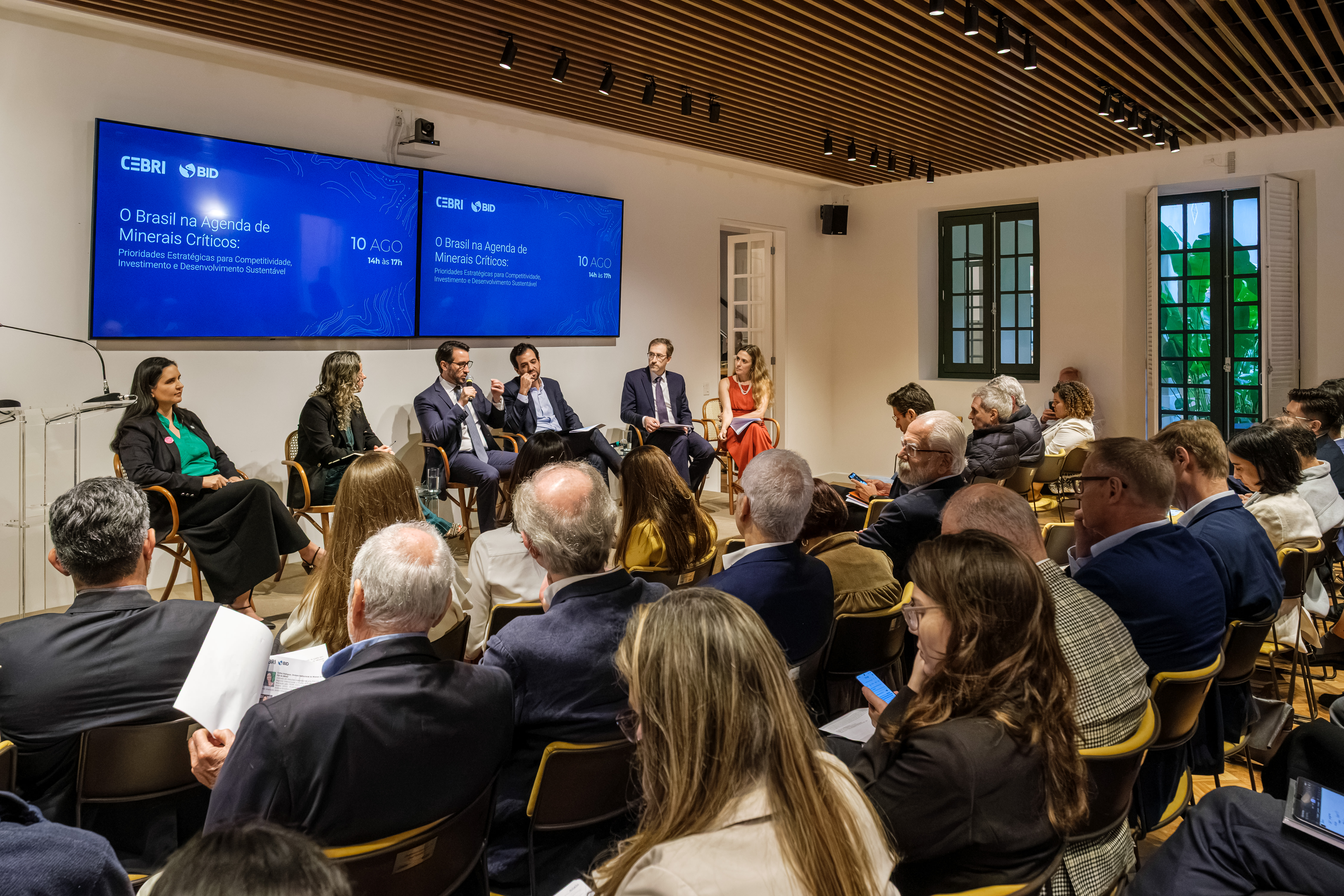
The discussion addressed progress on Brazil’s critical minerals agenda and the next steps for the country. Topics included public policy, financing, value addition, and international cooperation, as well as Brazil’s participation in regional initiatives such as IDB LAC Minerals, which aims to develop more secure and sustainable critical minerals value chains with greater value added across Latin America and the Caribbean.
The event also marked the launch of the final report of a study supporting the National Rare Earths Strategy (ENTR), prepared to inform the Ministry of Mines and Energy. The study was conducted by a consortium led by CEBRI in partnership with consultancy Vallya, subject-matter experts, and with support from BMA Advogados, under the Mining for the Energy Transition project, funded by the Inter-American Development Bank (IDB) with resources from the European Union.
The report presents assessments and recommendations to support federal government decision-making on rare earths and strengthen Brazil’s position in higher-value-added global supply chains. Its proposed targets include reaching 20% of global rare earth production, establishing annual separation capacity of 40,000 metric tons of rare earth oxides, and developing domestic capacity to produce 5,000 metric tons of permanent magnets per year by 2040.
Read the full study HERE
