CEBRI and NIRAS organize a workshop on the adoption of green hydrogen in Brazilian steelmaking Energy
- Energy
- 31 october 2024
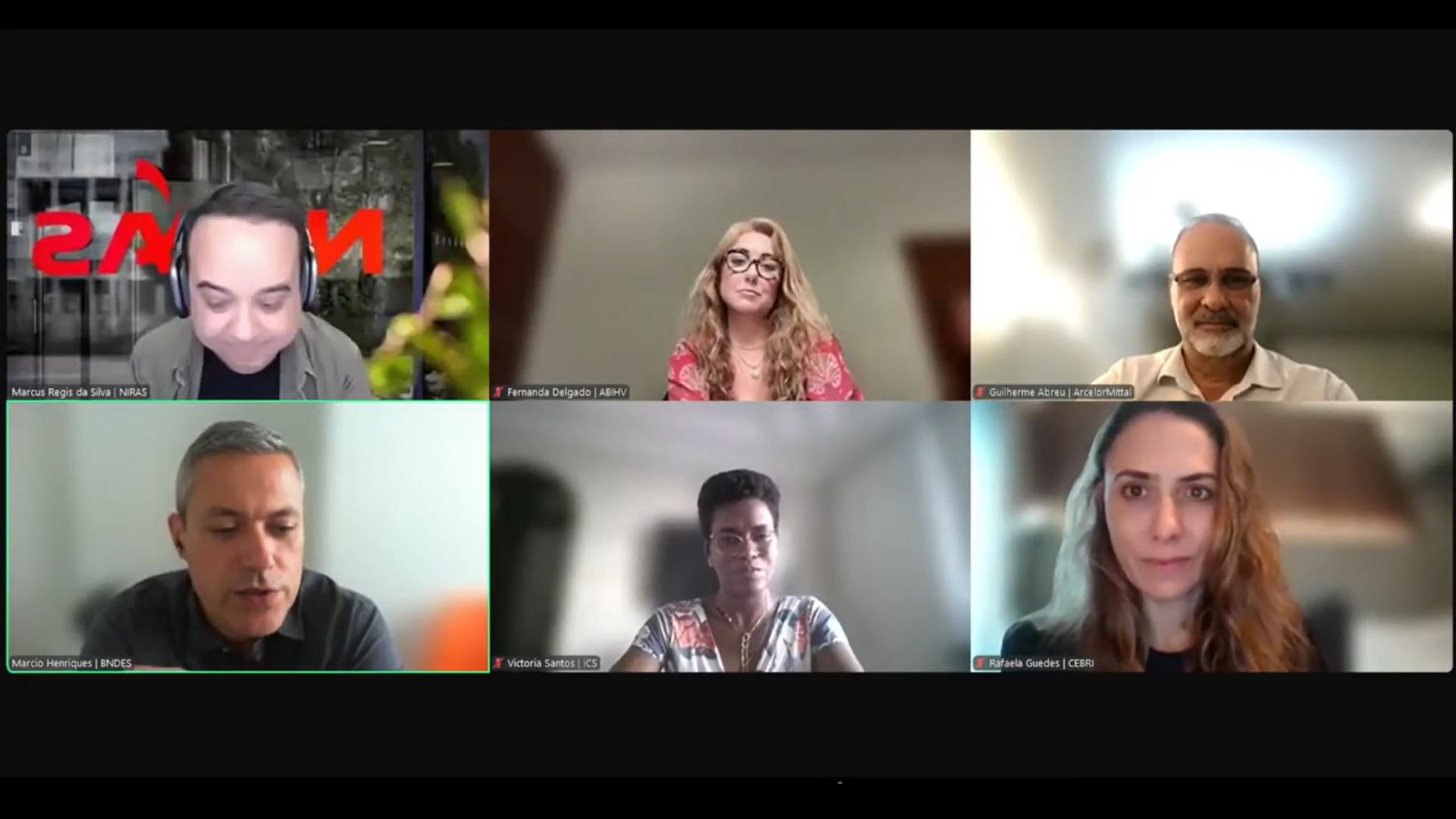
On October 25th, the Energy Center of CEBRI, in collaboration with NIRAS International Consulting, held the online workshop "Hydrogen in Brazilian Steelmaking: Challenges for Energy Transition." The meeting, part of the H2Brazil project implemented by GIZ and the Brazilian Ministry of Mines and Energy, with funding from the German Federal Ministry for Economic Cooperation and Development, included the presence of experts and representatives from the public and private sectors, as well as institutions, to discuss the challenges and opportunities of adopting green hydrogen in steelmaking in Brazil.
Among those present were Karina Sousa, Director of the Energy Transition Department at the Ministry of Mines and Energy; Rafaela Guedes, Senior Fellow at CEBRI; Victoria Santos, Energy and Industry Manager at the Climate and Society Institute (iCS); Markus Francke, Director of the H2Brazil project at GIZ Brazil; Felipe Toro, Leader of the Green H2 Economy team at NIRAS International Consulting; Marcus Regis, Project Manager and Business Developer at NIRAS International Consulting; Márcio Nunes Henriques, Deputy Head of the Department of Base and Extractive Industries at BNDES; Fernanda Delgado, CEO of the Brazilian Association of Green Hydrogen Industry (ABIHV); and Guilherme Abreu, General Manager of Sustainability at ArcelorMittal.
The discussion began with the role of low-emission hydrogen as an alternative for steelmaking and its significant carbon footprint, from which the needs in terms of infrastructure and costs were discussed. Throughout the debate, some key topics highlighted as central for a fair energy transition in steelmaking included the necessity to train the workforce for the new technologies being implemented and to ensure that communities affected by mining and the establishment of steel plants are included and benefit. Additionally, the importance of inclusive policies and social support for workers was emphasized.
Collaboration between the public, private, and civil society sectors, respecting regional particularities and focusing on fair economic and social development, was pointed out as crucial conditions for the success of the energy transition in steelmaking. The next few years will present a decisive window of opportunity for Brazil to establish itself as a reference in sustainable exports, balancing global competitiveness with commitments to social inclusion and sustainability.