
-

-

-
 PT | EN
PT | EN 
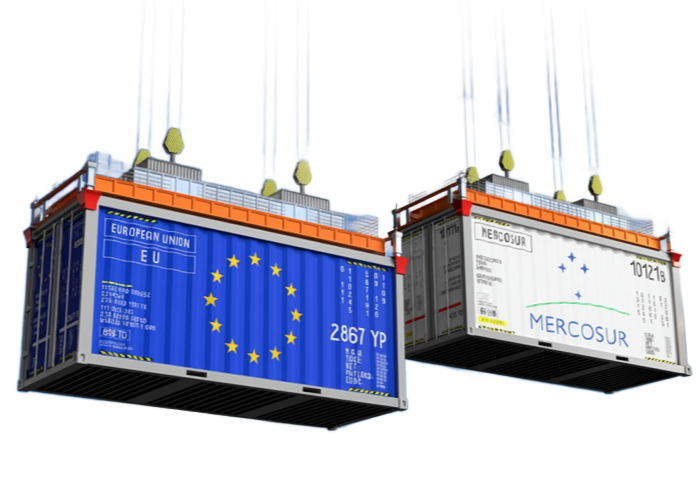
The signing of the Mercosur-European Union Partnership Agreement [1] occurs at a time of renewed dynamism in Mercosur's extra-regional trade policy, after more than ten years without the conclusion of new trade agreements. Mercosur signed agreements with Singapore in 2023 and with the European Free Trade Association (EFTA) in September 2025, and held advanced negotiations with the United Arab Emirates.
Negotiations with Canada, which stalled in 2021, were relaunched last October. Negotiations with India aim at expanding the scope of the preferential tariff agreement in force since 2009. Brazil´s Foreign Trade Chamber (CAMEX) has recently-renewed the mandate to negotiate similar agreements with Indonesia and Vietnam. Furthermore, exploratory dialogues are underway with countries such as Japan, with the expectation that they will lead to trade negotiations in the near future.
In the grand scheme of international trade, as in life, it is important to have options. Generally, each new Agreement creates incentives for other trading partners to seek to initiate dialogues with a view to, at least, equalizing the market access conditions granted to countries with which agreements have already been concluded.
The crisis of the multilateral trade system also contributes to greater activism in pursuing new bilateral or regional trade partnerships. "Diversification" and "the search for resilience in value chains" are the current buzzwords in international trade.
It is in this context, precisely, that the Partnership Agreement between Mercosur and the European Union was signed, more than 25 years after the start of negotiations.
KEY ASPECTS OF THE EU-MERCOSUR AGREEMENT
In this article, I highlight six aspects of the Agreement that are particularly relevant, as they lay a solid foundation for deepening cooperation between the two regions.
First and foremost, this is not merely a free trade agreement, but a broader partnership project with far-reaching consequences for both regions. At a time of crisis of democracy, the Agreement firmly grounds itself in values dear to both sides. By building the Agreement upon the protection of democracy, the rule of Law, human rights, as well as strong multilateralism, Mercosur and the European Union are issuing a clear and unequivocal declaration on the solid and sound foundations for expanding economic and trade ties between the two regions.
The emphasis on democratic values is not a cosmetic detail in the current international context. Every trade agreement aims to create value and generate prosperity, but once based on democratic and republican values, they seek to ensure better conditions for that value and prosperity to benefit broader segments of the population.
The second aspect is the alignment of the Agreement with the pillars of sustainable development. Engagement in international environmental regimes, such as the United Nations Framework Convention on Climate Change (UNFCCC) and its Paris Agreement, as well as in international regimes for the protection of workers and human rights, are essential elements of the Agreement. The reference to these regimes creates an additional incentive to strengthen multilateralism across all these areas.
Another extremely relevant point of the new annex to the chapter on trade and sustainable development, inserted into the Agreement in the final phase of negotiations in 2023-2024, is the effort to prevent environmental measures from becoming unnecessary trade barriers. In this spirit, there is a commitment to use data and information from Mercosur countries to assess compliance with the EU's environmental policies and measures.
The third element is the preservation of the policy space in many important areas. In the government procurement chapter, for example, Brazil excluded purchases within the scope of the SUS (Brazilian Unified Health System) from the Agreement. The Agreement, moreover, maintained flexibility for the use of policy tools such as offsets, technological transfer, preferential margins, and special measures for small and medium-sized enterprises.
In the automotive sector , there was an extension of the tariff reduction schedule for vehicles that are expected to dominate the sector in the near future, such as electric vehicles (18 years), hydrogen-powered vehicles, and those using new technologies (25 and 30 years, respectively, with a 6-year grace period).
Furthermore, should liberalization lead to market disruptions in Mercosur countries, there is the possibility of using specific safeguards for the automotive sector, which are more easily activated than the general safeguards provided for in the trade remedies chapter of the Agreement.
Another important point is preserving the capacity to adopt policies that seek to add local value to critical minerals, which, as it is well known, are abundant in the region and can provide new impetus to sectors that are highly likely to play a crucial role in the energy transition and in the future of the industrial sector in Mercosur countries.
The fourth factor is an innovation in the Agreement’s dispute settlement mechanism. Given the possibility that unilateral measures adopted by one of the Parties to the Agreement may negatively impact its trade concessions, both sides agreed on a rebalancing mechanism, which may be activated by the aggrieved Party so that, through compensatory measures or the proportional withdrawal of concessions, the balance achieved at the conclusion of the negotiations can be restored.
The fifth element is often overlooked by analysts of the agreement that tend to focus on immediate tariff changes. The Agreement includes strong incentives for cooperation and/or regulatory harmonization across various areas, including customs regimes, sanitary and phytosanitary measures, technical barriers to trade, animal welfare, biotechnology, trade in services, and intellectual property, among others.
Regulatory convergence in these areas gradually reduces transaction costs and facilitates trade and investments across the two regions in various sectors.
One particularly relevant point, in a region heavily reliant on agricultural exports, such as Mercosur, is the issue of geographical indications (GIs). In the case of Brazil, the Agreement consolidates the recognition of 37 GIs, such as Canastra cheese, Pantanal honey, and coffee from the Cerrado region of Minas Gerais, which per se contributes to adding value to agribusiness export products, not only for the EU but also for third-party markets, by internationally strengthening the reputation of these origins.
Regulatory harmonization also facilitates the integration of value chains, especially taking into account that roughly half of the stock of foreign investment in Brazil is from European countries.
Finally, the last aspect concerns the agribusiness sector, which was central not only to the negotiations but also to the narratives created about the Agreement. It is important to note that the most sensitive products on the European side–such as meat–are subject to tariff-rate quotas. The quota for beef, of 99,000 tons, although relevant in terms of market access for exporters from Brazil and Mercosur, represents around 1.5% of the product's overall consumption in the EU. Similarly, important segments of European agribusiness–such as dairy products, wines, and chocolates–should reap significant benefits from the Agreement.
The sanitary and phytosanitary standards and regulations of Brazil and the Mercosur countries are solid and reliable. The Agreement also foresees the strengthening of dialogue and cooperation between the two sides in areas such as animal welfare and biotechnology.
Needless to say that there are many other important dimensions in a trade agreement as relevant as the ones between the EU and Mercosur. The six points highlighted above are just a flavour of the multiple aspects that deserve close monitoring not only for assessing the positive outcomes for the two regions but also for the standpoint of future trade negotiations. As the Interim Trade Agreement has been provisionally applied from the 1st May onwards, we are all entrusted with the task of ensuring that this agreement effectively delivers its promises for the benefit of our countries and societies.
The author updated the content during the translation revision on June 22, 2026, removing the last section and adding the last paragraph.
Notes
[1] This article reflects strictly personal opinions and does not necessarily represent the views of the Ministry of Foreign Affairs or the Brazilian government.
Received: January 9, 2026
Accepted for publication: January 13, 2025
Translation published: July 6, 2026
* Translated from Portuguese by Theo Pereira with the support of digital translation and AI-assisted language tools: Google Translate (initial draft), Grammarly (grammatical and syntactic revision), and ChatGPT 6 (selective phrasing refinements). Reviewed and approved by the authors. AI assistance is disclosed in line with the guidelines of CNPq Ordinance No. 2,664 of March 6, 2026 (Brazil).
Copyright © 2026 CEBRI-Revista. This is an open access article distributed under the terms of the Creative Commons Attribution License, which permits unrestricted use, distribution, and reproduction in any medium, provided the original article is properly cited.
