
-

-

-
 PT | EN
PT | EN 
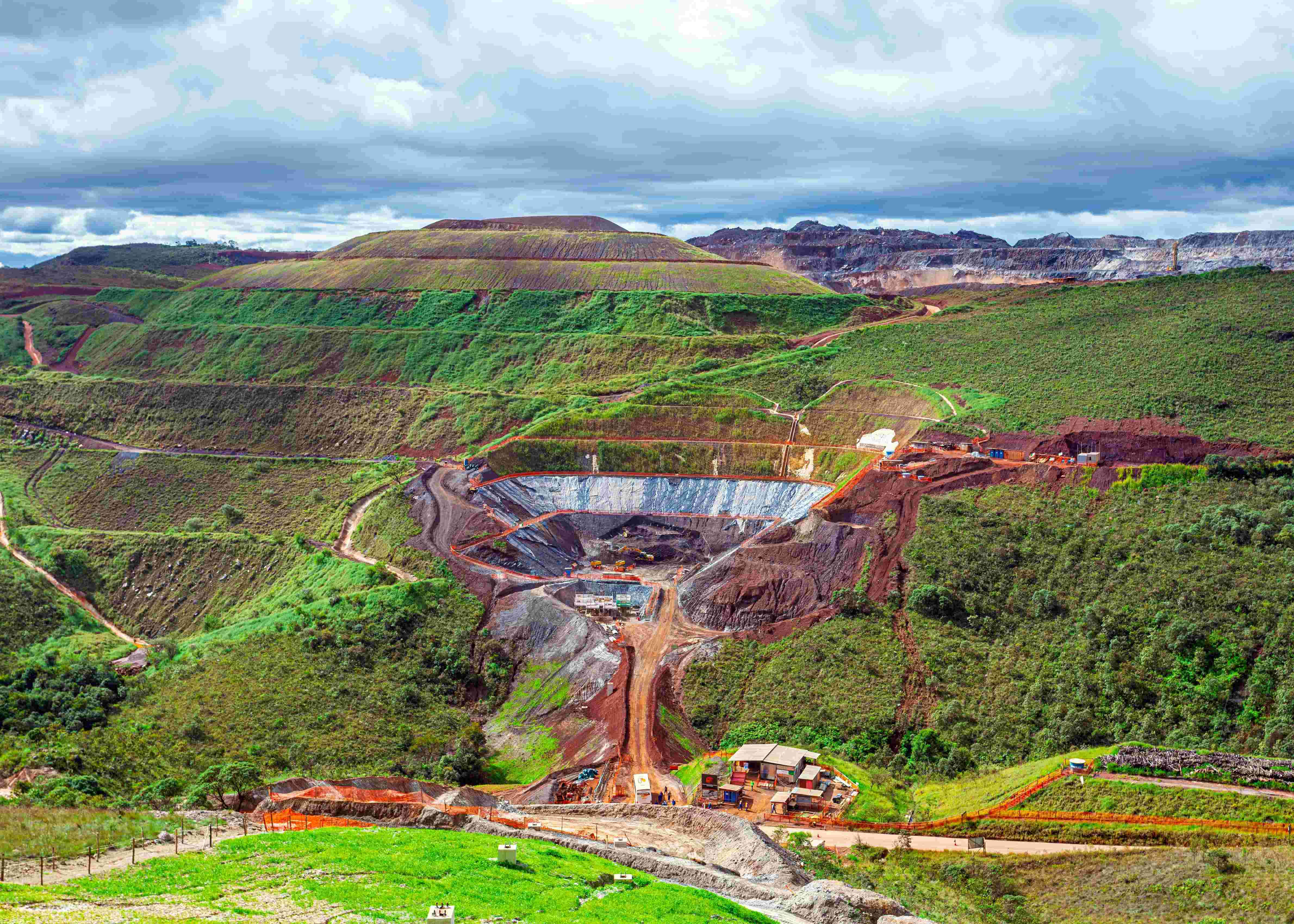
Mining plays a central role in the Brazilian economy and, for decades, has sustained the national trade surplus for decades. Today, it represents not only a vital economic sector but also an axis of geopolitical power. In the first quarter of 2025, the sector accounted for 77% of the trade balance surplus, reinforcing its centrality to macroeconomic stability. However, this dependence exposes structural weaknesses: concentration in a few low-value-added products, strong reliance on China as the main export destination, growing challenges related to the relative decline in the production of critical minerals fundamental to low-carbon technologies, and recurring socio-environmental crises that erode the country's international credibility.
In this scenario, the comparison shows that mineral resources may serve as instruments of diplomacy, sustainability, and industrial hegemony. The analysis situates Brazilian mining within the contemporary geopolitical debate by contrasting its trajectory with those of Australia, Canada, and China–three countries that, through different paths, have transformed mineral abundance into strategic power. From this perspective, opportunities arise for Brazil to reposition its mineral policy and redefine its role in global economic diplomacy, especially amid the energy transition, competition for critical minerals and the reconfiguration of production chains.
AUSTRALIA, CANADA, AND CHINA: A COMPARATIVE ANALYSIS
International comparisons show that Australia, Canada, and China, although following distinct trajectories, have managed to transform their mineral resources into instruments of geopolitical power, articulating production, foreign policy, innovation, and governance to expand their influence in global value chains. These countries demonstrate that mining can transcend its economic dimension and assume a strategic role in diplomacy, energy security, and industrial competitiveness, offering important insights into Brazil's insertion in the international arena.
Australia has established itself as one of the world's major mineral powers, combining geological abundance with a clear strategy for international engagement. It exports hundreds of millions of tons of iron ore annually and plays a key role in Asian supply chains. However, its strength lies not only in export volumes but also in its ability to transform natural resources into geopolitical assets. One of its most strategic initiatives was the creation of a national reserve of critical minerals, worth approximately US$1.2 billion, intended to support supply chains in Western countries, especially the United States, in response to Chinese dominance in refining. Furthermore, Australia has consolidated economic and diplomatic partnerships with Asia-Pacific countries, combining energy security, technological cooperation, and trade agreements. The Australian mineral sector operates under a robust regulatory regime, with clear rules for licensing, oversight, and socio-environmental responsibility, which strengthens predictability and international confidence–essential attributes for attracting investment and securing long-term agreements. Despite this strength, the country faces vulnerabilities, as it is significantly dependent on China as a customer and faces commodity volatility, such as in lithium, which has already led to operational suspensions.
Canada presents a highly sophisticated mining strategy, combining diversified production of over 60 minerals and metals with an international positioning based on sustainability, innovation, and governance. The country leads global forums such as the PDAC (Prospectors & Developers Association of Canada) and conducts diplomatic missions to attract investment and share technologies for low-impact mining. In this context, Canada positions itself as a global benchmark in ESG practices[1], adopting rigorous standards for Indigenous consultation, traceability, and the mitigation of socio-environmental impacts, strengthening its credibility and generating competitive advantages in markets with high environmental requirements. Even so, Canadian companies face criticism for socio-environmental impacts in projects abroad, especially in developing countries, and the relationship with Indigenous communities remains a sensitive issue, requiring constant regulatory improvement.
China occupies a unique position in mineral geopolitics, being the world's largest consumer of iron ore, with imports projected at 1.27 billion tons in 2025, and simultaneously controlling between 60% and 90% of critical minerals midstream[2]. Although it imports iron ore in large volumes, the country dominates the refining of minerals essential to batteries, renewable energy, military technology, permanent magnets, and digital systems, giving it considerable power to shape prices, set standards, and influence value chains on a global scale. Its demand, therefore, functions as an instrument of foreign and industrial policy. However, this extreme concentration also exposes China to risks, as demonstrated in episodes of retaliation involving export restrictions on rare earths in response to US tariffs, showing that its dominant position can generate tensions.
BRAZIL: VULNERABLE SUPPLIER OR STRATEGIC ACTOR?
Despite possessing abundant reserves and global leadership in iron ore, Brazil remains vulnerable from a geopolitical standpoint. In 2025, 67.5% of Brazilian iron ore exports were destined for China, confirming a structural dependence that exposes the country to volatility risks and changes in Chinese industrial policy. Recent declines have aggravated this concentration: between January and April 2025, iron ore exports to China fell by 29.4% in Minas Gerais and 21.8% nationwide, raising concerns about the fragility of the trade balance.
Furthermore, Brazilian production of critical minerals has declined relatively since 2017, leaving the country outside the most dynamic global energy transition chains. While Australia and Canada are developing complete value chains, Brazil remains focused on traditional, low-value-added commodities. This concentration limits the country's ability to enter high-value markets and participate in strategic competition for minerals essential to a low-carbon economy.
In the field of critical minerals, Brazil holds 95% of the world's niobium reserves and accounts for approximately 90% of global production. Despite this advantage, the country still exports mainly ferro-niobium without advancing into higher-value-added chains, such as aerospace superalloys or quantum technology applications. The same occurs with lithium: although Brazil holds the fifth-largest reserve in the world and Minas Gerais has consolidated itself as a production hub, 97% of national production is exported to China in raw form, without internal processing that adds value.
Beyond economic and socio-environmental vulnerabilities, Brazil also faces hybrid vulnerabilities in its critical infrastructure. Ports, railways, and digital mineral traceability systems are exposed to simultaneous risks—both physical and cyber—that could compromise strategic supply chains. The lack of integration between industrial and digital security weakens Brazil's position in international negotiations, since high-value markets demand not only environmental but also technological reliability. In this sense, the geopolitics of strategic minerals directly shape the resilience of national critical infrastructure.
The sector also faces significant socio-environmental challenges. High-profile international crises have eroded its credibility and hindered the signing of supply agreements with markets that demand high ESG standards. Without robust and transparent governance, Brazil loses competitiveness and reduces its diplomatic room for maneuver.
The Mariana (2015) and Brumadinho (2019) disasters exposed serious governance failures. Mariana released 60 million m³ of mineral tailings, devastating communities and polluting the Rio Doce river all the way to Espírito Santo. Brumadinho released 10 million m³, resulting in 270 deaths and irreparable damage. These episodes not only shook confidence in Brazilian companies but also hampered negotiations with markets that demand rigorous ESG standards.
Therefore, Brazil faces a dilemma: to continue as a vulnerable supplier of commodities or to reposition itself as a strategic player. To achieve this, it needs to advance on five fronts: market diversification, consolidation of ESG standards and traceability, integration of mining into foreign policy, and a focus on critical minerals. Compared to international leaders, Brazil still does not use its mineral resources as a diplomatic mechanism (like Australia), a seal of sustainable credibility (like Canada), or an instrument of industrial hegemony (like China). This gap, however, opens space for a strategic agenda capable of repositioning the country and the midstream, as well as robust socio-environmental governance. Without these movements, the country will remain trapped in cycles of dependence and reputational crises.
STRATEGIC PATHS FOR BRAZIL
To strategically reposition itself and transform its mineral potential into international influence, five areas are prioritized:
1- Market diversification
Reducing dependence on China is essential. Brazil should strengthen relations with the United States, the European Union, India, Japan, and ASEAN, expanding its portfolio of buyers.
2- ESG standards and traceability
High-value markets demand verifiable sustainability. The country must consolidate robust indicators, adopt modern traceability systems, and align itself with international green taxonomies. In this way, the country not only meets external requirements but also positions itself as a regulatory and diplomatic benchmark, amplifying its voice in global mining governance.
3- Integration between MRE, MDIC and APEX
Mining should serve as an instrument of foreign policy. Doing so involves diplomatic coordination, commercial intelligence, and active participation in multilateral forums.
4- Focus on critical minerals and value chains
It is essential to map opportunities in the midstream–refining, alloys and compounds–connecting Brazilian geology to the low-carbon economy.
5- Socio-environmental governance and hybrid resilience
Rebuilding credibility requires effective oversight, regulatory coherence, and transparency. Furthermore, it is essential to integrate physical and cybersecurity measures across ports, railways, and digital systems to ensure hybrid resilience. Without this integration, Brazil will remain exposed to simultaneous risks–environmental disasters, logistical failures, and digital attacks–that can compromise supply chains and reduce its diplomatic room for maneuver. Governance, conceived as a multidimensional system, is necessary to align sustainability, traceability, and technological protection.
CONCLUSION
Mining is not just an economic sector: it is a geopolitical lever. Australia, Canada, and China demonstrate that mineral resources can be converted into instruments of power when linked to diplomatic, industrial, and technological objectives. Australia uses strategic reserves as a tool for economic diplomacy; Canada has transformed sustainability into a competitive asset; and China dominates the midstream, shaping global supply chains. Brazil, on the other hand, has not yet managed to transform its mineral abundance into geopolitical influence.
Data shows that the country possesses unique advantages: 95% of global niobium reserves, growing lithium potential, and a consolidated position in iron ore. However, dependence on China and socio-environmental impacts erode its credibility. To address this, it is necessary to reduce dependence on China, diversify markets, and establish verifiable ESG standards that meet the demands of high-value-added buyers. The integration of foreign policy, industrial competitiveness, and socio-environmental governance is the central axis of this transformation. Without coordination, the country will remain trapped in cycles of volatility and reputational crises; with an integrated agenda, it can amplify its voice, attract capital, and redefine its place in the international system.
By adopting this agenda, Brazil will not only reduce internal vulnerabilities but also help define international standards for sustainability and mineral security. Such a strategy would amplify its voice in multilateral forums, strengthen its position in trade negotiations, and allow the country to reposition itself as a central player in global economic diplomacy. Brazil's contribution, in this context, would not only be economic but also normative and strategic.
Brazil's vulnerability is not limited to trade dependence or socio-environmental crises. The country needs to recognize that critical mining infrastructure–both physical and digital–is subject to hybrid risks that could compromise its international standing. Building an integrated agenda must include not only socio-environmental governance and mineral diplomacy, but also cybersecurity and technological resilience, essential elements for transforming mineral abundance into geopolitical influence.
The implications are clear: in the energy transition and the competition for value chains, the strategic time is now. Brazil needs to decide whether it will be merely a supplier of commodities or a protagonist in defining the rules of the new global mineral economy. This choice will determine not only its economic relevance but also its capacity to exert geopolitical influence at critical moments.
Notes
[1] ESG: Environmental, Social and Governance.
[2] Midstream: an intermediate stage in the mineral supply chain, which includes refining, processing, and transforming raw materials into industrial inputs.
References
Jungmann, Raul. 2025. "Da mineração à ação climática: o caminho que o Brasil deve pavimentar na COP30". CEBRI-Revista, Year 4, Number 15 (Jul-Sep). https://cebri.org/revista/br/artigo/233/da-mineracao-a-acao-climatica.
CEBRI, IBRAM, CENERGIA, CETEM & SGB. 2025. O papel do Brasil na agenda global de minerais críticos e estratégicos: demanda projetada e contribuição possível do Brasil na transição energética. Rio de Janeiro: CEBRI. https://cebri.org/br/doc/399/o-papel-do-brasil-na-agenda-global-de-minerais-criticos-e-estrategicos.
Received: January 12, 2026
Accepted for publication: April 16, 2026
Translation published: May 27, 2026
* Translated from Portuguese by Theo Pereira with the support of digital translation and AI-assisted language tools: Google Translate (initial draft), Grammarly (grammatical and syntactic revision), and ChatGPT 6 (selective phrasing refinements). Reviewed and approved by the authors. AI assistance is disclosed in line with the guidelines of CNPq Ordinance No. 2,664 of March 6, 2026 (Brazil).
Copyright © 2026 CEBRI-Revista. This is an open access article distributed under the terms of the Creative Commons Attribution License, which permits unrestricted use, distribution, and reproduction in any medium, provided the original article is properly cited.
