
-

-

-
 PT | EN
PT | EN 
Debates on world order have intensified following Mark Carney’s Davos address, which cast the present moment as “one of rupture rather than transition”. Carney’s “Rupture”, in this article does not signify collapse or replacement, but a shift in authority within existing institutions. The liberal order remains in place, but the claims that once underpinned its legitimacy, especially Western leadership and universal norms, no longer command the same authority. Global South institutions have become more visible in global governance, with China playing a central part. Rupture thus points less to a new order than to a redistribution of authority within an enduring order.
Introduction
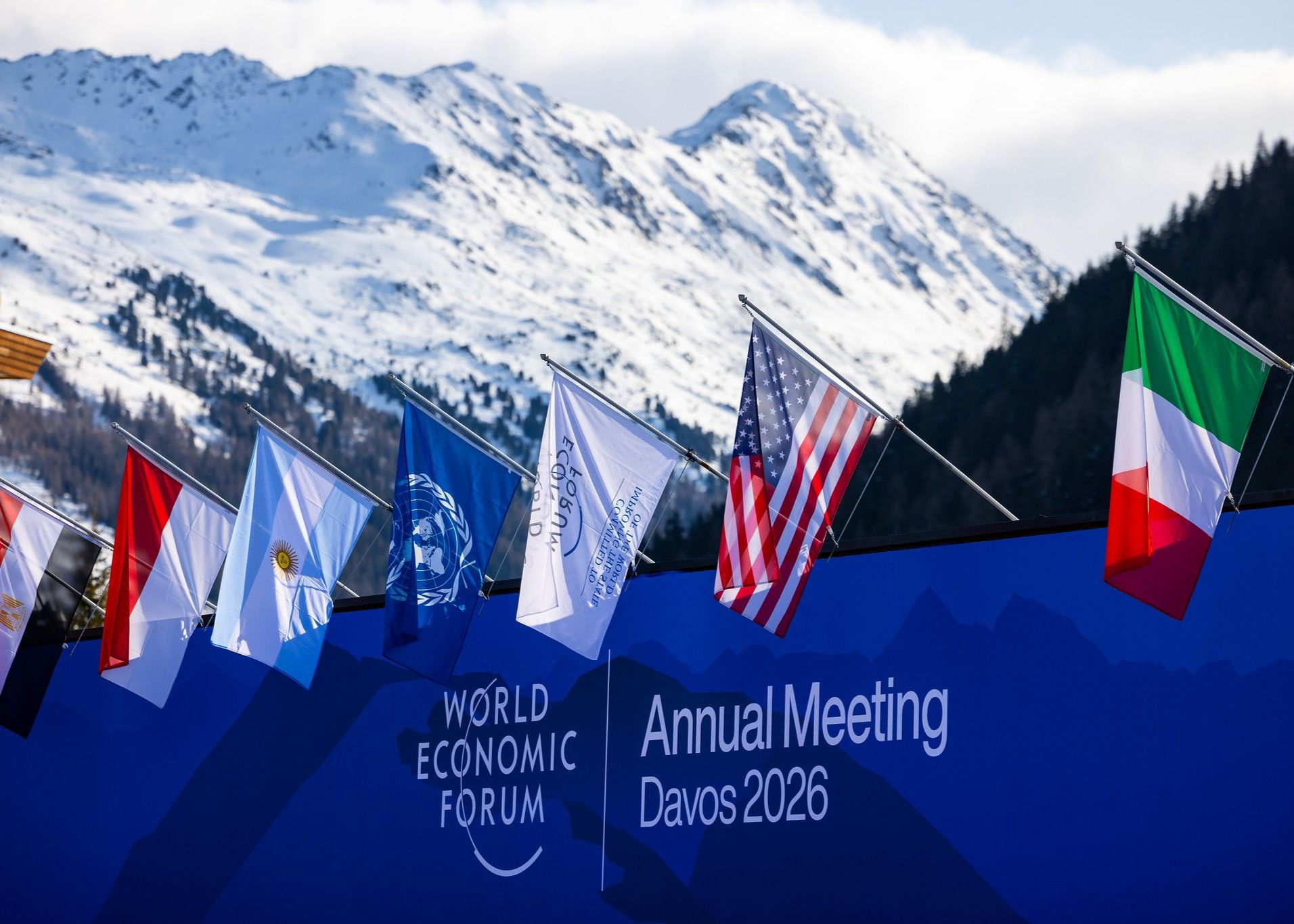
Debates on world order have intensified following Mark Carney’s address at the World Economic Forum in Davos, where he argued that the “old order is not coming back” and described the present moment as one of “rupture rather than transition” (World Economic Forum 2026). He presents contemporary global politics as a moment of historical discontinuity, urging middle powers to act collectively amid heightened threat, coercive diplomacy, and expanding military interventionism. This raises a central question in current debate: whether the international order is undergoing structural transformation, or whether present tensions instead reflect adjustment and contestation within an enduring framework.
This article interprets “rupture” as a shift in authority within existing global institutions, not the collapse of the current order or its replacement. Breakdown refers to collapse, while systemic transformation refers to replacement by a new order. Rupture, by contrast, describes a change in the distribution of influence within an order that still endures. Current tensions, on this view, reflect strain within an existing framework rather than systemic breakdown or full transformation.
Current tensions in world politics are not confined to rivalry between major powers. They also appear within the Western order itself, in disputes over trade, security, sanctions, technology, and the use of force; in the growing distance between the liberal order’s continuing institutional weight and the weakening authority of the claims that once legitimised it; in the unresolved strain between Western interests and values, especially in relations with China; and in the expanding role of Global South institutions in development finance, diplomatic coordination, and multilateral engagement. These tensions do not by themselves indicate systemic breakdown. Rather, they point to a wider reorganisation of authority within an order that still endures.
The claims that long underpinned the Global Order’s broader legitimacy, above all Western leadership and the supposed universality of its norms, no longer carry the same authority. At the same time, Global South institutions have assumed a more active role in development finance, diplomatic coordination, and multilateral engagement without displacing the existing order itself. Since the 2017 Belt and Road Forum, this has become increasingly visible in the prominence of development banks, summit meetings, and other forums in which China and Global South states play a central part. Canada and several other Western states have also moved further into these settings, even though alliance commitments may narrow their choices. The establishment of BRICS and its various institutions has further elevated the role of Global South in global affairs.
The article develops in three parts. It first places contemporary claims of rupture within the longer history of decline narratives and debates on change in world order, showing that predictions of systemic reordering have often accompanied periods of strain without producing a new order. The second part argues that contemporary disagreements among Western powers do not amount to breakdown, but reflect adjustment and contestation within durable institutional and alliance structures. The final part argues that Global South institutions now occupy a more important place in global governance through their expanding role in development finance, diplomatic coordination, and multilateral engagement, with China playing a central part in this process, and examines the position of Western middle powers within this wider shift. What appears as rupture, therefore, is understood in this article as an “opportunity” for Western middle powers to intensify their engagement with Global South institutions, which are assuming a more prominent role in global governance, and is better seen as a reorganisation of authority within the present order.
Decline Narratives and World Order
For a new global order to emerge, one major shift must occur, without which the debate on new world order would remain theoretical. That is a definite American decline. Yet, Joseph Nye notes that American decline theories have been around for half a century. “What’s most impressive about theories of American decline is that they come and go, it’s like waiting for a coach at a bus stop. I mean, you wait and sooner or later one comes” (Nye 2010). Nye lists numerous examples that predicted American decline. In the 1950s, the Soviet Union’s launch of Sputnik led many to believe this was the end of the United States. Later, in the 1970s, during the oil crisis, similar voices echoed the view that “this is the end of American power.” This recurred in the 1980s during the Reagan administration, through the transition from an industrial economy to an information-based economy (Nye 2010).
During the 1990s, even at the height of American primacy, doubts about its long-term durability did not disappear. Paul Kennedy’s The Rise and Fall of the Great Powers continued to shape elite discussion as a warning about overstretch, while debates about globalisation and trade imbalances kept alive the question of whether American leadership could be sustained indefinitely (Rachman 2011). After the 2008 financial crisis, such concerns returned with greater force (Aldalala’a 2020). The crisis was widely read as evidence of institutional weakness and of a broader loss of confidence in U.S. leadership (Bremmer 2018). Yet, as in earlier periods, these arguments reflected a moment of strain and uncertainty more than a clear reordering of world power (Luce 2012). In that sense, Nye is right to treat decline less as a settled fact than as a recurring way of interpreting disruption.
To anchor this argument within International Relations, it is worth noting that major theoretical innovations have historically been a result of systemic breakdown rather than anticipatory claims of transformation (Wohlforth 1994). Modern realism emerged after the collapse of the post First World War order, while the end of the Cold War generated new theoretical approaches, most notably constructivism, as existing frameworks were perceived to be inadequate for explaining systemic changes (Wohlforth 1994; Shigemitsu 2000). Furthermore, Rey Koslowski and Friedrich Kratochwil argue that the end of the Cold War constituted a transformation of the international system rather than a change within it, a point also emphasised by Holsti (1998). Contemporary claims of rupture or transition, by contrast, reflect processes of adjustment within the existing order rather than comparable systemic breakdown.
The foreign policy of the Trump administration, including its renewed use of military force, points to a reassertion rather than a withdrawal of American power. At the same time, this has been accompanied by a weakening of the American political project. The administration’s increasing use of military force has also generated disagreement with close allies, especially in Europe. Yet such disagreement is not in itself unusual. Historically, tension among major powers, and between major and middle powers, has often been part of durable international orders rather than a sign of their immediate collapse.
Disagreement Without Breakdown
Western cohesion has never depended on the absence of disagreement. Trade conflicts between the United States and Western Europe following the collapse of Bretton Woods in the 1970s centred on steel, agriculture, and macroeconomic adjustment, with Richard Nixon articulating policy in explicitly national terms and expressing scepticism toward international cooperation (James 1996). Yet these disputes unfolded within the GATT framework rather than through institutional exit. Similarly, in 1966, President Charles de Gaulle withdrew France from NATO’s integrated military command while remaining within the Atlantic Alliance, emphasising strategic autonomy without dismantling the institution itself (Smith & Heller 2023). The 2003 Iraq War likewise generated serious political disagreement between the United States and key European powers, particularly France and Germany, but did not disrupt core Western institutions (Triantaphyllou 2003). NATO remained operational, European Union integration advanced, and transatlantic economic relations continued.
Current disputes among Western powers extend beyond trade and security to include tariff tensions (Boak et al. 2026) between the United States and the European Union, differing positions on industrial policy, sanctions, and China strategy (Fehér 2025), disagreements over burden sharing in Ukraine, tensions over Greenland and Arctic sovereignty (Moulson et al. 2026), disputes over energy dependence and NATO (NATO 2025), defence spending, contestation in technology governance (Engler 2023), and political divisions within Europe over migration and strategic autonomy.
The U.S. and Israeli war with Iran introduced a further source of tension between the United States and its European allies. Trump’s call for European and NATO support in reopening the Strait of Hormuz was met with clear refusal. That refusal was not merely a response to a specific operational request. It also reflected broader European unease with a form of American foreign policy in which war has again become a recurring instrument of strategy. After the European Union summit in Brussels, French President Emmanuel Macron stated that defending international law and promoting de-escalation was “the best we can do,” adding that he had not heard anyone express a willingness to enter the conflict, but rather the opposite (Reuters 2026a). German Defence Minister Boris Pistorius was equally direct, asking what Donald Trump expected “a handful or two handfuls of European frigates” to do in the Strait of Hormuz that the U.S. Navy itself could not do (Reuters 2026b).
The current tension also does not amount to a breakdown of the alliance. It does, however, reveal a widening distance from the military direction of American foreign policy, and, at the same time, it clearly indicates the “rupture” illustrated below. Germany’s position was particularly telling, since Berlin made clear that any support for maritime security would have to follow the end of the war rather than accompany its continuation. This therefore points not to the collapse of Western cooperation, but to growing disagreement within the alliance over the management of escalation in global affairs and the extent to which European allies are willing to align themselves with American military actions. It also suggests that the conduct of “selective” wars is difficult to sustain without at least some degree of alliance support, let alone wider international legitimacy.
On this basis, a further precise understanding of “rupture” is provided by Manuel Castells’ Rupture: The Crisis of Liberal Democracy (2018). For Castells, rupture is defined by the erosion of trust in political institutions and the resulting delegitimation of established forms of representation. Rupture, therefore, is “the rupture of the relationship between those who govern and the governed” (Castells 2018, 4). Furthermore, agreeing with this, Martin Holbraad et al. argue that rupture is the active ingredient of the current sense of a world in turmoil: the rise of populist politics, the corollary impulse towards protest [Brexit as organised protest], and even revolutionary change, as well as moves towards violence and terror (Holbraad et al. 2019).
Brexit, the fragmentation of European party systems, and instability within the European Union are thus understood as expressions of a representational crisis rather than indicators of geopolitical transition. As discussed above, the 2008 financial crisis marked a critical inflection point through the exposure of corruption, inequality, and representational failure within liberal democratic systems (Wilson and Grant 2012). Rupture, as Castells (2018) argues, is internal to the political order, insofar as material capacity and institutional continuity persist even as legitimacy and representative authority are progressively depleted.
Contemporary disagreements among Western states thus unfold within a shared global order whose institutional, legal, and security structures continue to limit sustained defection or systemic challenge. (See Buzan & Hansen 2009). Disputes over trade and security increasingly test leadership hierarchies and burden sharing, yet they do so through established institutional channels rather than through exit from the alliance itself. This pattern is most clearly observable in the foreign policy behaviour of Western middle powers, whose strategic autonomy remains structurally limited by alliance commitments and economic interdependence.
We use Canada here as an example given that Mark Carney’s speech forms the backdrop to our argument. Canada’s alignment with United States foreign policy is evident across multiple periods and areas, including Cold War nuclear integration through NORAD and the acceptance of U.S. nuclear warheads in 1963, indirect but material support for the U.S. war effort in Vietnam; full security and military alignment after September 11, including participation in Afghanistan; indirect military and intelligence support during the 2003 Iraq War despite formal nonparticipation; sustained compliance with U.S.-led sanctions regimes under the Special Economic Measures Act, including against Iran (Canada, Global Affairs Canada 2025), Venezuela, and Russia; exclusion of Huawei from 5G networks in line with U.S. strategic pressure, and close alignment with U.S. leadership on sanctions, military assistance, and escalation management in response to the war in Ukraine (Canada, Department of National Defence 2025). These cases demonstrate determined compliance by a Western middle power with U.S. coercive or unilateral policies within an enduring alliance framework rather than episodic or exceptional alignment.
We have argued above that the “opportunity of rupture” refers to the opening of additional sites of governance within the global order rather than to institutional collapse. Accordingly, the analysis shifts to the structural role of the Global South as the main arena in which China’s global position is pronounced. Furthermore, drawing on Finnish President Alexander Stubb’s argument, the article examines how Global South institutions may provide the most suitable framework within which Western middle powers can pursue a broader role under current global conditions.
Global South as Category
The Global South did not emerge as a unified political or economic bloc. It took shape instead through the historical experience of twentieth century decolonisation (Escobar 2012). Its earlier roots lay less in economic classification than in Third World political discourse, where it was first used to describe exclusion from a hierarchical international order.
From the beginning, the Global South was a political idea rather than a coherent bloc (Mahler 2018). It was shaped most clearly at the Bandung Conference, where newly independent states sought to assert greater autonomy in an international system that remained unequal. Later efforts to organise postcolonial cooperation (Escobar 2012), especially through the Non-Aligned Movement and the Group of 77, gave these states a collective voice within institutions still dominated by the North, but they did not create an autonomous capacity to make rules. After the Cold War, the shift from Third World to Global South did not by itself produce stronger political unity. It largely preserved an older language of inequality, while leaving the problem of collective action unresolved.
China’s engagement with the Global South has rendered the Global South operational based on structural participation. Hong Liu argues that, beyond geopolitical considerations, China’s expanding economic ties with the developing world function as a framework for transnational knowledge transfer, with development centrality reinforced through institutionalisation. China has also facilitated expanded capacity for institutional diversification across the Global South, opening additional space for middle powers in the global north to participate in an already advancing structure (Liu 2022).
The rupture identified by Carney can be understood over the longer term through the diffusion of institutional authority evident since the 2017 Belt and Road Forum. This diffusion is reflected in the decision of Western middle powers to participate in development finance institutions of the Global South, most notably the Asian Infrastructure Investment Bank (AIIB). The United Kingdom, Germany, France, and Australia have joined the AIIB as non-regional members, signalling a willingness to operate within development finance frameworks beyond traditional Bretton Woods institutions while remaining embedded within the transatlantic alliance system.
Recent visits to China by Emmanuel Macron in December 2025, by Mark Carney, Keir Starmer, and Finnish Prime Minister Petteri Orpo in January 2026, and by Friedrich Merz in February 2026 give a clear example of this wider change. Hong Liu observes that “to avoid returning to Cold War style ideological confrontations, major powers should take a stakeholder centered perspective regarding the needs and interests of recipient countries. This in turn will help institutionalize mutually beneficial knowledge transfer both within the Global South and between North and South” (Liu 2022, 12).
Alternatives
The lack of sustained and meaningful institutional exchange between the North and the South reinforces concerns raised by Alexander Stubb, who argues that the present global order is increasingly shaped by the weakening of postwar multilateralism. Stubb understands multilateralism as a form of international cooperation grounded in common rules and shared institutions. Therefore, the growing weight of middle powers in the Global South indicates dissatisfaction with an order that has not adequately accommodated their interests. As a result, their strategic choices now carry greater importance for wider international stability (Stubb 2025).
However, Stubb identifies two forms of tension in the current order. The first is “a growing tension between those who promote multilateralism and an order grounded in the rule of law and those who speak the language of multipolarity and transactionalism” (Stubb 2025). In this context, many states pursue what Stubb calls “a multivectoral” foreign policy, aimed at diversifying relations across multiple actors rather than aligning with any single bloc.
The second face of tension identified by Stubb concerns values. He argues that a transactional or “multivectoral foreign policy” may be driven by interests, but need not eschew values, which should continue to guide state conduct. In response, Stubb proposes a framework of “values-based realism,” in which states remain committed to core principles while recognising that global cooperation cannot be confined to collaboration among like-minded actors. This approach emphasises respect for the rule of law alongside sensitivity to cultural and political difference.
The counterproductive move currently adopted by Western middle powers lies in the inconsistency of their engagement with China. On the one hand, these states increasingly pursue economic engagement in response to stagnation and uncertainty in Western markets. On the other hand, this engagement proceeds alongside unresolved value-based disagreement, producing a pattern of selective accommodation combined with symbolic distancing. Keir Starmer’s visit confirms recognition of China’s economic importance; however, it coincides with the reaffirmation of the decision to remove Huawei from United Kingdom 5G networks by 2027 (United Kingdom, Department for Digital, Culture, Media and Sport 2020). The result is a policy position that weakens coherence while leaving normative disagreement unresolved.
Well before later disputes over tariffs on United States allies, there were numerous instances that revealed a persistent tension between interests and values. Coordinated sanctions imposed by Western states on China over Xinjiang in March 2021 were not followed by sustained institutional escalation, reinforcing their largely symbolic character (Wintour 2021). Technology restrictions targeting Huawei from July 2020 onward (Gallagher 2022) invoked security and governance concerns while leaving deeper structural dependence on Chinese manufacturing and supply chains intact. Targeted United States import bans linked to forced labour allegations (Swanson 2024) in August 2024 and sanctions over Hong Kong in March 2025 similarly coexisted with continued diplomatic and economic engagement (U.S. Department of State 2025). The conclusion of negotiations on the EU-China Comprehensive Agreement on Investment (CAI) in December 2020 proceeded despite publicly acknowledged concerns over labour rights and market practices, reflecting the primacy of economic interest.
The reason for this disjuncture lies in the declining credibility of Western institutions as guarantors of global peace and prosperity. These cases show that Western values such as human rights and the calls for democratic freedoms often function more as markers of what the West treats as shared values than as principles consistently upheld in practice. Although such values still inform Western claims to normative leadership, their invocation increasingly invites backlash shaped by historical experience. The destruction in Iraq and elsewhere associated with the War on Terror and later interventions, repeatedly justified in the name of human rights and democratisation, has weakened the credibility of those claims. What remains is a tension within the Western order between value-based promises and strategic or economic interests, a tension that points to rupture within the order rather than to its collapse.
The “opportunity of rupture,” therefore, lies in recognising changes already under way in the global order. Chief among them is the growing role of Global South institutions, which reduces the centrality of Western values rhetoric. China is not operating economically or normatively on its own. Rather, China’s South partnership diplomacy supports cooperation on the basis of shared interests while avoiding binding security commitments or ideological alignment, thereby reducing the political and strategic costs for participating states (Strüver 2017; Cao 2016). The Belt and Road Initiative carries this further through project-based forms of cooperation that allow states to gain material and developmental benefits without giving up existing alignments or adopting China’s domestic governance model (Wang 2019).
This form of Global South cooperation clearly disavows coercion and, at the same time, encourages North-South engagement as alternative multilateral arrangements widen the range of authority beyond traditional Western frameworks. Demographic and economic shifts have increased the importance of Global South states. Institutions such as BRICS, ASEAN, the SCO, and the GCC illustrate this development by extending cooperation beyond Western-dominated frameworks. This pattern points to institutional growth rather than displacement, creating a wider and more overlapping field in which Global South actors play a larger role in shaping cooperation and rulemaking.
Within this broader context, changes in global order are most clearly visible at the institutional and normative levels, with direct implications for Western middle powers. At the institutional level, Global South engagement gives priority to strategic autonomy and multidirectional alignment over bloc formation (Ben Hammouda, 2024), as seen in the expansion of development finance mechanisms such as the New Development Bank and the Asian Infrastructure Investment Bank, which coexist with Bretton Woods institutions without changing basic patterns of participation (Viana de Castro & Santiago 2025). China-related infrastructure cooperation further adds to this more plural institutional setting without amounting to systemic replacement. At the normative level, Global South influence is strongest in specific issue areas, especially climate finance and sovereign debt restructuring, where existing arrangements are increasingly contested, while fragmentation remains visible in areas such as technology governance.
Western middle powers’ engagement within Global South-based institutional settings may therefore help address structural pressures linked to development, debt, and climate, rather than relying mainly on reactive or security-centred responses (Patrick 2026). By working through finance institutions, infrastructure coordination mechanisms, and climate-related frameworks rooted in the Global South, these states can take part more directly in shaping the conditions under which such pressures are addressed. Migration is one visible result of these pressures, but not their source. For Western middle powers, this widening engagement does not require withdrawal from existing alliances, but it does encourage a broader role across overlapping institutional settings, pointing to a gradual reordering of global affairs through dispersed authority and selective institutional change.
The current reorientation of Western middle powers towards China resembles the diplomatic activity surrounding the 2017 Belt and Road Forum, when the participation of many heads of state signalled pragmatic engagement with a changing global economy rather than ideological alignment. What is happening today similarly reflects a response to prolonged economic stagnation, fiscal pressure, and uncertainty within the Western core. This engagement, however, is more likely to last if it is channelled through broader Global South institutions rather than limited to bilateral bargaining with China alone, an approach China has consistently encouraged through institutions that give greater weight to sovereign equality.
Not only has the credibility of Western institutions been called into question, but their relevance and effectiveness have also been debated. The retreat of the United States, and its threat to withdraw further from international institutions, may be seen as creating a power vacuum. Yet it may also offer an opportunity for the international community to pursue reforms within existing institutions that the United States had previously blocked. In the absence of the United States from important international agencies and agreements, Western middle powers are called upon to work with the Global South to reorient the global order, both by participating in Global South initiatives and institutions and by revitalising post-World War II institutions.
Having argued that, it is still obvious that disruption between the West and China has become a persistent feature of contemporary international politics, visible across trade, technology, security, sanctions, and regulatory disputes. It is now part of the wider international environment, producing a condition of managed competition rather than episodic crisis. Escalation is constrained less by shared norms than by China’s demonstrated capacity to respond across economic and strategic spheres.
For Western middle powers, the most workable course, therefore, lies in what this article calls “the opportunity of rupture”: neither narrow alignment with China nor rigid bloc discipline within the West, but a more sustained engagement in Global South institutions. The Finnish President highlights the importance of creating an environment that would foster global dialogue and cooperation. He proposes to increase the Global South representation in the international institutions, specifically to add permanent seats in UN Security Council, to have rules and norms that create stability while allowing for diversity, and, lastly, to acknowledge and accept regional solutions that in turn would support cooperative multilateralism (Stubb 2026).
Conclusion
In this article, rupture refers to a shift in how authority is exercised within an international order that still endures. It does not mean that the current order is collapsing or being replaced. What has changed is that influence now passes through a wider range of institutions, many of them linked to the Global South. The participation of Western middle powers in such institutions calls for changing distribution of power and interest in world politics. When Canadian or British representatives work alongside counterparts from Brazil, South Africa, China, India, or the Middle East, these institutions operate more in line with present political realities than bilateral summits still shaped by older great power assumptions. This may not reduce Western influence. It offers another way of exercising it at a time when authority is more widely shared. What is interesting is that the authority is being exercised at a time when the United States decides to retreat from major international commitments. Such condition offers greater room and flexibility for Western middle powers to yield their influence. These forums also bring questions of finance and material interest together in ways that traditional alliance-centred diplomacy is less able to manage.
At the same time, our analysis cautions against any pacifist or reconciliatory reading of this institutional development. Cooperation within the Western order has never rested on normative convergence alone, nor on the claim that liberal democracies are inherently peaceful. It has rested on the regulation of force among states capable of inflicting violence on one another. Violence has not disappeared from the Western order. It has been organised and restrained through alliances, deterrence arrangements, and historically rooted expectations about the risks of escalation. Peace, in this sense, has been a managed condition rather than a moral achievement, sustained through continuing adjustments in power among states that possess both material capabilities and a clear sense of the costs of unrestricted conflict.
The endurance of the Western order has thus been inseparable from the very element through which Western power structures were historically established, namely war. From the world wars that produced the post-1945 settlement to the Cold War security system sustained through confrontation and deterrence, stability depended on an institutionalised balance of power rather than on the elimination of conflict. This order was repeatedly stabilised through crisis rather than consensus, from Berlin and Korea to Cuba, where the management of escalation, not resolution, preserved systemic continuity. Subsequently, distinctions between middle powers and great powers have remained situational, defined less by formal hierarchy than by strategic utility at particular moments, as reproduced in shifting alliance roles during the Cold War and after 1991.
Yet despite this, the prospect of an enemy, and the necessity of having one, has remained central to the Western Alliance as a condition of cohesion. The sustained increase in NATO defence spending is a direct expression of this. The attempt to expand NATO in 2008, pursued despite explicit reservations from Germany and France, further illustrates the extent to which confrontation and risk acceptance remain embedded within Western strategic practice. Europe’s prolonged absence from direct war has not generated renewal or strategic autonomy, but has instead contributed to economic stagnation, social fragmentation, and inward-looking political debate, conditions enabled by an extended period of externally managed security rather than by independent strategic consolidation. Stubb argues that EU must be flexible enough to corresponds to the new realities, such as the changing US foreign policy that is anti-globalisation and anti-EU. The EU must be able to make fast decision and be flexible about association agreements so that the EU can maximise its power beyond its institution (DRM News 2026).
Looking forward, the more likely future of global politics is neither a coherent new world order nor the collapse of the Western one, but a prolonged period in which competition, cooperation, and coercion continue side by side. For Western middle powers, success will depend less on bloc discipline or symbolic value claims than on the ability to work across different global institutional platforms and organisations, especially based in Global South, where economic growth and demographic weight carry increasing importance. Engagement in these arenas will not end geopolitical rivalry, nor will it soften great power competition. It may, however, offer a more durable way of managing tension by placing rivalry within institutions that can contain pressure rather than intensify it. The “opportunity of rupture” lies there. It lies not in refining power politics, but in adjusting to a world in which authority is more widely shared, violence remains regulated rather than absent, and stability depends increasingly on negotiation through institutions rather than hegemonic dominance.
REFERENCES
Aldalala’a, N. 2020. End of Liberal Triumphalism: A Perspective on China in the Post-Covid-19 Global Order. Strategic Trends 1, Trends Research Organization, Abu Dhabi. https://trendsresearch.org/publication/strategic-trends-1-end-of-liberal-triumphalism-a-perspective-on-china-in-the-post-covid-global-order/?srsltid=AfmBOoqlRtZnkn4z4pfp3T6hx81jYPgaFXKiKsqhoTAbnjFfzDxwGJE2
Anderson, Engler. 2023. “The EU and U.S. Diverge on AI Regulation: A Transatlantic Comparison and Steps to Alignment.” Brookings Institution, April 25 2023. https://www.brookings.edu/articles/the-eu-and-us-diverge-on-ai-regulation-a-transatlantic-comparison-and-steps-to-alignment.
Ben Hammouda, Hakim. 2024. Multi-alignment and De-risking: The Global South Response to World Fragmentation. Institut français des relations internationales. https://www.ifri.org/en/papers/multi-alignment-and-de-risking-global-south-response-world-fragmentation.
Boak, Josh, Ellen Burrows & Darlene Superville Niemann. 2026. “Trump Says 8 European Countries Will Face 10 Percent Tariff for Opposing US Control of Greenland.” Associated Press, January 18 2026. https://apnews.com/article/denmark-greenland-us-trump-4ad99ea3975a8b62d37bd04961feda55.
Bremmer, Ian. 2018. “How the Financial Crisis Undermined America’s Place Atop the Global Order.” Time, September 20. https://time.com/5401647/america-global-order/.
Buzan, Barry & Lene Hansen. 2009. Security beyond the State: Global Security Assemblages in International Politics. Cambridge University Press. https://doi.org/10.1017/CBO9780511598122.
Canada. Department of National Defence. 2025. “Canadian Military Support to Ukraine.” Government of Canada. https://www.canada.ca/en/department-national-defence/campaigns/canadian-military-support-to-ukraine.html.
Canada. Global Affairs. 2025. “Regulations Implementing the Special Economic Measures Act and the United Nations Act Respecting Iran.” Government of Canada. https://www.international.gc.ca/world-monde/international_relations-relations_internationales/sanctions/iran.aspx.
Cao, Wei. 2016. “The Efficiency of China’s Public Diplomacy.” Chinese Journal of International Politics 9 (4): 399–434. https://doi.org/10.1093/cjip/pow012.
DRM News. 2026. “Finland President Warns of ‘World Disorder’ as Europe Faces Russia, US Pressure | AC1G.” YouTube video, March 17. https://www.youtube.com/watch?v=eGhVVNzlh2M.
Escobar, Arturo. 2012. Encountering Development: The Making and the Unmaking of the Third World. Reissue with new preface. Princeton University Press.
Fehér, Zsuzsanna. 2025. “Convergence and Divergence in US and EU Policies on China.” Atlantic Council, November 10. https://www.atlanticcouncil.org/in-depth-research-reports/report/convergence-and-divergence-in-us-and-eu-policies-on-china/.
Gallagher, Jill C. 2022. U.S. Restrictions on Huawei Technologies: National Security, Foreign Policy, and Economic Interests. CRS Report R47012. Washington, DC: Congressional Research Service. Accessed April 7, 2026. https://www.congress.gov/crs-product/R47012.
Holbraad, Martin, Bruce Kapferer & Julia F. Sauma. 2019. “Introduction: Critical Ruptures.” In Ruptures: Anthropologies of Discontinuity in Times of Turmoil, edited by Martin Holbraad, Bruce Kapferer, and Julia F. Sauma. UCL Press. https://discovery.ucl.ac.uk/id/eprint/10076047/1/Ruptures.pdf
Holsti, K. J. 1998. The Problem of Change in International Relations Theory. Working Paper no. 26. Institute of International Relations, University of British Columbia. https://www.files.ethz.ch/isn/46511/WP26.pdf.
James, Harold. 1996. “The End of Bretton Woods?” In International Monetary Cooperation since Bretton Woods, edited by Harold James. International Monetary Fund and Oxford University Press. https://doi.org/10.5089/9781475506969.071.
Liu, Hong. 2022. “China Engages the Global South: From Bandung to the Belt and Road Initiative.” Global Policy 13 (Suppl. 1): 11–22. https://doi.org/10.1111/1758-5899.13034.
Luce, Edward. 2012. “The Reality of American Decline.” Financial Times, February 5. https://www.ft.com/content/8268fb6e-4e65-11e1-aa0b-00144feabdc0.
Mahler, Anne Garland. 2018. From the Tricontinental to the Global South: Race, Radicalism, and Transnational Solidarity. Duke University Press.
Moulson, Geir, Ellen Burrows & Josh Brooks. 2026. “Denmark and Greenland Say Sovereignty Is Not Negotiable after Trump’s Reversal on Tariffs.” Associated Press, January 20. https://apnews.com/article/denmark-greenland-trump-arctic-security-nato-d74c0ffcf1db904a2a9c3b2c5c5b8d03.
NATO. 2024. “NATO Assistance to Ukraine.” North Atlantic Treaty Organization. https://www.nato.int/cps/en/natohq/topics_192648.htm.
NATO. 2025. “Defence Expenditures and NATO’s 2 Percent Commitment.” https://www.nato.int/en/what-we-do/introduction-to-nato/defence-expenditures-and-natos-5-commitment.
Nye, Joseph S. 2010. “Is America in Decline?” Lecture transcript presented at Chatham House, May 19. https://www.files.ethz.ch/isn/138642/190510nye.pdf.
Patrick, Stewart. 2026. “The Middle Power Moment.” Carnegie Endowment for International Peace, January 20. https://www.carnegieendowment.org/research/2026/01/the-middle-power-moment.
Rachman, Gideon. 2011. “Think Again: American Decline This Time It’s for Real.” Foreign Policy, January 3. https://foreignpolicy.com/2011/01/03/think-again-american-decline.
Reuters. 2026a. “Trump Calls NATO ‘Cowards’ over Lack of Support in Iran War.” Reuters, March 20. https://www.reuters.com/world/trump-calls-nato-cowards-over-lack-support-iran-war-2026-03-20/.
Reuters. 2026b. “US Allies Rebuff Trump’s Request for Support in Strait of Hormuz.” Reuters, March 16. https://www.reuters.com/business/aerospace-defense/us-allies-rebuff-trumps-request-support-strait-hormuz-2026-03-16.
Shigemasa, K. 2000. The End of the Cold War and the Constructivist Ascendance. Osaka University Institutional Repository Working Paper. Osaka University. https://ir.library.osaka-u.ac.jp/repo/ouka/all/9882/7-13_n.pdf.
Smith, M. S. & P. B. Heller. 2023. “France Withdraws from NATO’s Military Structure.” EBSCO Research Starters: History. EBSCO Information Services. https://www.ebsco.com/research-starters/history/france-withdraws-natos-military-structure.
Strüver, Georg. 2017. “China’s Partnership Diplomacy: International Alignment Based on Interests or Ideology.” Chinese Journal of International Politics 10 (1): 31–65. https://doi.org/10.1093/cjip/pow015.
Stubb, Alexander. 2025. “The West’s Last Chance: How to Build a New Global Order before It’s Too Late.” Foreign Affairs, December 2. https://www.foreignaffairs.com/united-states/wests-last-chance.
Stubb, Alexander. 2026. “Inaugural Address at the Raisina Dialogue 2026.” Office of the President of the Republic of Finland, March 5. https://www.presidentti.fi/en/inaugural-address-by-president-of-the-republic-of-finland-alexander-stubb-at-the-raisina-dialogue-2026-in-new-delhi-india-on-5-march-2026/.
Swanson, Ana. 2024. “U.S. Bans Imports from Three Chinese Companies over Ties to Forced Labor.” New York Times, June 11. https://www.nytimes.com/2024/06/11/business/economy/us-ban-china-uyghur-labor.html.
Triantaphyllou, Dimitrios. 2003. “Transatlantic Crisis.” European Union Institute for Security Studies, February 27. https://www.iss.europa.eu/publications/alerts/transatlantic-crisis.
United Kingdom, Department for Digital, Culture, Media & Sport. 2020. “Huawei to Be Removed from UK 5G Networks by 2027.” GOV.UK. Published July 14, 2020. Accessed April 7, 2026. https://www.gov.uk/government/news/huawei-to-be-removed-from-uk-5g-networks-by-2027.
United States Department of State. 2025. “Sanctioning Those Undermining Hong Kong’s Autonomy.” March 31. https://www.state.gov/sanctioning-those-undermining-hong-kongs-autonomy.
Viana de Castro, S. K. & A. R. Santiago. 2025. “The Evolution of Financial Architecture Supporting the BRICS: Reshaping the Global Financial Order?” Frontiers in Political Science 7: 1657108. https://doi.org/10.3389/fpos.2025.1657108.
Wang, Heng. 2019. “China’s Approach to the Belt and Road Initiative: Scope, Character and Sustainability.” Journal of International Economic Law 22 (1): 29–55. https://doi.org/10.1093/jiel/jgy048.
Wilson, Graham K. & Wyn Grant. 2012. “Conclusion.” In The Consequences of the Global Financial Crisis, edited by Graham K. Wilson and Wyn Grant. Oxford University Press. https://doi.org/10.1093/acprof:oso/9780199641987.003.0013.
Wintour, Patrick. 2021. “China Responds to EU and UK Sanctions over Uighurs Human Rights.” Guardian, March 22, 2021. https://www.theguardian.com/world/2021/mar/22/china-responds-to-eu-uk-sanctions-over-uighurs-human-rights.
Wohlforth, William C. 1994. “Realism and the End of the Cold War.” International Security 19 (3): 91-129. https://doi.org/10.2307/2539080.
World Economic Forum. 2026. “Davos 2026: Special Address by Mark Carney, Prime Minister of Canada.” January 20, 2026. https://www.weforum.org/stories/2026/01/davos-2026-special-address-by-mark-carney-prime-minister-of-canada/.
Nath Aldalala’a is a Professor of International Relations, Department of Political Science and Madani Studies, International Islamic University Malaysia (IIUM). His forthcoming book is China and the Arab World since 1949: Governance Beyond Great Power Politics, Palgrave Macmillan.
Lee Pei May is an Assistant Professor of International Political Economy, Department of Political Science and Madani Studies, International Islamic University Malaysia (IIUM). Her research interests include trade wars, the rise of the Global South (BRICS), and Malaysia-China relations.
Submitted: March 23, 2026
Accepted for publication: April 8, 2026
Copyright © 2025 CEBRI-Journal. This is an Open Access article distributed under the terms of the Creative Commons Attribution License, which permits unrestricted use, distribution, and reproduction in any medium, provided the original article is properly cited.
