

-

-

-
 PT | EN
PT | EN 
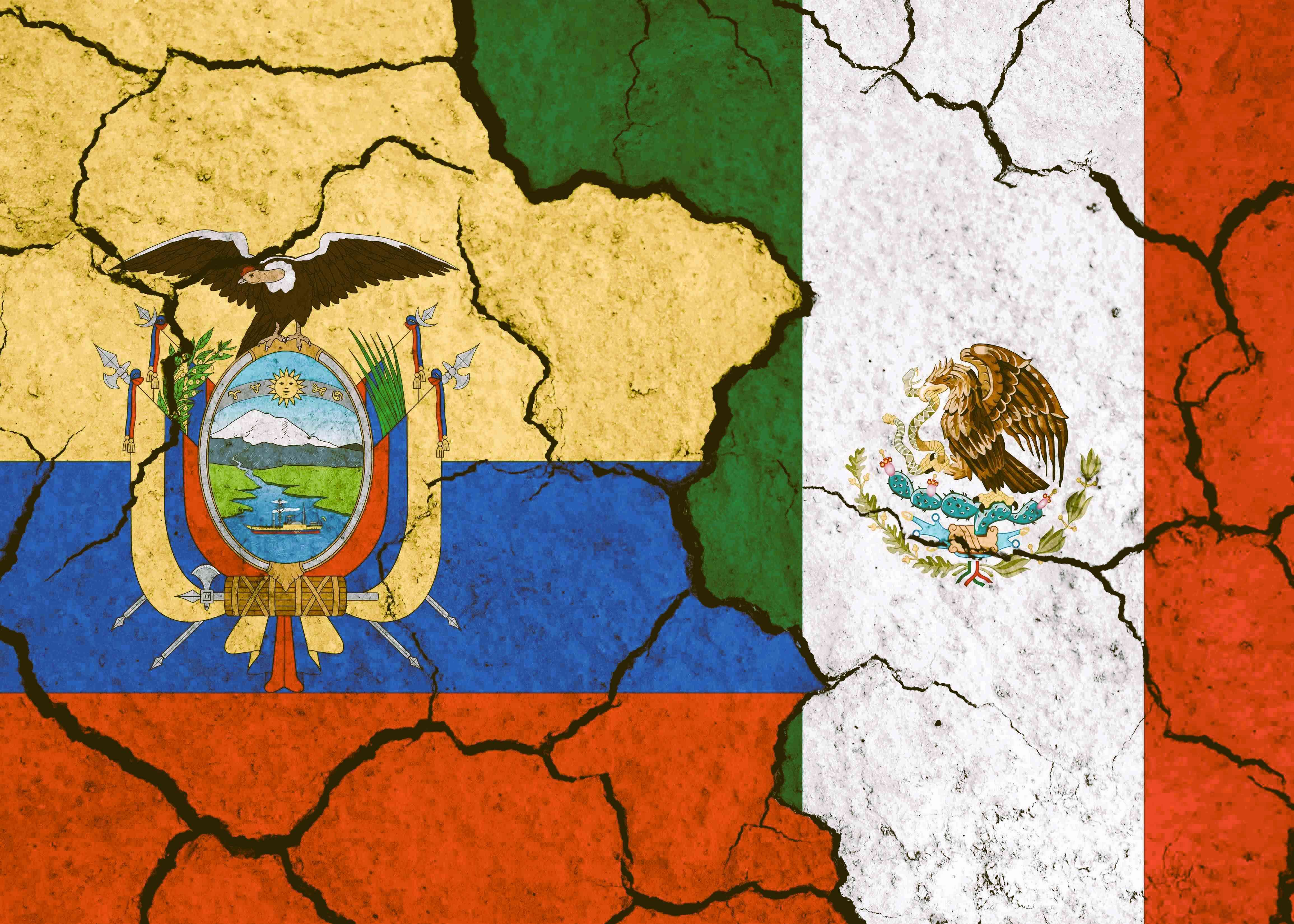
On May 23, 2024, the International Court of Justice (ICJ) unanimously rejected Mexico's request for provisional measures [1] against Ecuador for the breach of the Mexican embassy in Quito (ICJ 2024). The Court concluded that Mexico had not proven that Ecuador had irreversibly harmed its rights or that the circumstances warranted the urgent application of precautionary measures [2].
The decision reinforces the growing demand for provisional measures over the past few years. Between 2023 and the present, the number of requests has exceeded the total for the previous five years, demonstrating renewed interest among states in this procedural instrument.
This case represents the latest chapter in the escalating tensions between Latin American countries. The dispute began when Mexican President López Obrador argued that the assassination of Ecuadorian presidential candidate Fernando Villavicencio, which occurred days before the first round of elections in 2023, had influenced the final vote, which Daniel Noboa won.
The detention of Jorge Glas, former vice-president of Ecuador, on April 5 at the Mexican embassy in Quito, exacerbated the political crisis between the two countries, despite attempts at diplomatic reconciliation. Convicted of corruption and on provisional release, Glas sought asylum at the Mexican embassy, fearing further action from Ecuadorian authorities. This action generated a strong reaction from Mexico, which, considering it a flagrant violation of its sovereignty, broke off diplomatic relations with Ecuador and initiated contentious proceedings before the ICJ days later.
As part of its claims, Mexico requested that Ecuador take "appropriate and immediate" measures to ensure the protection and security of the Mexican embassy, including its archives and the private residences of Mexican diplomats. The Mexican state also demanded that Ecuador refrain from any action that could prejudice the ongoing proceedings at the ICJ, including guaranteeing that there will be no further measures against Mexico or its representatives.
On the merits, Mexico requests that the ICJ recognize Ecuador’s international responsibility for violations of the Vienna Convention on Diplomatic Relations, which establishes the principles of inviolability and non-interference in the activities of diplomatic missions. Furthermore, it requests the suspension of Ecuador's membership in the United Nations (UN).
In response, hours before the start of the public hearings in The Hague, the Ecuadorian government filed its own complaint with the ICJ, accusing Mexico of improperly using the Mexican embassy in Quito to shelter the former vice president since December 2023 (ICJ 2024b). Based on the same Vienna Convention, the Ecuadorian State argues that there has been a violation of the principle of non-interference in internal affairs, in addition to pointing to violations of the 1954 Convention on Diplomatic Asylum ("Caracas Convention"), the 1933 Convention on Political Asylum, and the United Nations Convention against Corruption.
The cases demonstrate that the issue of diplomatic asylum, particularly important in the Latin American context, is once again being raised in international fora. Marked by a turbulent political trajectory, the region has found in diplomatic asylum an important instrument to protect individuals victims of political persecution, a trend of the authoritarian regimes of the 20th century [3].
The concept of diplomatic asylum was analyzed by the ICJ in the Asylum and Haya de la Torre cases, respectively, in 1950 and 1951. At the center of the debate was Colombia's prerogative, as the granting state of asylum, to unilaterally determine the nature of the crime committed by Victor Raúl Haya de la Torre, an Ecuadorian political leader. The revolving question was whether the crime in question was political in nature, guaranteeing him the right to asylum, or whether it constituted a common crime, which would exclude him from this protection. The ICJ unanimously decided that Colombia, as the granting state, was not competent to classify the offense through a unilateral and definitive decision binding on Peru. Furthermore, the Court did not recognize the existence of a regional custom in this regard, as Peru opposed it (ICJ 1950, 266; 1951a, 71).
The revival of the Asylum case in the current dispute between Mexico and Ecuador, seemingly appropriate at first glance, may prove problematic. After all, the 1954 Caracas Convention–to which both are parties–established, in its Article 4, the right of the asylum-granting State to classify the offense. In its proceedings, Ecuador refrained from citing this provision, limiting itself to stating that the former vice-president had never been the object of political persecution. Furthermore, the Ecuadorian stance contrasts sharply with the decision to grant Julian Assange asylum for seven years in the Ecuadorian embassy in London, even though the previous government adopted that decision.
It is also worth noting the argument that Mexico’s granting of asylum violates the principle of non-interference in internal affairs, given the use of the Mexican diplomatic mission for purposes allegedly incompatible with the exercise of its diplomatic functions, as provided for in Article 41 of the Vienna Convention on Diplomatic Relations. However, since the Nicaragua case [4], the investigation of any violation of the principle of non-intervention requires assessing whether the act in question–the granting of asylum–constitutes coercive interference in the Ecuadorian political-electoral context (ICJ 1984, 392).
Furthermore, the decision is notable for its conciseness, which reveals a worrying trend in the Court’s procedural matters. Since its first decision on the application of provisional measures in the Anglo-Iranian Oil case of 1951 [5], the Court has gradually identified cumulative conditions for the exercise of the prerogative established by Article 41 of the Statute of the ICJ, namely: (i) existence of prima facie jurisdiction [6]; (ii) plausibility of the rights claimed; (iii) connection of the rights claimed with the measures requested; (iv) the risk of irreparable harm; and (v) urgency (ICJ 1951b, 89).
The Court has maintained the tradition of addressing the existence of prima facie jurisdiction as a requirement, even when it subsequently denies the granting of provisional measures due to a lack of urgency, as occurred in Belgium v. Senegal [7]. Moreover, since the Fisheries Jurisdiction and Nuclear Tests cases, both from the 1970s, the existence of prima facie jurisdiction has been addressed by the Court as a prejudicial element to the analysis of the other requirements for granting provisional measures (ICJ 2012, 422; 1972a, 12; 1972b, 30; 1973a, 99, 1973b, 135).
One of the rare exceptions to the Court’s jurisprudence constante occurred in the recent Nicaragua v. Germany case [8]. In dismissing the request for provisional measures, the Court refrained from addressing relevant substantive aspects–such as prima facie jurisdiction–and merely reported the facts and arguments of the parties to conclude that “the circumstances did not warrant the application of provisional measures” (ICJ 2024, free translation).
The primacy of procedural economy seems to have influenced the Court, once again, in denying a precautionary measure without addressing prima facie jurisdiction in the order of May 23. Unlike in Nicaragua v. Germany, the Court relied on the binding nature of public declarations by the Ecuadorian State, addressed both to the Court and to Mexico, which assured Ecuador's commitment to respecting the integrity of the Mexican diplomatic mission and its agents. Recognizing that a unilateral act creates a legal obligation for the issuing State, the Court quickly concluded that there was no urgency in applying a precautionary measure.
Although the decision was delivered unanimously, five separate opinions were attached by individual judges. Such individual pronouncements may indicate points of divergence which, while not sufficient to initiate a dissenting opinion, may reveal fissures in the Court's unanimous position. This is evident in the statement by German judge Georg Nolte (2024), who criticized the Court’s economic bias. For Nolte, the increase in requests for precautionary measures may justify greater conciseness in decisions, but should not allow for the disregard of conditions that assume logical and substantive priority.
The favorable reception of the ICJ’s decision by Mexican and Ecuadorian authorities is noteworthy. The Ecuadorian government, in an official statement, expressed satisfaction with the outcome, stating that the decision "confirms the unnecessary nature of the request" submitted by Mexico (Ecuador 2024). The Mexican Foreign Ministry considered the Court's decision an "advance in protecting the interests" of the country (Mexico 2024). With this stance, both governments demonstrate confidence in the resolution of the case on its merits.
The Glas case exposes the weaknesses of regional diplomacy and raises concerns about the escalation of conflicts between Latin American nations. In this sense, tensions may jeopardize Brazil's strategic interests (2024)–which condemned the Ecuadorian action–such as strengthening existing regional cooperation mechanisms, such as Mercosur and the Amazon Cooperation Treaty Organization, and deepening bilateral relations with Andean countries. In international law, the question remains whether the Court, on its merits, will revisit the institution of diplomatic asylum to clarify obscure aspects of the current state of the principle and its application in the growing number of requests for diplomatic asylum.
Notes
[1] Within the framework of the International Court of Justice, provisional measures are exceptional and urgent procedural instruments employed to prevent irreparable harm or to protect basic rights while awaiting the final resolution of a contentious case. These measures, provided for in Article 41 of the Statute of the Court and binding on the parties in dispute, are precautionary and temporary, aimed at safeguarding the parties' interests in litigation and ensuring the effectiveness of the Court's decisions.
[2] An abridged version of this article (Almeida & Vollers 2024) was published on the Migalhas portal on June 14th, 2024.
[3] Diplomatic asylum is an instrument of international law that allows a State to grant protection to an individual in its diplomatic mission (embassy or consulate) who is at risk of persecution or harm in their country of origin. It is a controversial institution, as it is not universally recognized and generates tensions between the States involved. However, in Latin America, diplomatic asylum has a long tradition and historical importance, having been used as a tool to protect individuals persecuted by authoritarian regimes.
[4] In this important case for international litigation, the Court condemned the United States for violating international law by supporting rebels against the Sandinista government of Nicaragua, in particular the principles of non-intervention in internal affairs and the prohibition of the use of force.
[5] In this case, the International Court of Justice determined, for the first time, the application of precautionary measures, inter alia, to ensure the status quo ante between the parties, prevent the dispute from escalating, and allow the Anglo-Iranian Oil Co.'s continued supervised operations in Iran.
[6] In international law, prima facie jurisdiction refers to a preliminary assessment by an international court or tribunal that, based on the information initially available, appears to have jurisdiction over a case. It is an initial determination that the jurisdictional body has sufficient grounds to assess the application of precautionary measures, without definitively deciding on the merits of the dispute.
[7] In 2009, Belgium initiated proceedings against Senegal before the International Court of Justice, alleging that Senegal was violating the obligation to "extradition or prosecution" (aut dedere aut judicare) under the Convention against Torture and Other Cruel, Inhuman or Degrading Treatment or Punishment. In deciding on the application of provisional measures, the Court, referring to the guarantees given by Senegal that it would not allow Mr. Habré to leave its territory while the case was pending, concluded that there was no risk of irreparable harm to the rights claimed by Belgium and that there was no sufficient urgency to justify the application of provisional measures.
[8] On March 1st, 2024, Nicaragua initiated proceedings against Germany at the International Court of Justice, arguing that Germany violated the 1948 Genocide Convention by supplying weapons to Israel for the conflict in Palestine. See more information at: https://www.icj-cij.org/sites/default/files/case-related/193/193-20240430-ord-01-00-en.pdf
Bibliographic References
Almeida, Paula Wojcikiewicz & Lucas Vollers. 2024. “Diplomatic asylum back to international forums”. Migalhas, June 14th, 2024. https://www.migalhas.com.br/depeso/409186/asilo-diplomatico-de-volta-as-instancias-internacionais .
Brazil. 2024. "Entry of Ecuadorian police forces into the Mexican Embassy in Quito". Ministry of Foreign Affairs, Press Release 145, April 6th, 2024. https://www.gov.br/mre/pt-br/canais_atendimento/imprensa/notas-a-imprensa/ingresso-de-forcas-policiais-equatorianas-na-embaixada-do-mexico-em-quito .
Ecuador. 2024. “International Court of Justice unanimously rejects provisional measures requested by Mexico against Ecuador”. Ministerio de Relaciones Exteriors y Movilidad Humana, press release, May 23, 2024. https://www.cancilleria.gob.ec/2024/05/23/international-court-of-justice-unanimously-rejects-provisional-measures-requested-by-mexico-against-ecuador/ .
ICJ. 1950. “Asylum case (Colombia v. Peru)”. ICJ Reports 1950. International Court of Justice. https://www.icj-cij.org/sites/default/files/case-related/7/007-19501120-JUD-01-00-EN.pdf .
ICJ. 1951a. “Haya de la Torre case (Colombia v. Peru)”. ICJ Reports 1951. International Court of Justice. https://www.icj-cij.org/sites/default/files/case-related/14/014-19510613-JUD-01-00-EN.pdf .
ICJ. 1951b. “Anglo-Iranian Oil Co. Case (United Kingdom v. Iran)”. ICJ Reports 1951. International Court of Justice. https://www.icj-cij.org/sites/default/files/case-related/16/016-19510705-ORD-02-00-EN.pdf .
ICJ. 1972a. "Fisheries Jurisdiction case (United Kingdom of Great Britain and Northern Ireland v. Iceland)". ICJ Reports, Order of August 17th, 1972. International Court of Justice. https://www.icj-cij.org/sites/default/files/case-related/55/055-19720817-ORD-01-00-EN.pdf .
ICJ. 1972b. “Fisheries Jurisdiction case (Federal Republic of Germany v. Iceland)”. ICJ Reports, Order of August 17th, 1972. International Court of Justice. https://www.icj-cij.org/sites/default/files/case-related/56/056-19720817-ORD-01-00-EN.pdf
ICJ. 1973a. “ Nuclear Tests (Australia v. France)”. ICJ Reports 1973. International Court of Justice. https://icj-cij.org/sites/default/files/case-related/58/058-19730622-ORD-01-00-EN.pdf
ICJ. 1973b. “Nuclear Tests case (New Zealand v. France)”. ICJ Reports 1973. International Court of Justice. https://www.icj-cij.org/sites/default/files/case-related/59/059-19730622-ORD-01-00-EN.pdf .
ICJ. 1984. “Case Concerning Military and Paramilitary Activities in and Against Nicaragua (Nicaragua v. United States of America).” ICJ Reports 1984. International Court of Justice. https://www.icj-cij.org/sites/default/files/case-related/70/070-19841126-JUD-01-00-EN.pdf .
ICJ. 2012. “Questions Relating to the Obligation to Prosecute or Extradite (Belgium v. Senegal)”. ICJ Reports 2012. International Court of Justice. https://www.icj-cij.org/sites/default/files/case-related/144/144-20120720-JUD-01-00-EN.pdf
ICJ. 2024. “Alleged Breaches of Certain International Obligations in Respect of the Occupied Palestinian Territory (Nicaragua v. Germany)”. ICJ Reports 2024. International Court of Justice. https://www.icj-cij.org/sites/default/files/case-related/193/193-20240430-ord-01-00-en.pdf .
Mexico. 2024. “The International Court of Justice reaffirms the inviolability of diplomatic missions as established in the Vienna Convention”. Press Release 197. Secretariat of Foreign Affairs, May 23rd, 2024. https://www.gob.mx/sre/prensa/the-international-court-of-justice-reaffirms-the-inviolability-of-diplomatic-missions-as-established-in-the-vienna-convention?idiom=en .
Nolte, Georg. 2024. “Declaration of Judge Nolte”. Embassy of Mexico in Quito (Mexico v. Ecuador). International Court of Justice, May 23rd, 2024. https://www.icj-cij.org/sites/default/files/case-related/194/194-20240523-ord-01-02-en.pdf .
Received: July 17th, 2024
Accepted for publication: August 29th, 2024
Translation published: June 15, 2026
* Translated from Portuguese by Theo Pereira with the support of digital translation and AI-assisted language tools: Google Translate (initial draft), Grammarly (grammatical and syntactic revision), and ChatGPT 6 (selective phrasing refinements). Reviewed and approved by the authors. AI assistance is disclosed in line with the guidelines of CNPq Ordinance No. 2,664 of March 6, 2026 (Brazil).
Copyright © 2026 CEBRI-Revista. This is an open access article distributed under the terms of the Creative Commons Attribution License, which permits unrestricted use, distribution, and reproduction in any medium, provided the original article is properly cited.
