
-

-

-
 PT | EN
PT | EN 
In 2025, geopolitical and geoeconomic oscillations characterized Brazil-US relations in the context of Lula 3.0 and Donald J. Trump 2.0 administrations. These oscillations are produced by structural conditions and conjunctural pressures, linked to power realities, pragmatism and strategic upheavals. In this scenario, the article's goal is to present a balance of bilateral diplomacy, arguing that there are continuous trends that affect the partnership, by exploring three dimensions. The first dimension is linked to the structural framework of power in which Brazil-US relations are inserted; the second is the analysis of the present time, and the third presents projections that are not final thoughts, but a potential roadmap of issues, opportunities and risks.
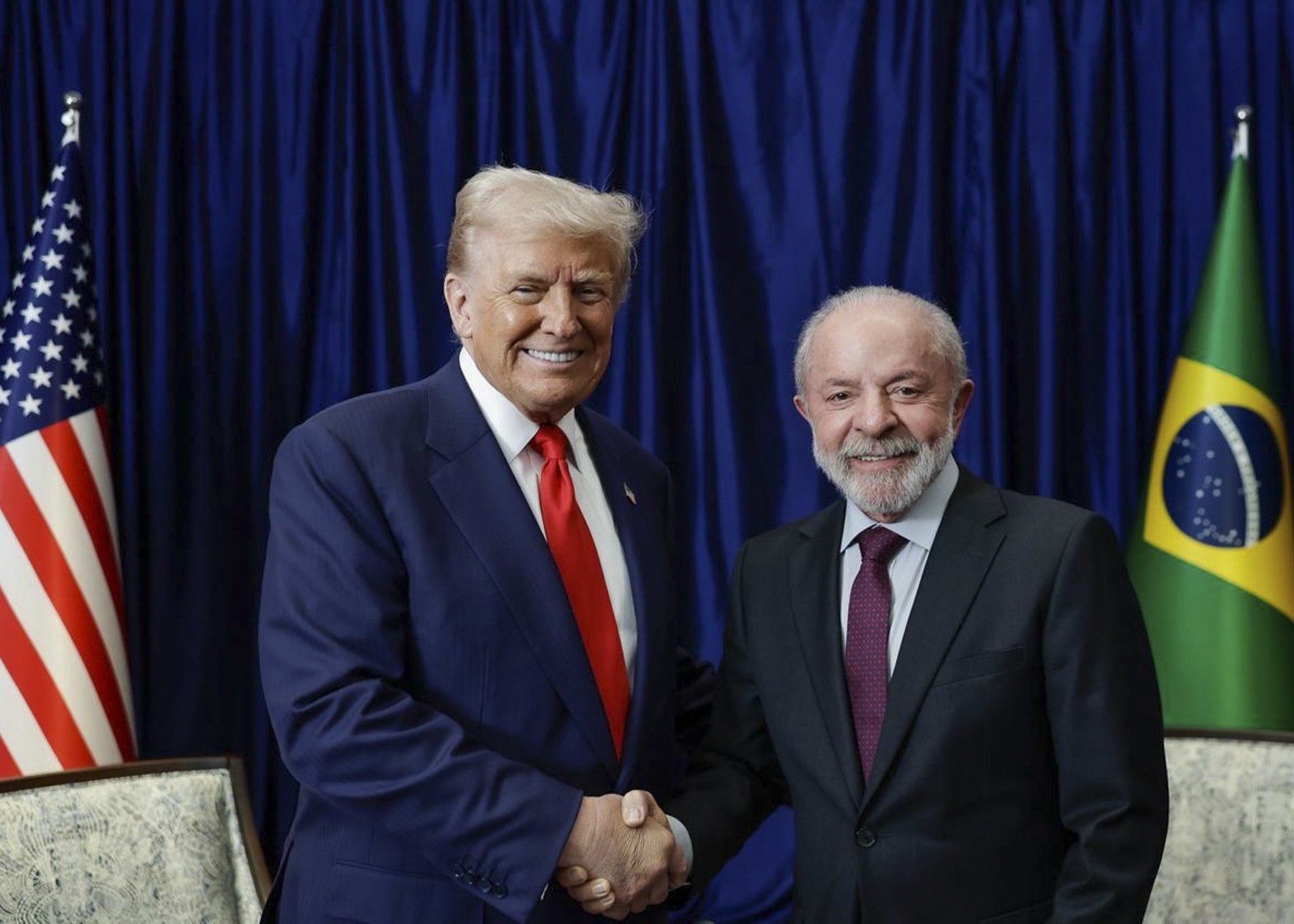
In January 2025, when President Donald J. Trump took office for a second term, several polarized analyses of the future of Brazil-US bilateral relations under the government of Luiz Inácio Lula da Silva (2023-Current) from the Workers Party (PT) and its coalition of progressive forces were produced. For some, the revival of the Republican Presidency after Joe Biden's Democratic hiatus (2021-2024) was a doomsday. Trump 2.0 was not only a restoration of his first mandate (2017-2020), but its deepening. For others, Brazil would resume the course of a US-like-minded State, preparing the ground for a political overturn in 2026.
In short, none of these polarized views was correct. Trump and Lula were able to explore the essence of politics, which is pragmatism. Therefore, this article aims to present a balance of bilateral diplomacy in 2025, reflecting current agendas, but also trying to present a broader context of bilateral relations and its possibilities. The core argument of the article is that Brazil-US bilateral relations, present and future, are linked to continuous trends that cannot be disregarded as they are ingrained in Brazilian society and foreign realities of power.
In order to explore this reality, added to this introduction, the text develops its argument into three sections: in the first section – the structural framework of power – the idea is to put into context the broader characteristics of Brazil-US relations, by briefly making four assumptions regarding these relations and today’s balance of world power. As this framework is built, the second section of the article focuses on the year 2025, and its comings and goings as Lula and Trump terms overlap, exploring international and domestic dynamics of both nations. The last section brings projections for 2026, that are mostly a potential roadmap of issues, opportunities and risks, rather than final thoughts.
THE STRUCTURAL FRAMEWORK OF POWER
Even though this is not a historical rendition of Brazil-US relations (Pecequilo 2025), but an essay on current agendas, four assumptions must be made. First, the US exerts structural influence on the nation's foreign policy and social, cultural, and economic development models, which define Brazil as part of the West. This influence affects the country, as its interest groups guide their positions, sometimes not based on concrete conditions but on assumptions about an either-or logic that aligning with the US produces benefits for Brazil.
Second, the US is still exercising its role as the world's hegemonic power, preventing the rise of challengers to its interests and strategic positions. The US acts as the world's balance of power holder, "engaging to contain" other nations. Third, despite remaining hegemonic, the US is facing domestic imbalances that challenge its power resources and the dynamics of interest groups that shape policy and decision-making.
Another source of pressure is the rise of emergent nations from the South, particularly China. These nations are sustaining effective coalitions such as the BRICS Plus, the Shanghai Cooperation Organization, and reorganizing their regional spaces and international projection. China's Belt and Road Initiative (BRI), its expansion beyond Eurasia, and the expansion of the Chinese system of international relations towards Africa, the Middle East, and Latin America offer alternatives to the West and the multilateral order. As a member of BRICS Plus, Brazil is one of these emergent nations, and China is one of its most relevant strategic and trade partners. As Hirst (2025) argues, Brazil-US bilateralism is directly affected by this transition of power. The scenario endures an unstable multipolarity (Visentini 2025), which leads to the fourth structural component.
In Brazil and Latin America, this structural framework goes even deeper as geopolitical conditions prevail, and the region is geographically located in the US influence sphere. The US would naturally act to restore its preferred alliances and conditions in the hemisphere if it perceives threats posed by regional or out-of-region players. This is a long-term tradition based on the 1823 Monroe Doctrine, which established these priorities in the 19th century. Although in the post-Cold War world some US governments mentioned that the Monroe Doctrine ended and was replaced by an era of cooperation, the Republican Presidency of George H. Bush (1989-1992), and the Democrat terms of Barack Obama (2009-2016) and Joe Biden (2021-2024), its geopolitical reality never ceased to exist.
Launched in November 2025, Trump's second term "National Security Strategy of the United States of America" (The White House 2025)[1] is a clear example of this. Breaking up a long-standing tradition that focused US attention on Eurasia, this document considers the Western Hemisphere as the US "priority". The other regions are the Indo-Pacific, Europe, the Middle East, and Africa. The US created the "Trump Corollary to the Monroe Doctrine". Although long, it is worth presenting a quotation that explores the core of this policy:
After years of neglect, the United States will reassert and enforce the Monroe Doctrine to restore American preeminence in the Western Hemisphere and to protect our homeland and our access to key geographies throughout the region. We will deny non-Hemispheric competitors the ability to position forces or other threatening capabilities, or to own or control strategically vital assets, in our Hemisphere. This "Trump Corollary" to the Monroe Doctrine is a common-sense and potent restoration of American power and priorities, consistent with American security interests. Our goals for the Western Hemisphere can be summarized as "Enlist and Expand." We will enlist established friends in the Hemisphere to control migration, stop drug flows, and strengthen stability and security on land and sea. We will expand by cultivating and strengthening new partners while bolstering our own nation's appeal as the Hemisphere's economic and security partner of choice (The White House 2025, 15-16).
The Trump Corollary reinstates the logic of the former Roosevelt Corollary of 1904, when President Theodore Roosevelt declared that the Latin American region would be the focus of US political and military interference. At that time, the core issue was in the Caribbean Basin, extending into the Northern part of South America. In the 21st century, although the initial focus is the same, US military power and political influence are stronger in other parts of South America.
Since 2000, when democrat President Bill Clinton started the militarization of the fight against drug trafficking with Plan Colombia, followed by George W. Bush narcoterrorism agenda and the restructuring of US Southern Command (USSOUTHCOM) and the creation of the United States African Command (USAFRICOM) in 2008, US military presence was updated in the South American space, from the North to the South Atlantic. This was a response to the rise of the Pink Tide of progressive governments, as well as to China.
Over the last 20 years, China has become the most relevant trade partner for several Latin American countries, filling the US aid, trade, and development cooperation vacuum. China is interested in the region's strategic resources, such as oil, rare earths, and critical minerals, as well as markets. Previously, Trump was already repositioning the US strategy in the Hemisphere. Dangers such as migration, organized crime and drug trafficking were present in strategic documents, added to the containment of external powers and local dangers (Venezuela, Cuba and Nicaragua). The priority was to enlarge the community of like-minded nations. There were also technological competition and trade wars within the North American Free Trade Agreement (NAFTA), which was updated as the USMCA (United States-Mexico-Canada) and a new project called Growth in the Americas.
Trump's Growth in the Americas was one of the first US initiatives aimed at regaining US influence in geoeconomics, followed by Biden's Americas Partnership for Economic Prosperity (APEP), which was unsuccessful. The US is unable to fully provide the kind of economic agenda that China does, not only in trade but also in infrastructure and investments. The arrival of the BRI in 2018 through the Community of Latin American and Caribbean States (CELAC) put additional pressure on US interests.
This leads to an unprecedented US-China competition, and China is clearly the most significant concern for NSS-2025 in the "non-hemispheric competitors" category. Brazil, as mentioned, is one of China's most relevant partners in South America and can be considered a "hemispheric competitor" when it pursues an autonomous foreign policy. How do these structural realities affect bilateral relations?
FROM THE GOOD NEIGHBOR DEMOCRAT TO THE YEAR OF PRAGMATISM (2025)
As Lula and Trump's terms overlap in 2025, it is possible to add some conjunctural elements to the previous structural framework. First, these terms operate in different conditions: for Lula, who is entering the last half of his third mandate, Trump 2.0 had come as a pressing variable for its agenda, challenging prospects of re-election in 2026 (or, if Lula is not the candidate, the chances of a progressive force winning); in the US, 2025 marked the first year of Trump's second term, after he lost his re-election bid in 2020 amid the pandemic. Both Presidents were staging a comeback and had to prove themselves in polarized societies.
For Trump, an offensive political stance in both domestic and foreign contexts was essential, repeating the logic of his first mandate: breaking with his predecessor's policies and redefining priorities in areas such as the economy, migration, and foreign policy. Lula, on the other hand, was in a defensive position, as agendas were in place and running, whereas conditions changed abruptly. As the nation's international priorities were set for a situation where democrats would remain in the White House, the country needed to adapt to a more sensitive external environment. Regarding domestic impacts, there was growing concern that the far-right movement in Brazil would be reignited. For the players of the January 8th, 2023 attempt to overthrow the democratic regime, who were in jail or still enduring trial, Trump's return to power was seen as a possible way out.
This would lead to Guimarães' (2025) argument that Brazilian diplomacy should adopt a "contain and engage" strategy across five axes: geopolitical, commercial, institutional/elections, regional, and technology/infrastructure. For this essay, we would resume these axes into three: geopolitical (geopolitical + regional), geoeconomic (commercial + technology and infrastructure), and geocultural (institutional/elections).
This strategy was put to the test in 2025 in three phases, and Brazil was able to both contain and engage the US: January-July, August-September and September-December. Although some may argue that the period is too short to be divided, one should remember that the pattern of Trump's Presidency is the "predictable unpredictability". This pattern relies on rapidly changing conditions and policies to pressure others and gain ground for US priorities and demands. Nevertheless, this supposedly erratic behaviour has a clear strategic logic of preserving US hegemony.
During the first phase, from January to July, Brazil-US relations were on hold. Trump's main concern was to promote significant changes to Biden's agenda on multilateralism, migration, human rights, and the environment. The idea of the good-neighbour policy, associated with the image of the "cordial democrat," was also present in Brazil's imaginary. One cannot guarantee that a Kamala Harris Presidency would be similar to Biden's, but there was an expectation of continuity. Biden's governmental actions in 2022-2023 helped sustain the democratic regime and restore stability. There was also a convergence towards universal rights and values.
Lula's diplomatic bet on the revival of multilateralism and a strong protagonism represented by Brazil's G20 Presidency in 2024 and the following ones in BRICS Plus, the Common Market of the South (Mercosur), and the Conference of the Parties (COP30) in the Amazon was naturally in check. Another effort that was pressed was Brazil's attempt to rebuild South American integration projects as the Union of South American Nations (UNASUR). MERCOSUR and CELAC were also experiencing difficulties due to the South American political crisis. Although several hypotheses about a new Pink Tide or a Conservative Tide were presented, constant changes in alliances and divided election results led to no clear "tides" at all.
Even with the launch of the US trade war on April 2nd, the "Liberation Day", Brazil was still somewhat flying under the radar of the US geoeconomic agenda, as import tariffs were set at 10%. There was great relief among interest groups in Brazil, as local exports were essential for keeping commodity prices low (bovine meat, fish, coffee, orange juice, to mention a few) in the US, and this was mostly because the US already had a trade surplus with Brazil. Other exports were of medium- and high-value manufactured products, such as diverse machinery (airplanes, compressors, mechanical parts), shoes, and steel. Brazilian imports were also relevant for the US trade balance and its surplus (gas, oil, machinery, pharmaceutical products and medicine). From an economic point of view, there was no benefit to the US in raising tariffs.
Some tensions, regarding the BRICS, the process of de-dollarization and the Brazil-China partnership were present. Conflicts regarding the regulation of social media and technology enterprises were already in place, inherited from Biden's government. However, they reached new heights due to Elon Musk's protagonism in the first months of Trump's Presidency, when he served as head of the Department of Government Efficiency (DOGE). There was a string of accusations of abuse of power by Brazil's Supreme Court, centered on Minister Alexandre Moraes.
Another source of tensions came from the geocultural side. Domestic forces in Brazil were constantly making use of Trump's pro-freedom speeches. One of former President Bolsonaro's sons, Eduardo Bolsonaro, moved to the US in March, as did other conservatives trying to escape Brazilian justice and, in their own words, organize the resistance against the left. There was a clear expectation that Trump would pressure Lula to stop the ongoing judicial process and free those who were already in jail.
At the end of July, all these factors combined led to the application of the Magnitsky Global Law towards Brazilian authorities and citizens. This law is a unilateral US measure created during Barack Obama's government and punishes foreign citizens who are accused of violating human rights and corruption crimes. The law works through economic sanctions applied to a chosen individual and involves suspending and prohibiting the issuance of US visas. For domestic groups, this measure was seen as an answer to the far-right pleas. This leads us to the second period: August-September.
This two-month period, which ended with the brief meeting between Lula and Trump at the UN General Assembly on September 23rd, could be described as the worst of the year and the most difficult for Lula. Although Brazil was not heavily affected in the first phase of the trade war, from August onwards, a 50% tariff was imposed on Brazilian exports. This 50% tariff was not exclusively imposed on Brazil, but also on India. Trump's justification for applying this new tariff initially cited Brazil's judicial situation regarding its former President Bolsonaro (in India, they were linked to the country's bilateral relations with Russia and its stance on the Ukraine war).
This was not the only reason, as Trump's criticism of the BRICS economic agendas was constant. Other issues that were not so visible geopolitically were brought to light once more, such as Brazil's neutrality in Ukraine and its condemnation of Israeli actions in the Palestine issue and the Gaza Strip. The tariffs were the first movement of the Trump Corollary towards Brazil.
The tariffs ignited the far right, represented not only by Bolsonaro's inner circle but also by conservative governors in states such as São Paulo, Minas Gerais, Goiás, and Paraná, to name a few. Some of these states were heavily affected by the tariffs, particularly São Paulo, and the political leaders saw an opportunity to openly criticize Lula. These leaders, who were already known for praising the US and for wearing red Make America Great Again caps, openly asked Brasília to bend to US political demands.
However, Lula's government stood its ground and refused to concede to both US and domestic pressures. The defence of Brazil's sovereignty was at the core of the government's efforts, helping Lula gain greater popularity. In contrast to red MAGA caps, progressive forces spread the images of the blue cap "Brazil belongs to the Brazilians". Apart from this publicity struggle lies the most relevant issue: the government opted for professional diplomatic and technical talks, understanding the logic and limits of Trump's actions. The search for alternatives to the US markets accelerated, with China and other emerging markets deepening talks with the European Union and developing domestic policies to aid the sectors hit hardest. As the government showed serenity, the opposition tried to generate panic.
Brazilian exports in the commodity sector are relevant to keeping US prices low, and Trump values those who do not show weakness. The convergence of these realities enabled a positive adaptation on both sides and was evident in Lula and Trump's brief, seconds-long encounter at the UN, which marked the beginning of the third phase.
From September to December, with the launch of the NSS-2025 included, pragmatism had become the essence of politics. Lula and Trump held a bilateral meeting in October 2025 with positive geoeconomic effects. This meeting, with additional efforts by Vice-President Geraldo Alckmin, also head of the Ministry of Development, Industry and Trade, and by Brazilian and American interest groups, resulted in a reduction in tariffs. A list of products, mostly food commodities, benefited from these talks, as US inflation was affected by Trump's trade war. Both countries were able to find a way through divergences, even without convergences, namely in the case of the Magnitsky Law, media regulation and Trump's former alliances with the Brazilian far-right. Accommodation does not mean the absence of clashes, but rather the possibility of their containment within diplomatic regular boundaries.
WHAT DOES 2026 HOLD? THE ERA OF UPHEAVAL
If 2025 ended on a positive note, embedded in pragmatism, 2026 began with signs of alert. On January 3rd, US military intervention in Venezuela for the ousting of President Nicolás Maduro, due to accusations of narcoterrorism, occurred, in the context of the Trump Corollary. As this process is still ongoing, this article can only observe that, in Brazil-US relations, this intervention reinforced Brazil's concern about US unilateral actions in the Western Hemisphere.
Are other military interventions possible? Trump mentioned Colombia, but Cuba and Nicaragua could be targeted. In an era of upheaval, anything is possible as the 2020s are full of hot spots: Ukraine, Gaza, Yemen, the African continent, Taiwan, etc. Which are the most pressing issues for bilateral relations?
International relations mirror pre-Second World War conditions, in which two poles were clashing (the US and Germany in that previous context): the US and China nowadays. Both are Brazil's main individual partners: the US in the three dimensions – geopolitical, geoeconomic and geocultural – and China focused on the geopolitical and geoeconomic agendas, but with less clout in the third aspect. However, this is a different hegemonic transition, as the US and China are strongly interdependent, with a higher risk of decoupling. So far, competitive coexistence prevails, but there is no process of de-risking this competition. On the contrary, it is escalating.
In an ideal scenario, Brazil could apply a bargaining foreign policy. In the real world, bargaining only works if there are two conditions: a consensual project of development and less vulnerability on one side, and a predisposition to negotiate on the other. It is doubtful that any of these conditions are present, as Trump envisions the preservation of assets such as US dollar dominance, technological advancement, and global projection, and China has already gained ground in several of these sectors, including its influence in the Western Hemisphere and in Brazil. This influence has spilled over and goes well beyond ideological narratives, and is ingrained in concrete agendas of trade, industry and infrastructure cooperation.
For Brazil, Trump's strategic clarity is positive, as well as its flexible realism and state-to-state policies. An autonomous and sovereign, yet cautious and pragmatic, policy would guarantee a productive bilateral relationship. As the world transition accelerates, new spheres of influence evolve. Brazil must have its own vision to navigate this unstable multipolar balance of power. To paraphrase Trump, peace comes through strength, not submission, but never without dangers.
*This article was completed on January 5, 2026.
Note
[1]Referenced as NSS-2025, for simplicity's sake.
References
Guimarães, Feliciano de Sá. 2025. “Contain and Engage: How Brazil Should Deal with Trump 2.0.” CEBRI-Journal, 4 (14): 16-33. https://cebri.org/revista/en/artigo/216/contain-and-engage
Hirst, Monica. 2025. “Brasil-Estados Unidos: um bilateralismo político em tempos de transição mundial.” In As relações Brasil-Estados Unidos no século XXI, Lia Valls Pereira & Monica Hirst (Orgs). Brasília: Ed. FUNAG.
Pecequilo, Cristina S. 2025. O Brasil entre dois mundos - os Estados Unidos e a China. Rio de Janeiro: Edições 70/Altabooks.
The White House. 2025. “National Security Strategy of the United States of America”. https://www.whitehouse.gov/wp-content/uploads/2025/12/2025-National-Security-Strategy.pdf.
Visentini, Paulo Fagundes. 2025. “A Multipolaridade Instável: construindo um conceito da transição sistêmica e suas alianças fluídas”. Revista de Segurança, Desenvolvimento e Defesa 2 (1): 173-183. https://rsdd.esd.gov.br/index.php/rsdd/article/view/64.
Submitted: January 5, 2026
Accepted for publication: February 9, 2026
DOI: https://doi.org/10.54827/issn2764-7897.cebri2025.16.02.03.49-62.en
Copyright © 2026 CEBRI-Journal. This is an Open Access article distributed under the terms of the Creative Commons Attribution License, which permits unrestricted use, distribution, and reproduction in any medium, provided the original article is properly cited.
