
-

-

-
 PT | EN
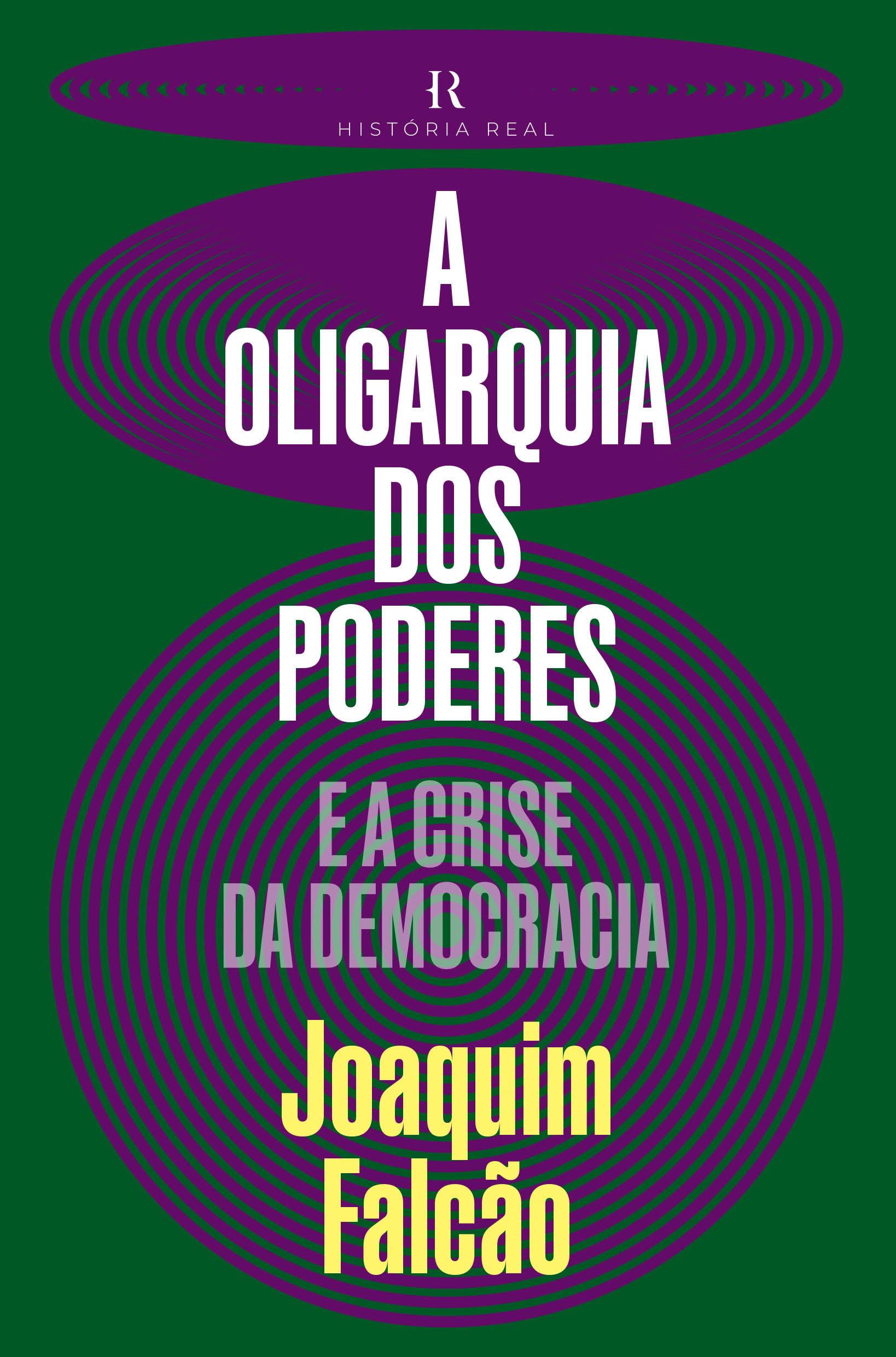
Democracies are under attack around the world, but not all are threatened in the same way. In the general narrative, elected actors use the powers of office to gradually undermine the pillars of democratic governance. In A oligarquia dos poderes: e a crise da democracia (The Oligarchy of Powers: and the Crisis of Democracy – História Real 2026), Joaquim Falcão discusses a specific plot in the Brazilian case. Beyond the risk that we never fully realize the century-old promise of “Original Democracy,” in the author’s expression, the danger is the consolidation of “a new political regime: the Oligarchy of the three State powers” (Falcão 2026, 55). The transformation is taking place through the coordinated, deliberate, and self-interested action of groups entrenched at the heart of the three branches of government.
This threat would be older (and broader) than the frankly authoritarian conduct of Jair Bolsonaro, who even promoted a classic coup with the military. In fact, Bolsonaro and themes such as disinformation and the growing politicization of the Armed Forces hardly appear in the book. There are some side themes to Falcão’s argument, such as the uncritical, colonized import of political and constitutional ideas or the Judiciary's ineffectiveness in solving social disputes. But the gist of the argument focuses on something distinct from the global plot of authoritarian populists who undermine democracy from within.
First, for Falcão, in Brazil it is not only elected actors but also judicial ones who work against the fulfillment of the democratic promise. Second, no single protagonist uses the powers of office to subjugate other institutions. On the contrary (and here lies a central point of the book), a kind of concerted equilibrium exists. Different actors in different branches enter into a stable collusion to guarantee one another the ability to remain (and amass wealth) in power. They do so against the interests and will of the majority of the population and against the limits set for their respective offices. Here is the oligarchy of powers in (in)action.
“Oligarchy,” here, appears in two senses. In the general sense, it contrasts with democracy as a pattern of organizing political power: a small group recurs across elections to decide the country’s course, not the mass of voters. As Jeremy Waldron observes, the promise of democracy involves something unnatural in a society where wealth, strength, and influence are unequally distributed–making the mere numerical weight of the otherwise disempowered central in the community’s decisions (Waldron 2016, 189). If it is not inevitable for the impoverished, divided, and unarmed majority to govern, democracy promises to build institutions (such as universal suffrage, freedom of association, and political equality) to that end.
The oligarchy of powers openly works against this promise. In a more proper sense, “oligarchy” designates in the book the domination of concrete, specific groups: occupants of the branches who, over time, use their position to constitute themselves as a kind of caste that perpetuates itself in power. This caste is not formed around economic power, nor around social organizations and relationships whose strength would predate State political power, such as parties and families. Even so, for Falcão, family relationships are a key element to understanding how the “oligarchy of powers” expands, enriches, and perpetuates itself. Access to State power generates specific interests and opportunities that, over time, allow certain families to entrench themselves in power.
Falcão thinks more in sociological terms (the work of Raymundo Faoro, incidentally, is clearly an inspiration). Even so, a comparison with Robert Dahl's classic Polyarchy helps illustrate his point. Dahl called “competitive oligarchies” regimes in which a restricted set of citizens contests political power: the contest exists, but most of the population does not take part in it (Dahl 1997, 30). In Dahl’s terms, Brazil would be a polyarchy today if we look at the broader institutional picture. But under these polyarchic rules, it functions as an oligarchy, operating so that among its members there is no real contest, but rather collusion–neither in elections nor in the day-to-day of the separation of powers. The families and groups entrenched in Congress, the Judiciary, and the public administration form a kind of consortium in which no one needs to lose power or the opportunity to increase their wealth and influence. A “win-win” in which the population ultimately always loses.
A professor of constitutional law, Falcão pays special attention to the institutional gears through which this consortium operates, above all the selective use of the checks and balances provided for in the Constitution. Instead of mutual checks, we have something like combined non-controls: you don’t touch mine, and I won’t touch yours; or you can touch mine, and I yours, as long as it benefits us both. Why fight, if our powers allow us to cooperate for our personal ends?
The challenge here is as old as the separation of powers itself. What good is it to give officeholders mechanisms to control one another if they lack the motivation to use them? Montesquieu relied on the natural antagonism among “social bodies” as the engine of checks and balances. King, nobles, and commons have “naturally” divergent prerogatives and interests. That is why the Crown, the House of Lords, and the House of Commons would invariably use the prerogatives the English Constitution placed at their disposal to control one another. The authors of the Federalist Papers, in turn, counted on the individual ambition of holders of elective office, on one side, and on the multiplicity of beliefs and interests that divide citizens in any free society, on the other. The branches would control one another because their occupants, chosen through the most varied elections and committed to preserving the power of their own office, would have divergent ambitions, interests, and beliefs.
But what if ambitions, interests, and beliefs align? During the George W. Bush administration (2001-2009), in the “War on Terror,” the Republican Party controlled both houses of Congress and the Presidency for most of the time. In that period, checks and balances (at least between the Legislative and the Executive) were basically dormant on national security matters: the Executive had carte blanche. As an organization that cuts across all these offices, the Republican Party aligned everything “from the outside” of the formal institutions and offices. Independence and control mechanisms exist among senators, representatives, and the President, but converging political interests prevent their activation.
In that scenario, there may be no checks and balances, but there is at least representation: the US Republican Party did, in fact, win those elections. In the oligarchy of powers, however, parties (and the electorate itself) are irrelevant. For Falcão, our “hydroponic parties” (an expression coined by Antonio Lavareda) are uprooted, creating a system in which “the politician despises the voter. The voter despises the party. And the party despises the politician” (185). In Falcão’s words: “Free from parties, and from the dream that the many can control the few, the three State Powers build a collusion. Transpartisan. Nonpartisan. Counterpartisan. Free, too, from checks and balances. Internal or external” (186).
Here, an ambiguous zone exists between diagnosis and critique. At times, Falcão seems to lament the “hydroponic” fate of most parties (perhaps, if they were stronger, could they control the oligarchs of the powers?). At other times, he seems to celebrate the transformations that weakened parties, attributing positive value to the figure of the “outsider.” Yet if the problem is that party elections are “insufficient” to control power (184), the growing space for outsiders is more a danger than a solution. They further weaken electoral control and other institutional controls to which strong parties could contribute.
Running through the book is a tension that is present but not made explicit: the relationship between oligarchy and the idea of the rule of law as government limited by rules. Falcão constructs the oligarchy of powers in opposition to the ideas of democracy and separation of powers, without discussing the rule of law. In the details, however, his analysis shows how this oligarchy is built on freedom of action, on the voluntarism of these agents, from agenda-setting to the interpretation they give to their own powers. This is what enables the construction of a reciprocal laissez-faire in the pursuit of self-interest, with conflicts generally staged around issues that, for the oligarchs, are peripheral.
The separation of powers presupposes that constitutional rules matter. It cannot be a system in which different actors may do whatever they want to limit one another. In fact, to conceive of it that way would lead us directly to Falcão’s oligarchy of powers. After all, if we are free to check one another or not, would it not be more advantageous to reach an agreement of reciprocal “non-limitation”? And what stops me from playing hardball and inventing new prerogatives to strengthen my bargaining position? Separation of powers is not merely calculation against calculation, but political interests limiting one another within the rules and competences of the Constitution. This holds above all for the Judiciary, whose action, unlike that of elected actors, should not be marked by the logic of free choice and creation.
One example discussed in the book is the individual injunction issued by Justice Gilmar Mendes in late 2025, by which he simply invented a new (and highly restrictive) procedure for the impeachment of Supreme Federal Court (STF) justices. This invention-as-decision emerged openly as a self-protective move to strengthen the Court’s position vis-à-vis Congress. It is separation of powers without rules: whoever can defend themselves does so, inventing whatever means they can. There may be checks and balances of some kind here, in a political sense, but at the bottom there is neither constitutional law nor rule of law.
Falcão’s critique of the decision seems to presuppose that there are, in fact, legal limits that officeholders should recognize. On the other hand, he expresses skepticism about the usefulness, as limits to State agents, of any rules that are not as precise as, for example, “the Supreme Court shall be composed of 11 justices.” For Falcão, it would be a vain hope of a “formalist conception” (114) to expect that excessively open, polysemic words of “elastic” meaning (such as “reasonableness”) can somehow limit the power of those who hold these offices.
Here, Falcão aligns himself with classic US constitutional thought. For the authors of the Federalist Papers, the separation of powers enters the scene because mere “parchment barriers” will be insufficient to limit political actors. Realism underpins this constitutional theory. It is precisely what leads to the creation of complex structures and incentives so that these actors control one another.
Yet realism cannot dispense with some belief in the force of constitutional rules, even those of “malleable” meaning. After all, constitutional rules forge these structures and incentives for mutual control. Not all of them will have instructions as precise as “the election of the President shall be held on the first Sunday of October.” Any Constitution will also include open-textured rules. These rules can mean many things, but they are expected not to mean just anything.
What, then, would be the problem in the relationship between the oligarchy of powers and constitutional rules? Would the problem be that “the elasticity of State discretion is the greatest fragility of Original Democracy” (107), and the oligarchy merely exploits this systemic flaw? Or, rather, that the oligarchs lack institutional limits that would prevent them from ignoring the law and “interpreting themselves” into the rules (106)? Put another way: do the Oligarchs of the Powers merely play with the rulebook (however elastic) as it is, in all its possibilities? Or did they long ago throw away the rulebook and, ultimately, as in the Humpty Dumpty quotation, “the question is which is to be master–that’s all” (112)? Does the law give the oligarchs too much freedom, or do they simply not care about the law?
Falcão states that “the interpreter of the legal matter is also the interpreter of the limit itself. Interpretation is power” (113). Even if this is inevitable from an institutional standpoint, what criterion decides that the oligarchy of powers is openly betraying the promise of separation of powers designed in the Constitution, rather than merely exploiting its flaws? Would the problem here be just that the oligarchy acts for the wrong interests or ends (those of officeholders, not those of the population that entrusted them with power)–or would it be also that the oligarchs adopt the wrong means, with no commitment to rules, however vague?
Falcão unpacks the “means” of the oligarchy across several chapters, with important analyses of how judges and politicians use agenda-setting power, among other things, to promote their interests. At other moments, however, examples could be read as celebrating unbound, rule-free action, so long as it serves the right ends. Falcão cites, for instance, Justice Flávio Dino’s individual injunction on the so-called “penduricalhos” (extra-salary perks) as action against the oligarchy of powers (24). From a legal standpoint, it is an extremely heterodox decision, marked by great judicial voluntarism regarding its form and timing. Moreover, it emerged as a public counterpoint to (and hollowing out of) the proposal for a code of ethics for the Supreme Court, then spearheaded by the court’s President, Edson Fachin, and challenged by Dino (ver Uribe 2026). It was a “self-creative” decision by a single Justice, issued as part of an internal dispute within the court (the dispute being whether the justices should discuss and present to society rules that limit their own behavior).
Examples like this raise the question: is it possible to dismantle the “oligarchy of powers” through brute force or para-legal cunning? Or are these cases, rather, disputes internal to the consortium of the “oligarchy of powers” itself? Falcão does not speak in these terms, and the book’s main opposition is clearly between oligarchy and democracy. Even so, the narrative also reveals an unfulfilled promise of the rule of law. If the oligarchy of power is built on contempt even for the most generous limits set by the Constitution, attacking it outside the rules may mean simply presenting new candidates for the same oligarchic post–or, worse, a “monarchical judicial coup” (41).
Despite its focus on democracy, the book also documents a more general crisis of the rule of law, of any commitment that power should not be a mere expression of the wills and whims of the political groups or families that hold it.
References
Dahl, Robert. 1997. Poliarquia. Brasil: EDUSP.
Levinson, Daryl J. & Richard H. Pildes. 2006. "Separation of Parties, Not Powers." Harvard Law Review 119 (8): 2311-2386. http://www.jstor.org/stable/4093509.
Uribe, Gustavo. 2026. "Fachin planejava discussão prévia sobre limite a penduricalhos." CNN Brasil, 5 de fevereiro de 2026. https://www.cnnbrasil.com.br/blogs/gustavo-uribe/politica/fachin-planejava-discussao-previa-sobre-limite-a-penduricalhos/.
Waldron, Jeremy. 2016. “Accountability and Insolence.” In Political Political Theory, Jeremy Waldron: 167-194. Princeton: Princeton University Press. https://doi.org/10.4159/9780674970342-008.
Translated by Bruno Zilli, with support from digital machine translation tools: Claude (initial draft) and Grammarly (grammatical and syntactic revision). Reviewed by the author.
Submitted: September 29, 2026
Accepted for publication: September 30, 2026
Copyright © 2026 CEBRI-Journal. This is an Open Access article distributed under the terms of the Creative Commons Attribution License, which permits unrestricted use, distribution, and reproduction in any medium, provided the original article is properly cited.