
-

-

-
 PT | EN
PT | EN 
México e Brasil, as duas maiores economias da América Latina, têm, há muito tempo, apresentado desempenho aquém como parceiros devido à divergência estrutural e ao desalinhamento geopolítico. Em uma ordem global em fragmentação, essa lacuna tornou-se uma vulnerabilidade estratégica. Este artigo argumenta que uma relação mais substantiva é agora tanto necessária quanto viável, mas apenas se ancorada em investimento, complementaridade setorial e engajamento coordenado na governança global, em vez de alinhamento político episódico ou aspiração diplomática.
The Strategic Question Latin America Has Deferred Too Long
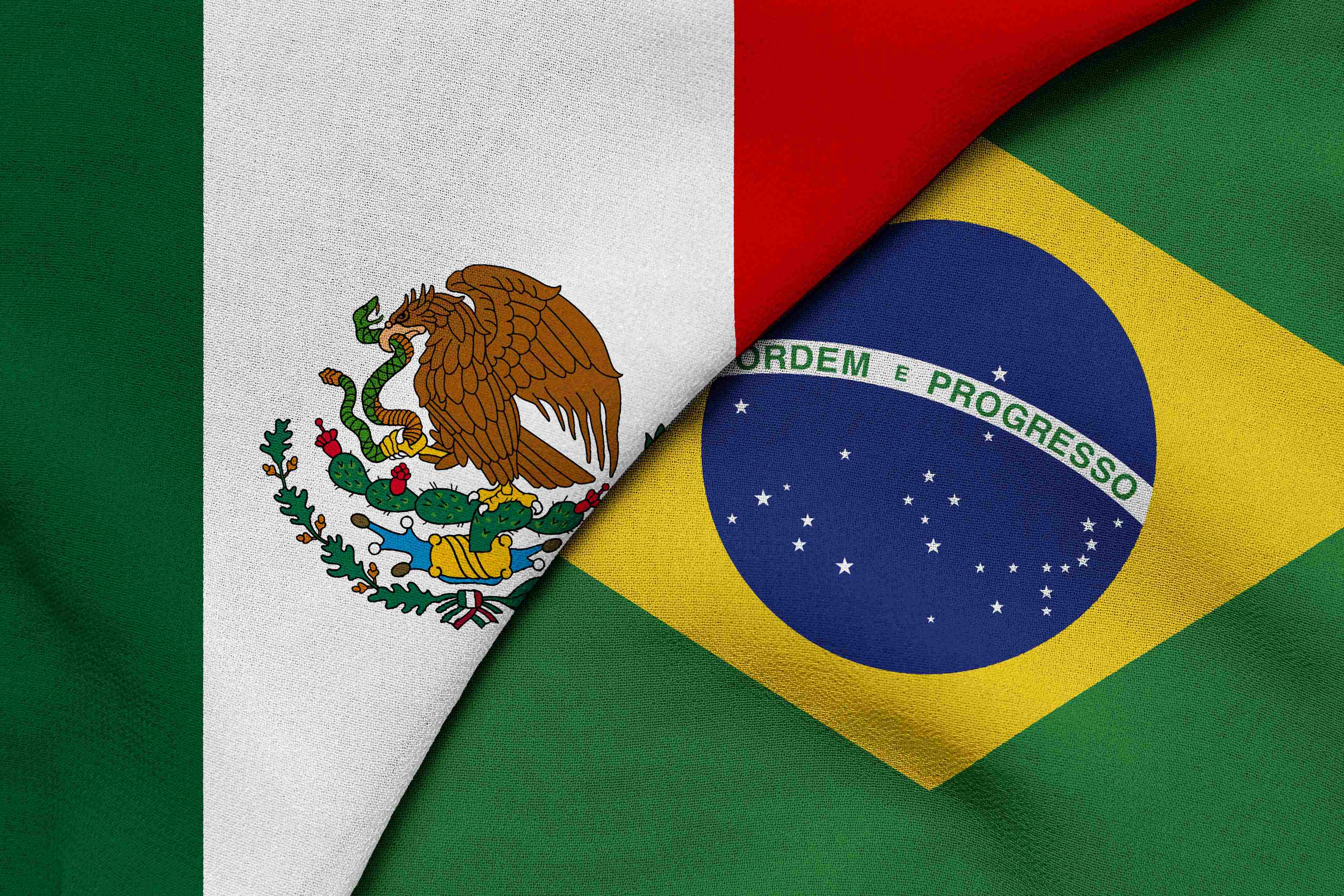
The relationship between Mexico and Brazil has long been treated as an unrealized opportunity. In fact, it is something more consequential: a measure of whether Latin America can act with any degree of strategic coherence in a world that is reorganizing itself around competing economic and geopolitical blocs. For much of the past three decades, that question could be deferred. Today, it cannot. As fragmentation reshapes trade, finance, and technology, and as middle powers are compelled to position themselves within an increasingly contested international system, the absence of a sustained and purposeful relationship between the region’s two largest economies is no longer a secondary issue—it is a structural constraint on Latin America’s ability to matter.
In the current environment, the absence of coordination between Mexico and Brazil ceases to be a neutral condition. It becomes a structural weakness. Neither country, acting alone, has the scale or the leverage to shape outcomes in any meaningful way. Together, they would not resolve Latin America’s long-standing limitations, but they would significantly enhance its capacity to navigate them.
Yet if this relationship is to acquire real substance, it must be built differently from past efforts. The recurring pattern has been one of political convergence generating expectations of partnership, only for those expectations to dissipate when structural realities reassert themselves. The lesson is not that the relationship lacks potential, but that it has been conceptualized incorrectly. It cannot rest on diplomatic will or ideological affinity. It must be anchored in shared interests that are sufficiently concrete to survive changes in government and shifts in the international environment.
A Relationship Shaped by Structure, Not by Choice
The limited depth of Mexico–Brazil relations is often attributed to a lack of political will or to episodic disagreements. The literature suggests something more fundamental. The relationship has been shaped, from the outset, by structural divergence.
The most consequential of these divergences emerged in the 1990s. Mexico’s decision to anchor its economic strategy in North America, through NAFTA (and later USMCA), created a production structure deeply integrated into U.S.-centered supply chains. Brazil, by contrast, pursued a model of regional industrialization, consolidating its leadership within Mercosur and prioritizing domestic market development. These were not merely different policy choices; they produced distinct economic ecosystems, regulatory frameworks, and patterns of external engagement (Hakim 2002; Covarrubias 2016).
Over time, this divergence was reinforced by geopolitical positioning. Brazil’s foreign policy deliberately constructed a South American space in which it could exercise leadership, a process that, by design, left Mexico outside its primary strategic horizon (Gratius & Saraiva 2013; Malamud 2011; Saraiva 2010; Pinheiro & Gaio 2014). Mexico, for its part, became increasingly absorbed in managing and deepening its relationship with the United States, a task that left limited bandwidth for sustained engagement with South America (Berg, Bledsoe & Ferguson 2025; Pellicer 2023).
These trajectories did not produce conflict, but they did produce distance. The relationship that emerged was one of intermittent engagement, periodically revitalized by moments of political alignment but never underpinned by a durable structural logic.
Indeed, one of the more striking findings of the literature is the consistent inability of political convergence to overcome these underlying constraints. Periods of ideological alignment—whether in the early 2000s or in the present moment—have generated expectations of a qualitative shift in the relationship. Yet those expectations have invariably proven difficult to sustain. The structural foundations simply have not been there (Seabra 2012; Saraiva & Costa Silva, 2021; Chagas-Bastos & Franzoni 2019; Sotero & Wood 2015).
This is not a story of missed opportunities in the conventional sense. It is a story of a relationship that has evolved in accordance with the incentives and constraints that each country has faced in its broader international insertion.
Economic Proximity Without Integration
If history explains the distance, recent economic trends reveal both the potential and the limits of rapprochement.
There has been undeniable growth in bilateral trade over the past decade. Flows expanded significantly, reaching a peak of over $18 billion in 2023 before moderating the following year. Yet this growth, while notable, should not be overstated. In relative terms, trade between Mexico and Brazil remains marginal, particularly when set against each country’s primary economic relationships (World Bank 2024).
The underlying reason lies in the structure of their economies. Mexico is one of the most open economies in the developing world, with trade representing over 74 percent of GDP. Brazil, by contrast, remains comparatively closed, with a trade-to-GDP ratio closer to 36 percent (World Bank 2025). These differences are not merely quantitative; they reflect distinct models of development. Mexico’s industrial base is deeply embedded in North American value chains, while Brazil’s is oriented toward domestic demand and, increasingly, toward commodity and industrial exports to China (Canuto, Fleischhaker & Schellekens 2015; Ornelas, Pessoa & Ferraz 2020).
Institutionally, the relationship remains shallow. The existing framework—principally the ECA-53 and ECA-55 agreements—covers only a limited portion of the tariff universe (approximately 13%), leaving significant barriers in place. Efforts to expand this framework are ongoing, but even in an optimistic scenario, they will not replicate the depth of integration that Mexico has achieved with the United States or that Brazil has pursued within Mercosur.
The fragility of this framework was laid bare at the end of 2025, when the Mexican Congress — at the initiative of the Sheinbaum government — approved a sharp increase in import tariffs on 1,400 products from twelve countries with which Mexico lacks trade agreements, including Brazil and China. The measure, part of the government's Strategic Industries Protection Program, raised average tariffs on affected goods from 16.1 to 33.8 percent, with some tariff lines reaching 50 percent, and entered into force on 1 January 2026. According to an analysis by Brazil's National Confederation of Industry (CNI) submitted to the Brazilian government, the measure threatened US$1.7 billion in Brazilian exports — equivalent to 14.7 percent of what Brazil sold to Mexico in 2024 — and fell disproportionately on intermediate goods, affecting 232 product lines across sectors including automotive components, chemicals, metallurgy, and steel. Brazil was identified as the fifth-most-affected country (Said 2025). The episode illustrates, concretely, the cost of the absence of a comprehensive trade agreement: countries with existing FTAs — the United States, the European Union, Canada, Japan, and Vietnam — were explicitly exempted. It also underscores the tension between the two countries' rhetorical commitment to closer integration and the domestic industrial policy logic, combined with pressure from the US on Mexico, that continues to pull in the opposite direction. Significantly, the tariff increases were announced just months after the August 2025 bilateral summit had generated expectations of a deepened commercial relationship — a reminder that political momentum at the summit level can be undermined by legislative and regulatory decisions taken at the domestic level.
It is in investment, however, that the true nature of the relationship becomes apparent.
There is, at first glance, a paradox. Some of Mexico’s most sophisticated and globally competitive firms have established a significant presence in Brazil. América Móvil has committed tens of billions of dollars to building a dominant position in telecommunications. FEMSA has constructed a multi-billion-dollar footprint in beverages and retail. Grupo Bimbo, Nemak, and Orbia have all established durable operations through acquisitions and organic expansion.
And yet, when one steps back from these individual cases, the aggregate picture is far less impressive. Mexican foreign direct investment in Brazil remains modest, volatile, and highly concentrated. Over the past two decades, flows have averaged relatively low levels and have been characterized by sharp fluctuations, including periods of net disinvestment.
This is not a contradiction. It is an indication of how difficult the Brazilian market is for foreign entrants. The firms that have succeeded are precisely those with the scale, capital, and organizational capacity to navigate a complex regulatory environment and absorb the costs of entry.
The obstacles are well known but no less consequential for that. Brazil’s regulatory complexity—the so-called Custo Brasil—imposes a heavy burden on investors, combining a fragmented tax system, legal uncertainty, and administrative opacity. The absence of a comprehensive investment framework between the two countries further increases risk, particularly for firms that lack the legal and political resources of large multinationals.
Beyond these institutional factors, there are deeper structural impediments. The two economies are not linked by integrated supply chains of the kind that have driven investment flows elsewhere. Geographic distance and logistical constraints add to the cost of doing business. Mercosur’s common external tariff makes export-based entry strategies difficult, effectively requiring investors to commit to local production from the outset. Currency volatility introduces an additional layer of risk that is difficult to hedge over long time horizons.
Perhaps most importantly, there is a lack of strategic intent. Mexican firms, particularly those with global ambitions, have historically prioritized the United States and, to a lesser extent, other Spanish-speaking markets. Brazil, despite its size, lies outside both the USMCA preferential framework and the linguistic and cultural comfort zone of many Mexican companies. On the Brazilian side, outward investment has followed its own logic, oriented toward markets that offer either proximity or clear strategic advantages.
The result is not an absence of opportunity, but a pattern of selective engagement. The relationship is sustained by a small number of highly capable firms rather than by a broad base of economic integration.
Geopolitics Beyond False Choices
The geopolitical divergence between Mexico and Brazil is often framed as an impediment to closer relations. In practice, it may be better understood as a source of potential complementarity—provided it is approached with a degree of strategic clarity.
Brazil’s engagement with BRICS is a case in point. It reflects a coherent attempt to expand the country’s room for maneuver in an increasingly contested international system. Through BRICS, Brazil has gained access to alternative forums of coordination, reinforced its role as a representative of the Global South, and participated in institutional innovations such as the New Development Bank.
These are tangible achievements, and they should not be dismissed. At the same time, it is important to recognize the limits of what BRICS can deliver. The group remains highly heterogeneous, encompassing countries with divergent political systems, economic structures, and strategic priorities. Alignment is often difficult to achieve, and when it is achieved, it tends to reflect minimal consensus rather than deep convergence (Hadebe 2026).
From an economic perspective, the picture is equally uneven. China occupies a position of clear predominance within the group, both as a trade partner and as a source of investment (Garcia et al. 2025; Tourangbam & Pathak 2020). The economic relationships among the other members remain underdeveloped, lacking sufficient density and integration required for more comprehensive cooperation. A significant majority of intra-BRICS trade growth is attributable to engagement with China, while Brazil’s BRICS trade is notably less diversified than its broader international trade portfolio and is predominantly focused on China (UNCTAD 2026).
In this sense, BRICS is an important component of Brazil’s external strategy, but it is not, and cannot be, a sufficient one. It does not provide the kind of diversified, high-quality economic integration that Brazil ultimately requires to sustain growth and technological upgrading (Brosig 2021; Avila & Caramuru 2025).
Mexico’s situation is, in many respects, the mirror image. Its integration into North America is deep, productive, and, by most measures, successful (Velasco 2018; Arnaud 2024; Wilson 2017). Yet it also creates a form of dependence that is increasingly difficult to manage in a context of political volatility and strategic competition in the United States (Wood 2026; Petrova 2026).
What emerges from this comparison is not a contradiction, but a potential alignment of interests. Brazil’s diversified global engagement and Mexico’s deep integration into advanced manufacturing networks are not mutually exclusive assets. They are, potentially, complementary ones.
The challenge is to move beyond the implicit assumption that each country must choose between its existing strategic orientation and a closer relationship with the other. The more productive approach is to recognize that, in a fragmented global economy, diversification is itself a source of resilience. For Brazil, this means looking beyond BRICS—which by and large means China—as the primary axis of external engagement. For Mexico, it means developing a more active presence beyond North America.
The Possibilities—and the Frictions—of Cooperation
If the relationship between Mexico and Brazil is to acquire real substance, it will have to do so not through broad declarations of intent, but in domains where interests converge in concrete and operational ways. The challenge is not to identify areas of cooperation—these are evident—but to translate them into forms of engagement that are sustained, scalable, and resilient to political change.
Investment provides the most plausible starting point. Unlike trade, which remains constrained by institutional gaps and structural asymmetries, investment offers a more flexible and adaptive pathway for integration (Elkins, Guzman & Simmons 2006; Kahn & Gozalvez 2016). Yet here too, the limits of the current model are clear. The bilateral relationship continues to rely on a relatively small number of firms whose scale and capabilities allow them to navigate a difficult cross-border environment. That model has produced isolated successes, but it is not a sufficient foundation for deeper integration (Aguilera et al. 2017).
What is required, therefore, is not simply more investment, but a reconfiguration of how it is enabled. This implies reducing regulatory friction, strengthening mechanisms of investment protection, and—perhaps most importantly—building institutional capacity to support outward investment (Zhu et al. 2025). The contrast between the two countries is revealing. Brazilian firms have, at different moments, benefited from coordinated public support in their international expansion. Mexican firms, by contrast, have largely operated without such backing, relying instead on their own balance sheets and strategic judgment (Alcaraz et al. 2017; Maia & Alves 2021; Ochoa-Bilbao, Rodríguez Añuez & Prado Lallande 2022).
The current moment, however, introduces a dynamic that could begin to alter this pattern. The combination of nearshoring pressures and geopolitical uncertainty in North America is creating incentives for firms to rethink how and where they position production. The August 2025 bilateral summit, and the subsequent interest expressed by Brazilian firms in expanding into Mexico, point to a shift in logic. Rather than viewing investment as a means of accessing domestic markets, the emerging opportunity lies in using Mexico and Brazil as complementary nodes within broader production systems (Romero & López Cabrera 2024). For Brazilian firms, Mexico offers a platform into North American value chains. For Mexico, Brazil represents both a large market and a source of industrial capabilities that remain underutilized in the bilateral relationship.
Realizing this shift will require more than market forces alone. On the Mexican side, it implies reconstructing an institutional architecture for investment promotion that has been weakened in recent years, particularly following the dissolution of ProMéxico (Ochoa-Bilbao et al. 2022). On the Brazilian side, it requires a recalibration of development finance priorities, including a more deliberate orientation of BNDES toward engagement with Mexico—something that has historically been secondary to its focus on South America (Maia & Alves 2021).
Nowhere are these complementarities more evident than in the energy sector, and particularly in biofuels. Here, the relationship has begun to move—tentatively—from aspiration to institutionalization. Brazil’s experience in ethanol and renewable energy, underpinned by a long-standing policy framework and reinforced by the 2024 “Fuel of the Future” law, offers a model of scale and predictability that is largely absent elsewhere in the region. Mexico, by contrast, despite its resource base, remains a marginal player in ethanol production and continues to rely on inputs that have been phased out in other major economies for environmental reasons.
The agreements reached in 2025, including cooperation on biofuels and exploratory discussions on deepwater hydrocarbons, suggest a recognition of this asymmetry and its potential. Yet the extent to which these initiatives translate into meaningful outcomes will depend less on diplomatic intent than on domestic policy choices. In Mexico, recent energy reforms have reasserted state control and altered the regulatory environment in ways that may complicate private investment and slow the adoption of cleaner technologies (Fuentes 2025). Without adjustments—particularly in ethanol blending standards and regulatory clarity—the scope for large-scale cooperation with Brazil will remain limited. By contrast, Brazil’s policy framework already provides clear signals to investors, positioning it as a credible partner in technology transfer and joint development.
A similar pattern emerges in industrial cooperation. The complementarities are real but underexploited. Mexico’s manufacturing base is deeply integrated into North American supply chains, while Brazil retains significant industrial capabilities across sectors such as aerospace, steel, and electrical equipment. Nearshoring creates a potential entry point for Brazilian firms seeking to participate in these value chains without relocating to the United States. Yet this potential remains largely latent. Existing agreements, including ECA-55 in the automotive sector, have provided a partial framework, but they have not evolved into a broader system of joint production. What is missing is not market access but coordinated incentives that encourage firms in both countries to invest together, rather than in parallel.
Climate cooperation reveals both the scale of the opportunity and the difficulty of realizing it. As G20 members and large developing economies, Mexico and Brazil share an interest in shaping the emerging architecture of climate finance and energy transition. Brazil has positioned itself as a central actor—particularly through its G20 presidency and leadership leading up to COP30—while Mexico has played a more limited role (Albe 2024).
This asymmetry is not inevitable. Mexico could engage more actively in shaping the post-COP30 agenda, particularly in areas aligned with its own interests, including energy transition financing and sustainable agriculture. But this requires greater alignment between international ambition and domestic policy. Mexico’s current energy framework, combined with its lagging emissions commitments, constrains its ability to participate fully in such a partnership. Without this alignment, cooperation risks remaining largely declaratory.
Multilateral engagement offers a domain where barriers are lower and potential returns are significant. Both countries have an interest in shaping debates on development finance, infrastructure, and climate adaptation. Brazil’s use of its G20 presidency to elevate these issues demonstrates what coordinated institutional capacity can achieve. Mexico’s development finance institutions operate in a similar space, albeit with more limited reach. Greater coordination—particularly in the implementation of the COP30 agenda—would be a relatively low-cost way of enhancing both countries’ influence.
Nowhere, however, is the divergence between the two countries more structurally entrenched than on the question of United Nations reform—and nowhere are the underlying stakes more clearly revealed. Mexico and Brazil share a commitment to multilateralism and have consistently supported Security Council reform on the grounds that it no longer reflects contemporary geopolitical realities (Sotomayor Velázquez 2009; Binder & Heupel 2020). Their convergence on procedural reforms—including Mexico’s support for voluntary veto restraint—and their joint positions on recent crises (Brasil 2026) reflect a genuine shared normative foundation.
Yet this convergence masks a deeper incompatibility. Brazil’s long-standing aspiration for a permanent seat on the Security Council, pursued through the G4 framework, is the organizing principle of its UN strategy. Mexico, by contrast, is a leading member of the Uniting for Consensus group, whose explicit objective is to prevent the creation of new permanent seats. Its own reform proposal—centered on expanded elected representation—was designed precisely as an alternative to permanent membership (Mexico, Permanent Mission to the UN 2023). In effect, Mexico's institutional position is structurally incompatible with Brazil's candidacy: supporting Brazil would require Mexico to abandon the coalition whose raison d'être is blocking it.
This divergence reflects more than institutional positioning. As Sotomayor Velázquez (2009) shows, it is rooted in distinct conceptions of the UN itself. Brazil has treated the organization as the principal arena for the recognition of its global status, with Security Council engagement serving as a pathway to permanent membership (Berg, Ziemer & Maloney 2025). Mexico’s approach has been more fragmented and more closely tied to its bilateral priorities, with greater emphasis on procedural reform and the General Assembly. These are not tactical differences; they are competing strategies for how influence is accumulated and exercised.
There is also a regional power dimension that neither country will openly acknowledge. Brazil’s claim to represent Latin America in a permanent seat is contested not only in principle but in practice by Mexico, which is itself the only plausible alternative claimant. Supporting Brazil would, in effect, diminish Mexico’s own standing within the region’s multilateral representation. The question of UN reform thus crystallizes a broader dynamic of regional competition that has shaped the bilateral relationship across multiple domains. On this issue, agreement to disagree may be less a compromise than an acknowledgment of structural reality.
Taken together, these areas of cooperation and divergence point to a broader conclusion. The obstacles to a deeper Mexico–Brazil relationship are real and should not be underestimated. But neither should they obscure the fact that the basis for a more substantive partnership already exists. The issue is not the absence of opportunities, but the absence of mechanisms capable of translating those opportunities into sustained engagement.
Conclusion: From Expectation to Strategy
The history of Mexico–Brazil relations is marked by a recurring pattern: moments of political convergence give rise to expectations of partnership, only for those expectations to fade as structural constraints reassert themselves.
The current alignment between the Lula and Sheinbaum administrations has produced a more sustained pattern of high-level engagement than the bilateral relationship has typically seen. A series of meetings and exchanges—ranging from the April 2025 CELAC Summit, where Lula proposed a Brazil–Mexico Business Forum, to joint positions on recent geopolitical developments, including the January 2026 condemnation of U.S. military intervention in Venezuela—reflect a shared commitment to multilateralism and closer coordination (Brasil 2025; Casillas 2025; Brasil 2026). Yet these developments also underscore the limits of political convergence. During the same period, Mexico advanced trade-restrictive measures affecting Brazilian exports, illustrating how diplomatic alignment and unilateral economic policy can proceed in parallel. This is precisely the dynamic identified in earlier scholarship: without deeper structural foundations, political will struggles to translate into sustained cooperation (Seabra 2012; Costa Silva 2021; Chagas-Bastos & Franzoni 2019).
What distinguishes the current moment is not that structural constraints have disappeared, but that the cost of ignoring them has increased. In a fragmented and competitive global environment, the absence of coordination between the region’s two largest economies is no longer sustainable.
The path forward does not lie in attempting to replicate models of integration that were developed under very different conditions. It lies in building a relationship that reflects the realities of both countries: their economic structures, their geopolitical positions, and their strategic interests.
This requires a shift in emphasis—from trade to investment, from rhetoric to implementation, from political alignment to structural complementarity.
Such a relationship will not eliminate the structural divergences that have defined the past, nor will it produce rapid transformation. But it can become strategically meaningful—and that, in the current global context, is already a significant shift. The question is no longer whether Mexico and Brazil can find areas of cooperation; those are evident. It is whether they can build a relationship that is resilient enough to endure beyond political cycles and deep enough to shape their place in a more fragmented world. In that sense, the issue is no longer one of opportunity. It is one of necessity.
References
Aguilera, Ruth V. et al. 2017. “Multilatinas and the Internationalization of Latin American Firms”. Journal of World Business 52 (4): 447-460. https://doi.org/10.1016/j.jwb.2017.05.006.
Albe, Ignacio. 2024. “How Brazil, Mexico and Argentina Approached This Year’s G20”. Atlantic Council, November 19, 2024. https://www.atlanticcouncil.org/blogs/new-atlanticist/how-brazil-mexico-and-argentina-approached-this-years-g20/.
Arnaud, Ludovic. 2023. “From NAFTA to USMCA: Revisiting the Market Access–Policy Space Trade-Off”. New Political Economy 29 (3): 356-369. https://doi.org/10.1080/13563467.2023.2260986.
Avila, Isabella & Marcos Caramuru. 2025. Brazilian Presidency in Perspective: BRICS between Consolidation and Challenges. CEBRI.
Berg, Ryan C., Henry Ziemer & Luke Maloney. 2025. “Striving for Seriousness: Brazil’s Inclusion and Exclusion from the World Order”. Center for Strategic & International Studies, December 2, 2025. https://www.csis.org/analysis/striving-seriousness-brazils-inclusion-and-exclusion-world-order.
Binder, Martin & Monika Heupel. 2020. “The Legitimacy of the UN Security Council: Evidence from Recent General Assembly Debates”. Global Policy 11 (S3): 93-103. https://doi.org/10.1111/1758-5899.12857.
Said, Flávia. 2025. “New Tariffs Imposed by Mexico Could Impact R$ 1.7 Billion in Brazilian Exports, Says CNI”. Tridge, December 12, 2025. https://www.tridge.com/news/new-tariffs-imposed-by-mexico-could-impact-r-cnmotj.
Brosig, Malte. 2021. “Has BRICS lost its appeal? The foreign policy value added of the group”. International Politics 61: 106-124. https://doi.org/10.1057/s41311-021-00327-y.
Canuto, Otaviano, Cornelius Fleischhaker & Philip Schellekens. 2015. “The Curious Case of Brazil’s Closedness to Trade”. World Bank Policy Research Working Paper 7228. https://openknowledge.worldbank.org/server/api/core/bitstreams/6f05608a-83e4-5a76-9394-c390d5ad5a6b/content
Casillas, Fidencio. 2025. “Mexico’s Sheinbaum and Brazil’s Lula Talk Bilateral Relations, Ethanol, Biodiesel, Aerospace”. Energy Analytics Institute, July 23, 2025. https://energy-analytics-institute.org/2025/07/23/mexicos-sheinbaum-and-brazils-lula-talk-bilateral-relations-ethanol-biodiesel-aerospace/.
Covarrubias, Ana. 2016. Mexico and Brazil: Comparative Regional Leadership.
Berg, Ryan C, Rubi Bledsoe & Michael Ferguson. 2025. “Mexico: A Pivotal State on the Global Stage”. Center for Strategic and International Studies, December 2, 2025. https://www.csis.org/analysis/mexico-pivotal-state-global-stage.
Chagas-Basto, Fabricio H. & Marcela Franzoni. 2019. “Frustrated Emergence? Brazil and Mexico’s Coming of Age”. Rising Powers Quarterly 3 (4): 33-59. https://rpquarterly.kureselcalismalar.com/wp-content/uploads/2019/05/vol3.4-chagas-bastos-franzoni.pdf.
Elkins, Zachary, Andrew T. Guzman & Beth A. Simmons. 2006. “Competing for Capital: The Diffusion of Bilateral Investment Treaties, 1960–2000”. International Organization 60 (4): 811-846. https://doi.org/10.1017/S0020818306060279.
Brasil. 2026. “Statement from Brazil, Chile, Colombia, Mexico, Uruguay and Spain Regarding the Events in Venezuela”. Ministério das Relações Exteriores Gov.br, January 4, 2026. https://www.gov.br/mre/en/contact-us/press-area/press-releases/joint-statement-of-brazil-chile-colombia-mexico-uruguay-and-spain-on-the-events-in-venezuela-4-january-2026.
Fuentes, Rolando. 2025. “Policy Issues and Challenges Under Mexico’s New Electricity Reform”. Rice University’s Baker Institute for Public Policy, February 18, 2025. https://doi.org/10.25613/A3VM-KW03.
Garcia, Ana, Luma Gaspar, Bruno Peixoto, Camilla Souza & Beatriz Jacubosky. 2025. “Trade Patterns Between BRICS+ and China: Complementarity or Asymmetry?” BPC Papers 12 (8). https://bricspolicycenter.org/wp-content/uploads/2025/07/Comercio-BRICS-e-China.pdf.
Gratius, Susanne & Miriam Gomes Saraiva. 2013. “Continental Regionalism: Brazil’s prominent role in the Americas”. CEPS-FRIDE Working Document 374. https://www.ceps.eu/ceps-publications/continental-regionalism-brazils-prominent-role-americas/
Hadebe, Siyabonga P. 2026. “Power Asymmetries in BRICS: Serving the Global South or Entrenching Sino-Russian Interests?” Journal of BRICS Studies 4 (2): 135-148. https://doi.org/10.36615/xw9mkn74.
Hakim, Peter. 2002. “Two Ways to Go Global”. Foreign Affairs 81 (1): 148-162. https://doi.org/10.2307/20033009.
Kahn, Thomas & Ana Gozalvez. 2016. “A Virtuous Cycle of Integration: The Past, Present and Future of Japan–Latin America Economic Relations”. IDB Publications.
Maia, Eduardo Santos & Davi Soares Alves. 2021. “BNDES and the Internationalization of Brazilian Companies on Lula Governments: Embraer’s Case”. Brazilian Journal of International Relations 10 (3): 658-676. https://doi.org/10.36311/2237-7743.2021.v10n3.p658-676.
Malamud, Andrés. 2011. “A Leader Without Followers? The Growing Divergence Between the Regional and Global Performance of Brazilian Foreign Policy”. Latin American Politics and Society 53 (3): 1-24. https://doi.org/10.1111/j.1548-2456.2011.00123.x.
Mexico, Permanent Mission to the United Nations. 2023. “A Mexican Proposal for Negotiations on Security Council Reform”. UN Document A/77/717, January 25, 2023.
Ochoa-Bilbao, Luis, Myrna Rodríguez Añuez & Juan Pablo Prado Lallande. 2022. “Mexico’s Role as a Middle Power: From Diplomatic Activism to Commercial Foreign Policy”. In Handbook of Regional Conflict Resolution Initiatives in the Global South, Jeronimo Delgado-Caicedo (ed). London: Routledge.
Ornelas, Emanuel, João Paulo Pessoa & Lucas Ferraz. 2020. Política Comercial no Brasil: Causas e Consequências do Nosso Isolamento. São Paulo: Editora FGV/CEBRI.
Petrova, Virdzhiniya. 2026. “‘Weaponized Interdependence’ in the North American Free Trade Area: Remedies under International Law for U.S. Trade-Related Economic Coercion Against Mexico”. Anuario Mexicano de Derecho Internacional 26 (26). https://doi.org/10.22201/iij.24487872e.2026.26.20169.
Pinheiro, Leticia & Gabrieli Gaio. 2014. “Cooperation for Development, Brazilian Regional Leadership and Global Protagonist”. Brazilian Political Science Review 8 (2): 8-30. https://www.files.ethz.ch/isn/188419/196-754-1-PB.pdf.
Brasil. 2025. “Lula Proposes Brazil–Mexico Business Events in Talks with President Sheinbaum”. Planalto/Gov.br, April 11, 2025. https://www.gov.br/planalto/en/latest-news/2025/04/lula-proposes-brazil2013mexico-business-events-in-talks-with-president-sheinbaum.
Romero, Indira & Jesús Antonio López Cabrera. 2024. “Nearshoring in Mexico: Seizing Opportunities and Facing Challenges”. Rice University’s Baker Institute for Public Policy, July 16, 2024. https://doi.org/10.25613/QAPE-AA23.
Saraiva, Miriam Gomes. 2010. “Brazilian Foreign Policy Towards South America During the Lula Administration: Caught Between South America and Mercosur”. Revista Brasileira de Política Internacional 53 (Special Issue): 151-168. https://doi.org/10.1590/S0034-73292010000300009.
Saraiva, Miriam Gomes & Álvaro Costa Silva. 2021. “Brazil and Mexico: Distance and Misunderstandings”. Latinoamérica 21, August 23, 2021. https://latinoamerica21.com/pt-br/brasil-e-mexico-distancia-e-desencontros/.
Seabra, Pedro. 2012. “Brazil and Mexico: Latin America In-Between”. IPRIS, May 16, 2012.. https://www.eurasiareview.com/16052012-brazil-and-mexico-latin-america-in-between-analysis/.
Pellicer, Olga. 2023. “Why Mexico Is a Quiet Presence on the World Stage”. Americas Quarterly, April 25, 2023. https://www.americasquarterly.org/article/why-mexico-is-a-quiet-presence-on-the-world-stage/.
Sotero, Paulo & Duncan Wood. 2015. “A False War Fades: The End of Brazil–Mexico Rivalry?” Wilson Center, June 10, 2015. https://www.wilsoncenter.org/article/false-war-fades-the-end-brazil-mexico-rivalry.
Sotomayor Velázquez, Arturo C. 2009. “Different Paths and Divergent Policies in the UN Security System: Brazil and Mexico in Comparative Perspective”. International Peacekeeping 16 (3): 364-378. https://doi.org/10.1080/13533310903036418.
Tourangbam, Monish & Sriparna Pathak. 2020. “China and BRICS: Dealing with Power Asymmetry in a Multipolar World”. Liberal Studies 5 (1): 117-129. https://ojs.indrastra.com/index.php/liberalstudies/article/view/10.
UNCTAD. 2026. Two Decades of Intra-BRICS Trade: Trends, Patterns and Policies. https://unctad.org/publication/two-decades-intra-brics-trade-trends-patterns-and-policies.
Velasco, Jesús. 2018. “The Future of U.S.–Mexico Relations: A Tale of Two Crises”. Rice University’s Baker Institute for Public Policy. https://www.bakerinstitute.org/research/future-us-mexico-relations-tale-two-crises.
Wilson, Christopher. 2017. Growing Together: Economic Ties Between the United States and Mexico. Wilson Center.
Wood, Duncan. 2026. “Canada and Mexico in a Moment of Strategic Choice.” Wilson Center. https://www.wilsoncenter.org/article/canada-and-mexico-moment-strategic-choice.
World Bank. 2025. [World] Trade (% of GDP). Washington, DC. https://data.worldbank.org/indicator/NE.TRD.GNFS.ZS.
World Bank. 2024. Brazil Trade Profile 2023. World Integrated Trade Solution (WITS), based on UN COMTRADE data.
Zhu, Zhaokuan, Chang-Bong Kim & Jaeeun Hwang. 2025. “The Impact of Heterogeneity in Bilateral Investment Treaties on Foreign Direct Investment”. Journal of Applied Economics 28 (1). https://doi.org/10.1080/15140326.2025.2485243.
Submitted: March 26, 2026
Accepted for publication: April 4, 2026
Copyright © 2026 CEBRI-Journal. This is an Open Access article distributed under the terms of the Creative Commons Attribution License, which permits unrestricted use, distribution, and reproduction in any medium, provided the original article is properly cited.
