
-

-

-
 PT | EN
PT | EN 
Tendo como pano de fundo a assinatura do Acordo UE-Mercosul, a importância da parceria Brasil-Europa também aumentou. Para alcançar maior complementaridade, Brasil e UE devem desenvolver uma base mais ampla de entendimento e cooperação, particularmente em vista das ameaças e convulsões geopolíticas. Apesar das próximas eleições e de uma série de desafios internacionais, é importante aproveitar as iniciativas existentes e dar novos impulsos. Como parceiros preferenciais, o setor empresarial e a sociedade também devem impulsionar as relações bilaterais e birregionais para alcançar efeitos sustentáveis em novas áreas estratégicas.
THE EU'S NEW PARTNERING INITIATIVE WITH THE REST OF THE WORLD
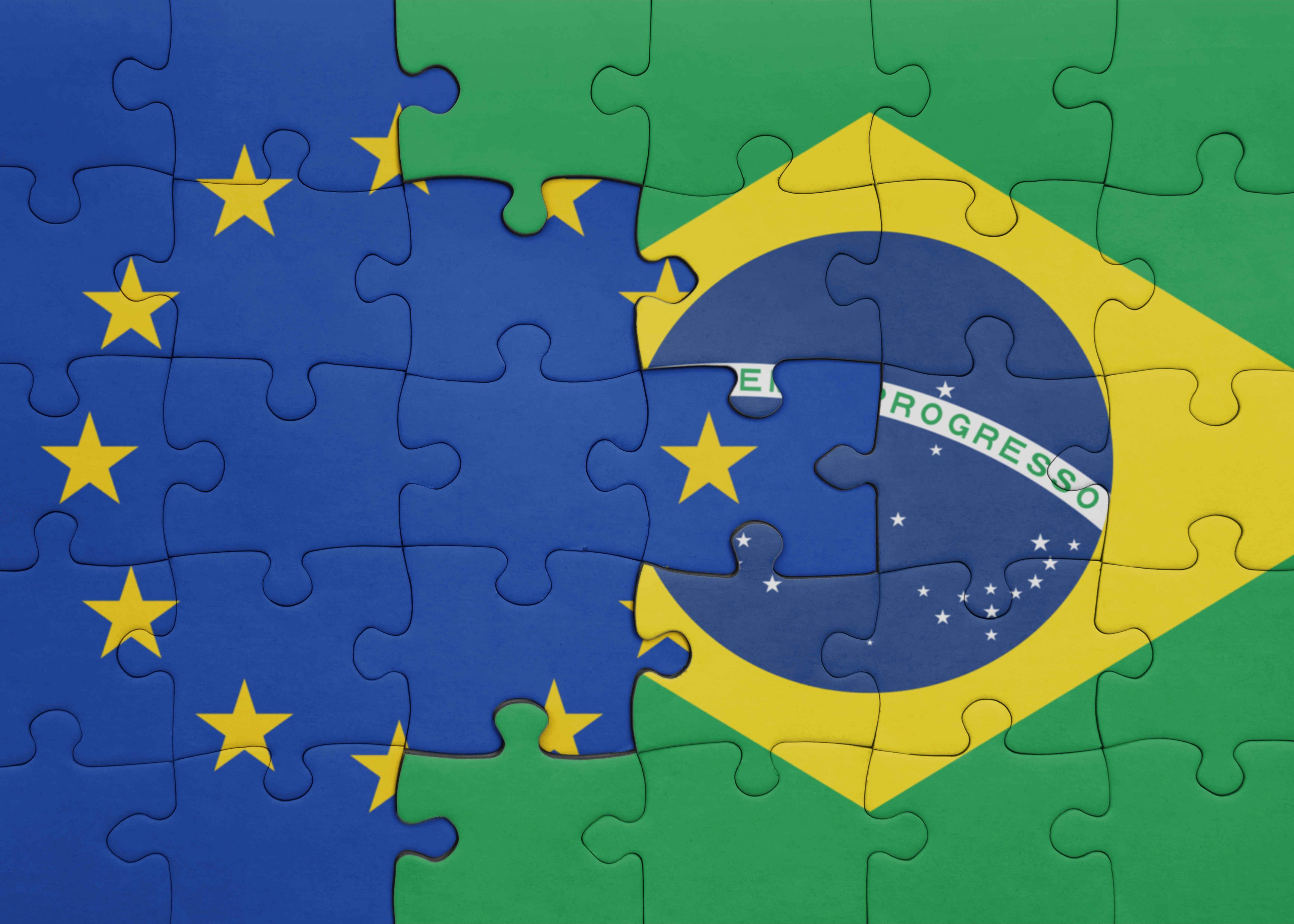
On January 17, the EU and the Mercosur States finally signed the association agreement that had been under negotiation for over 25 years. The 27 Member States had previously adopted two resolutions, which were finally endorsed by Italy as well, authorizing the signing of the EU-Mercosur Partnership Agreement (EMPA) and the Interim Trade Agreement (iTa) between the two parties. However, France, Poland, Austria, Ireland and Hungary voted against the EMPA, with Belgium abstaining. Budapest opposed the iTa, with Vienna and Brussels abstaining. This tortuous process has once again shown the difficulty of reaching common positions at the EU's governmental level, not to mention the protests involving tractors and the agricultural sector in Brussels and many other locations across Europe.
Last-minute negotiations on the Association Agreement between the EU and Mercosur have shown that the EU must make hurtful compromises and think beyond short-term national interests if it is to forge stronger partnerships and increase its global strength–a very challenging task given that several governments are under strong pressure at home. However, as German Chancellor Friedrich Merz stated, the EU-Mercosur agreement “represents a milestone in European trade policy and sends a strong signal of our strategic sovereignty and ability to act”. Although the European Parliament has asked the European Court of Justice for a legal review, it can be assumed that the trade agreement will provisionally enter into force.
The re-elected Commission President, Ursula von der Leyen, has set out her ambitions for Europe's foreign policy in her second term: the goal is to “leverage” the EU's “power and partnerships,” recognizing that the EU's influence on countries outside Europe is weaker than originally expected. The so-called “Brussels effect” of EU legislation (Bradford 2020), which assumes that EU regulations and laws will be emulated globally, is limited in some areas. Some of the legislation that the EU has passed in the context of the Green Deal has caused irritation among many of its global partners, whether it be the Carbon Border Adjustment Mechanism (CBAM) or, even more so, the EU deforestation initiative. The Commission is presenting the Global Gateway initiative–despite its internal heterogeneity–as an important tool in EU partnership policy, with EU delegations playing a key role in promoting it globally. The EU recognizes that its relations with global partners such as Brazil must be based on more equal partnerships. Von der Leyen's political guidelines state that the EU needs to “listen to and respond to the concerns of our partners affected by European legislation, particularly those relating to the European Green Deal” (von der Leyen 2024, 28). The EU and Brazil are collaborating on two main priorities: the Green Deal and digital transformation. These initiatives include energy, the green transition and digital connectivity. Additionally, a multi-country project on electromobility and transport is being conducted with Brazilian participation.
In order to defend its values in a changing world, the Union “must change the way we act. We must look for new opportunities wherever they arise. This is the moment to engage beyond blocs and taboos,” von der Leyen added in her 2025 address to the World Economic Forum (European Commission 2025b). The only card the EU can play is accountability. “With Europe, what you see is what you get,” stressed the EU Commission President. “We play by the rules. Our deals have no hidden strings attached”. However, a recent study has shown that European international partnerships suffer from “hallow promises, too little substance,” despite these kinds of agreements being a political priority, “they lack legal force, are fragmented, non-transparent, and, above all, underfunded” (Koch et al. 2025, 19).
ENHANCED VARIETIES OF PARTNERSHIPS: CONGRUENCE AND COMPLEMENTARITY
The European partnership model has certainly changed over time. At their first Summit on June 28, 1999, in Rio de Janeiro, the EU and the States of Latin America convened in the final declaration “a strategic partnership”. Since then, this term has dominated the interpretation of mutual foreign policies, despite never being defined in a general and binding way (Lazarou & Edler 2012, 36 ss.). Brazil has been a strategic partner of the EU since 2007 (European Commission 2007), a relationship that was formalized at the first EU-Brazil summit, upgrading diplomatic relations beyond the 1992 framework agreement. This strategic partnership has been reinforced by strategic partnerships between EU member countries and Brazil. Over the years, the EU has been trying to renew these special relations with increasingly descriptive terms, such as “enhanced” or “even stronger” partnerships. Ultimately, this endless discourse on partnerships essentially relies on four central elements:
These elements have been described in various ways, such as “equal partnerships” or “value-based collaborations,” but efforts to maintain this mutual appreciation continued at different levels of economic, social, and cultural understanding, even during periods of political tension (2019-2023).
During his visit to Brazil from May 27 to 29, 2025, the President of the European Council, António Costa, emphasized in a keynote address at the inaugural EU-Brazil Investment Forum that “Brazil is not just a close friend, it is a strategic partner for the EU–a global player and a key ally in promoting democracy, multilateralism, and shaping a more just and sustainable world” (Costa 2025). However, the EU's announcements of projects under the Global Gateway initiative, intended to increase its engagement in Brazil, are primarily motivated by geopolitical considerations. The partnership approach requires an adequately funded, proactive, long-term strategy, rather than short-term reactivity. Europe's strategic vision for cooperation with Brazil remains vague and inadequately communicated, as summarized in a recent evaluation (Könnecke 2024).
European foreign policy is currently striving to establish new partnerships around the world and refresh existing ones. Given the emphasis placed on the importance of the “Team Europe approach,” which involves closer collaboration between EU member States and development banks, the partnership approach must also be redesigned. Looking at Germany, various ministries are pursuing their specific sectoral interests and offering international partnerships in areas such as raw materials, energy, health and migration in a competitive way. Recently, however, a new category has been added to Germany's partnership portfolio. "Desired or preferred partners" are those with whom a higher-value connection exists or is to be established, going beyond the standard, mandatory partnerships that define the established canon of foreign alliance partners. Desired partnerships thus go beyond the need for “reliable partners” (e.g. in supply chains), who primarily offer certainty of expectations and crisis resilience–because one wants to know “where one stands with them”. In its new partnership approach, the EU will certainly consider normative compatibility and shared values when building long-term partnerships, in addition to mutual benefit and the Union’s own interests. However, given the complexity of current international political dynamics, as well as Europe’s own history of double standards, its current democratic shortcomings (e.g. populism and unfair financial and economic structures), and the legacy of colonialism, the EU must avoid imposing its values through pressure or moralizing. The EU authorities' fundamental papers, including the Strategic Compass (Council of the European Union 2022) and subsequent progress reports, as well as the White Paper on European Defence (European Commission 2025), demonstrate the EU's clear preference for asserting itself as a sovereign actor capable of defending its interests and values alongside its partners.
The search for desired partners follows a dual pattern of congruence and complementarity (Maihold 2015). In congruent relationships, commonalities resulting from projecting one's self-image onto the other person are decisive in defining a certain standard of status homogeneity. In contrast, complementary relationships seek a suitable counterpart in international politics and economics, accepting relationships with clear status differences. However, both desired partner profiles are characterized by the existence or prospect of sufficient reciprocity of expectations in the relationship, as evidenced by the absence of false or contradictory expectations on either side. The counterpart must therefore possess the ability to develop ideas about the desired partnership and overcome or adapt to possible differences in status.
THE BRAZIL-EU PARTNERSHIP
Following the European Commission's statements on its “preferred partners,” the respective challenges can be outlined by considering Brazil as a congruent partner. Brazil values the EU as a reliable partner in terms of foreign direct investment, promoting democracy and human rights, and climate cooperation. For a long time, Brazilian diplomats sought to build closer relations with the EU in order to counterbalance US hegemony, which lasted until the early 1990s. Despite strong cultural and historical ties, as well as shared norms and values such as democracy and human rights, Brussels failed to prioritize relations with Brazil. Under the 2007 strategic partnership agreement, the EU states that it regards Brazil as one of its most important partners in international forums. However, any diplomatic efforts have been restricted to short-term, sporadic bursts around summit meetings. The EU's frequently Eurocentric stance has made it difficult to establish a sustainable, mutually beneficial partnership. Furthermore, regarding the preferred partnership with Mercosur, which is considered a like-minded region on the global stage, it is clear that partnerships involving several countries require a politically complex approach from EU policymakers and member States.
With regard to Brazil, during President Lula da Silva’s visit to Brussels in June 2023 (European Commission 2023), and during the cabinet negotiations with the German government in December 2023, which led to the agreement of a “Partnership for a socially just and ecological transformation” (Brasil 2023), both sides once again emphasized their desire for a mutually beneficial partnership. The two countries have demonstrated a high level of reciprocity and are considered congruent partners with regard to their shared positions on international policy issues (with a view to a rules-based order), although they have divergent views on international conflicts such as those in Ukraine and Gaza. Despite their size difference, the two countries have similar statuses. A shared approach to regulation and governance between the partners is advantageous, facilitating cooperation and building on decades of trust despite global competition, thereby minimizing access costs. This also applies to raw materials policy, in which Brazil is one of Germany's strategic suppliers, not least due to its substantial reserves of strategic natural resources.
During her visit to Brazil on January 16, 2026, the President of the European Commission stated that “Europe and Brazil are moving towards a very important political agreement on critical raw materials. This agreement will govern our joint investment projects in lithium, nickel, and rare earths. This is crucial for our digital and clean energy transitions. It will also strengthen our strategic independence in a world where minerals are increasingly being used as instruments of coercion” (European Commission 2026a). Following the announcement of the EU-Mercosur agreement, the Brazilian President made clear that “we want to produce and sell industrial goods with higher added value,” indicating that the “eternal role” of commodity exporters is coming to an end (Brasil 2026a). The guiding principle is to create greater value in Brazil by including components such as training skilled workers, academic cooperation and technological exchange, in addition to pure investment.
With Brazil and Mercosur as a preferred partner for strengthening economic ties and working together towards a climate-neutral future, the question arises as to whether this type of partnership is a viable instrument, beyond positioning one's own alliance when searching for new partners. It quickly becomes clear that international competition fundamentally alters the nature of desired partnerships, given the diversity of interests represented, which either prevents close relationships or means they are only formed tactically. Desired partners who share similar views on many issues, such as Brazil, India or South Africa, cannot simply be classified and co-opted for an agenda that prioritizes maintaining the international order when they themselves are calling for reform of this order. European and German foreign policies have experienced such disillusionment time and again, but the US's depredation of norms (Panke & Petersohn 2027) provides an effective incentive to maintain standards of international behavior based on multilateralism and mutual respect. By hedging against uncertainty and economic coercion, Brazilian-European cooperation can set an example for other countries in the region, helping them to overcome the challenging circumstances of current foreign policy-making in the Western hemisphere.
When it comes to the role of the EU and its Member States in international politics, it is clear that the number of preferred partners must be strictly limited if desired levels of closeness and intensity in relations are to be secured or developed. Another variable is that politicians often look in the wrong places and rely on “preferred partners” who only meet this standard on the surface. This means that disappointment is inevitable if the concept of the “preferred partner” is used excessively. For foreign policies to develop a “preferred partner” program with recognizable added value, there is an urgent need to consolidate the cooperation instruments distributed among various departments in relations with respective countries, in order to create added value that demonstrates the benefits of their presence on the international stage.
OPENING UP NEW WINDOWS OF OPPORTUNITY
Strategic partnerships require continuous adaptation and renewal in changing contexts, especially if they strive for a certain degree of exclusivity and congruence. In view of the US imperial political approach and the associated fragmentation of the international order, the European partnering approach must also present substantial proposals for the international order's formation. This requires continuous dialogue that goes beyond invoking the past and puts controversial points of view on the agenda. The Brazilian President's call to be guided “by pragmatism, to overcome ideological differences and build solid and positive alliances within and outside the region" (Brasil 2026b) is an important guideline in this regard. Exemplary cooperation in the exploitation of raw materials, which allows both sides to make joint technological advances, is just as suitable for this as the establishment of a global trade system and financial order that takes into account the economic needs of the Global South. If steps are taken in this direction, then the aspiration for a congruent partnership can be fulfilled, and the strategic nature of the relationship between Brazil and the EU as a "preferred partnership" can be demonstrated. When the President of the European Commission speaks of “a new form of European independence as a structural imperative” (European Commission 2026b), she does not mean decoupling from strategic partners, but rather deepening mutual relations–even if the image of a first-mover advantage for Europe seems a little exaggerated.
Amid controversial domestic debates and in the run-up to the 2026 elections, Brazil is at the moment not expected to take on a leading role in Mercosur or in shaping the Brazilian-European partnership, given the limited political resources available. It is therefore important to build on existing approaches and set new priorities that will provide a better foundation for Brazil's involvement in bilateral and bi-regional contexts. The European Union is also embroiled in numerous disputes, not least with its North American partner, the US, which is distancing itself ever more from the shared principles of a multilateral, rules-based order. In view of these adverse conditions, businesses and societies in Brazil and Europe must take action to develop and strengthen joint initiatives. Some of these approaches are already underway, while others require combined efforts to be driven forward if Brazil and the EU are to realize the potential of their partnership and develop sustainable initiatives. One clear message from past events to all actors in the current geopolitical turmoil is that if the EU and Brazil cannot deliver on their promises, they cannot expect other countries to do so.
One of them is the continuation of the investment dialogue launched in 2025 with a Letter of Intent between ApexBrasil and the EU. This dialogue fosters sustainable investment that is aligned with Brazil's Ecological Transformation Plan and the EU's Global Gateway. The second EU-Brazil Investment Forum, planned for 2026, will provide another opportunity to engage in new projects within the framework of a structured investment dialogue focusing on sustainable development. As the EU has recently adopted a de-risking strategy aimed at securing its supplies in key strategic sectors, including clean technologies and critical raw materials, new areas must be discussed, such as higher-value production strategies in Brazil and supply chain management between Brazil and the EU. Additionally, the launch of an EU-Brazil Future Affairs Forum on digital technology, announced in 2025, will cover areas such as defense technology, sustainability and digital transformation, as well as their impact on global logistics and security, alongside other strategic dialogues. These areas of cooperation could be the most promising for the future, rendering the partnership between Brazil and the EU complementary, broader and stronger, provided the parties are serious about being partners of choice.
References
Bradford, Anu. 2020. The Brussels Effect: How the European Union Rules the World. Oxford University Press.
Brasil. Ministério das Relações Exteriores. 2023. “II Reunião de Consultas Intergovernamentais de Alto Nível Brasil-Alemanha – Berlim, 4 de dezembro de 2023”. Gov.br, December 1, 2023. https://www.gov.br/mre/pt-br/canais_atendimento/imprensa/notas-a-imprensa/ii-reuniao-de-consultas-intergovernamentais-de-alto-nivel-brasil-alemanha-2013-berlim-4-de-dezembro-de-2023.
Brasil. Presidência da República. 2026a. “‘União Europeia e Mercosul farão história ao criar uma das maiores áreas de livre comércio do mundo’, afirma Lula sobre Acordo de Parceria”. Gov.br, January 16, 2026. https://www.gov.br/planalto/pt-br/acompanhe-o-planalto/noticias/2026/01/201cuniao-europeia-e-mercosul-farao-historia-ao-criar-uma-das-maiores-areas-de-livre-comercio-do-mundo201d-afirma-lula-sobre-acordo-de-parceria.
Brasil. Presidência da República. 2026b. “Pronunciamiento del presidente Lula en la apertura del Foro Económico Internacional América Latina y el Caribe 2026, Panama-City, January 28, 2026. https://www.gov.br/planalto/es/seguir-al-gobierno/discursos-y-pronunciamientos/2026/pronunciamiento-del-presidente-lula-en-la-apertura-del-foro-economico-internacional-america-latina-y-el-caribe-2026.
Council of the European Union. 2022. The Strategic Compass for Security and Defence. Brussels, https://www.strategic-compass-european-union.com/.
European Commission. 2007. Communication of the Commission to the European Parliament and the Council, of 30 May 2007, entitled: “Towards an EU-Brazil strategic partnership”. COM(2007) 281 final. https://eur-lex.europa.eu/EN/legal-content/summary/towards-an-eu-brazil-strategic-partnership.html.
European Commission. 2023. “Statement by President von der Leyen at the Joint Press Conference with Brazilian President Lula da Silva”. Brussels, June 11, 2023. https://ec.europa.eu/commission/presscorner/detail/en/statement_23_3210.
European Commission. 2025a. “White Paper for European Defence – Readiness 2030”. Defence Industry and Space, December 23, 2025. https://defence-industry-space.ec.europa.eu/eu-defence-industry/white-paper-european-defence-readiness-2030_en.
European Commission. 2025b. “Special Address by President von der Leyen at the World Economic Forum”. European Commission, January 20, 2025. https://ec.europa.eu/commission/presscorner/detail/en/SPEECH_25_285.
European Commission. 2026a. “Statement by President von der Leyen with Brazilian President Lula da Silva”. European Commission, January 15, 2026. https://ec.europa.eu/commission/presscorner/detail/en/statement_26_119.
European Commission. 2026b. “Special Address by President von der Leyen at the World Economic Forum“. European Commission, January 20, 2026. https://ec.europa.eu/commission/presscorner/detail/en/speech_26_150.
European Council. 2025. “EU-Brazil relations: President Costa to Travel to Brazil to Strengthen Partnership and Launch Investment Dialogue”. Press release, May 23, 2025. https://www.consilium.europa.eu/en/press/press-releases/2025/05/23/eu-brazil-relations-president-costa-to-travel-to-brazil-to-strengthen-partnership-and-launch-investment-dialogues/.
Koch, Cédric et al. 2025. Competitive International Partnerships. Instruments, Partner Demands, and Reforms for the socio-ecological transformation. Bonn: FES/DGB.
Könnecke, Jule. 2024. “The EU-Brazil Partnership and the New Climate Geopolitics: Strategically Reconciling Decarbonisation and Competition”. SWP Comment 56: 1-7. https://www.swp-berlin.org/publikation/the-eu-brazil-partnership-and-the-new-climate-geopolitics.
Lazarou, Elena & Daniel Edler. 2012. “EU-Brazil Relations in a Time of Crisis: An Assessment of the Fifth EU-Brazil Summit”. Political Perspectives 6 (2): 30-57. https://www.academia.edu/12801068/EU_Brazil_Relations_in_a_Time_of_Crisis_An_Assessment_of_the_Fifth_EU_Brazil_Summit.
Maihold, Günther. 2009. “‘Strategische Partnerschaft’ und schwacher Interregionalismus: Die Beziehungen zwischen Brasilien und der EU”. Internationale Politik und Sicherheit 63: 190-208. https://eulacfoundation.org/en/strategische-partnerschaft-und-schwacher-interregionalismus-beziehungen-zwischen-brasilien-und-0.
Maihold, Günther. 2015. “Europa hat sich selbst aus dem Spiel genommen”. IPG, July 20, 2015. https://www.ipg-journal.de/schwerpunkt-des-monats/geopolitik-in-lateinamerika/artikel/europa-hat-sich-selbst-aus-dem-spiel-genommen-1005/.
Maresca, Alberto. 2026. “The Impact of the Second Trump Administration on Latin American Foreign Policy”. GIES Occasional Paper: 1-5. https://www.ugent.be/ps/politiekewetenschappen/gies/en/research/publications/gies_papers/2025-one-year-trump/the-impact-of-the-second-trump-administration-on-latin-american-foreign-policy.htm.
Panke, Diana & Ulrich Petersohn. 2017. “President Donald J. Trump: An Agent of Norm Death?” International Journal: Canada’s Journal of Global Policy Analysis 72 (4): 572-579. https://doi.org/10.1177/0020702017740159.
von der Leyen, Ursula. 2024. “Europe’s choice. Political Guidelines for the Next European Commission 2024−2029”. European Commission, July 18, 2024. https://commission.europa.eu/document/e6cd4328-673c-4e7a-8683-f63ffb2cf648_en.
Submitted: January 18, 2026
Accepted for publication: February 10, 2026
DOI: https://doi.org/10.54827/issn2764-7897.cebri2025.16.02.09.133-144.en
Copyright © 2026 CEBRI-Journal. This is an Open Access article distributed under the terms of the Creative Commons Attribution License, which permits unrestricted use, distribution, and reproduction in any medium, provided the original article is properly cited.
